
Ed Hajim on Finding Purpose Beyond Circumstance: A Conversation About Resilience, Leadership, and the Choices That Shape Our Lives
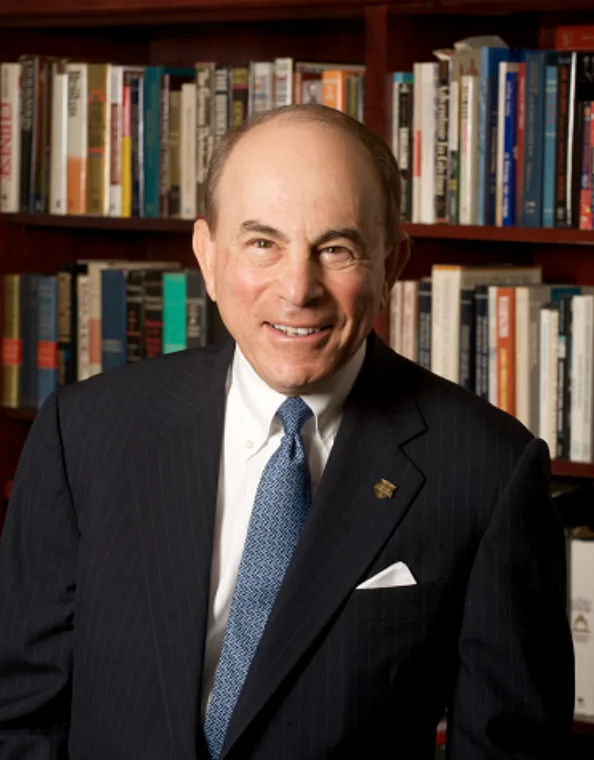
Few life stories follow a predictable path. For Ed Hajim, the road from childhood uncertainty to the highest levels of finance was shaped by moments of adversity, unexpected opportunities, and the people who recognized his potential along the way. His journey is not simply a story of professional achievement, but an exploration of how individuals can redefine themselves, overcome difficult beginnings, and create meaningful lives through perseverance and purpose.
In his memoir On The Road Less Traveled: An Unlikely Journey from the Orphanage to the Boardroom, Hajim shares the personal experiences that shaped his worldview, from growing up in orphanages and foster homes to building a distinguished career as a Wall Street executive. His latest book, The Island of the Four Ps: A Modern Fable About Preparing for Your Future, expands on the principles he has developed throughout his life, offering reflections on preparation, perspective, relationships, and the decisions that influence our future.
Throughout a career spanning more than five decades in investment management and leadership, Hajim has held executive roles with some of the most recognized names in finance while also dedicating himself to mentorship, education, and philanthropy. As chairman of the University of Rochester’s board and through the Hajim Family Foundation, he has focused on creating opportunities for others, particularly through support of education, healthcare, the arts, and conservation.
What stands out most about Hajim’s story is his belief that where someone begins does not determine where they ultimately arrive. His experiences taught him the value of resilience, adaptability, forgiveness, and taking ownership of one’s future. Rather than viewing hardship as a limitation, he sees challenges as experiences that can build strength, character, and a deeper understanding of oneself.
In this interview, Ed Hajim discusses the defining moments that shaped his life, the mentors who helped guide his path, the leadership lessons he learned in business, and the mindset that allowed him to transform uncertainty into opportunity.
You’ve described going from orphanages and foster homes to leading major financial firms. What’s the earliest moment you realized your circumstances didn’t define your ceiling?
When I received the NROTC Scholarship when I was a high school senior. That scholarship gave me the opportunity to enroll at the University of Rochester. Being able to attend college changed the whole trajectory of my life and gave me the belief that anything is possible.
Many people talk about resilience, but you’ve lived it. What do you think most people misunderstand about what resilience actually is?
Many people do not understand that resilience is like a muscle: the more you use it, then the stronger it becomes. Resilience is not something you just have fully day one; much of it must come from experiencing difficulties and either surviving or overcoming them.
At any point in your early life, did you internalize a limiting story about yourself, and if so, how did you rewrite it?
When I left the orphanage and went off to college, I buried my background. I was ashamed and did not want any sympathy. Although my father had kidnapped me at a young age, falsely told me my mother had died and then basically abandoned me, leaving me to live in foster homes and orphanages, I was still determined to attend a private college; I wanted to do it without divulging my past history. I just described myself as a kid whose father lived in California.
You’ve worked at the highest levels of Wall Street. What surprised you most about success once you actually achieved it?
What surprised me was the precariousness of Wall Street success. I witnessed many successful people fall from grace very quickly. Also, I recognized that the more successful you were, the more you were dependent on your people skills.
You often speak about the “Four Ps” (Passions, Principles, Partners, Plans). Which of those do people underestimate the most—and why?
I believe most people underestimate the need for partners, especially the right partners. I have found that I was only as good as the people with whom I choose to surround myself. Success often comes from the people you have around you – The right partners offer success. No partners or the wrong partners, failure.
The Ed Hajim Four Ps and my consistent inner voice in decision making:
● Passions: Find your passions, find the things that excite and motivate you. Recognize that passions do change and you must monitor them throughout your lifetime.
● Principles: Find the rules that you want to follow and the lines you won’t cross. They provide an important structure and bring organization to your life.
● Partners: No individual can succeed alone. Consider the kind of friends, collaborators, and advisers you’ll need around you, recognizing that those needs will evolve.
● Plans: Find your plans, write down where you want to go and how you plan to get there. Pay attention to your environment, things that will happen during your lifetime, and try to find a wave or a cycle that you can marry with your passions and principles.
Was there a decision in your life that felt small at the time but ended up completely altering your trajectory?
The decision to leave engineering and go to business school was not small but seemed like the obvious next step and did completely alter my trajectory.
Do you think adversity builds character automatically, or are there specific conditions that determine whether it becomes destructive or transformative?
I truly believe adversity or disadvantages build character.
Whether it is destructive or transforms is more complicated. It is only destructive is you violate one of my mantas “Never be a victim.” Remember the old cliché, it is not what happened; it is how you react to it.
A favorite quote is from former President, Franklin D. Roosevelt, who shared:
“A smooth sea never made a skilled sailor.”
What advice would you give to someone who feels stuck between surviving their circumstances and trying to build a meaningful future?
As mentioned, using my inner-voice and the Four Ps: Passions, Principles, Partners, Plans can be transformative as they give anyone feeling stuck, a methodology or framework to help them make a better decision on What’s Next.
Also, mentors. Seek out a mentor, someone who cares about you and can guide you to see a path to your next steps.
You’ve given significantly to education and engineering institutions; what role do you believe access to education plays in rewriting someone’s life story?
I support scholars, and my family’s alma maters, as I strongly believe, and was the case for me, that “Education is the solution to everything or almost everything.”
In addition, I created a Life Design Course to guide young people on a road map for life. Students may leave their school with the tools to make a living, but it is also important that they learn to make a life. When students finish school with an understanding of who they are, where they want to go and how they plan to get there, then they graduate feeling their school understood them for their own uniqueness.
If you had to distill your life into one belief about human potential, what would it be?
Anything is possible, human potential is only limited by the scope of your imagination and how hard you want to work, especially here in the United States. You must believe in yourself and find your passions.
ED HAJIM is the author of the critically acclaimed memoir, On The Road Less Traveled and Island of the Four Ps. The son of a Syrian immigrant, he is a seasoned Wall Street executive with more than 50 years of investment experience. He has held senior management positions with the Capital Group, E.F. Hutton, and Lehman Brothers before becoming chairman and CEO of Furman Selz. Hajim has been the co-chairman of ING Barings, Americas Region; chairman and CEO of ING Altus Group and ING Furman Selz Asset Management; and chairman and CEO of MLH Capital. He was also with High Vista, a Boston-based money management company. In 2008, after 20 years as a trustee of the University of Rochester, Hajim began an eight-year tenure as chairman of the university’s board. Upon assuming that office he gave the school $30 million—the largest single donation in its history—to support scholarships and endow the Edmund A. Hajim School of Engineering and Applied Sciences. Through the Hajim Family Foundation, he has made generous donations to organizations that promote education, health care, arts, culture, and conservation. In 2015, he received the Horatio Alger Award, given to Americans who exemplify the values of initiative, leadership, and commitment to excellence and who have succeeded despite personal adversities. Married for 60 years, Ed and his wife Barbara have three children and eight grandchildren.