Beyond the Pixel: How Award-Winning Designer Xiaoyun Chen Balances Empathy with Enterprise Scale
Dateline / Location — In the rapidly evolving landscape of digital product design, few professionals manage to bridge the gap between intimate, therapeutic user experiences and massive, high-stakes enterprise ecosystems. Xiaoyun Chen, a celebrated UX designer based in San Jose, is one such rarity. Recently honored with prestigious MUSE Design Awards and International Design Awards (IDA), Chen’s work demonstrates that whether designing for a single patient with memory loss or for 90 million streaming households, the core principles of empathy and innovation remain constant.
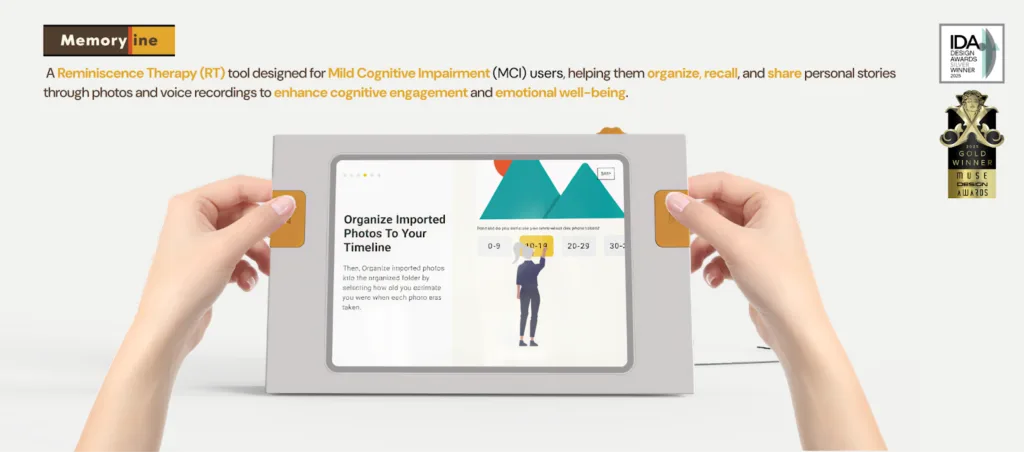
Redefining Elderly Care through “Reminiscence Therapy”. The design industry took notice this year when Chen’s project, Memory Line, secured the Gold Winner title at the 2025 MUSE Design Awards and a Silver Award at the IDA 2025.
In a market often obsessed with the “next big thing,” Memory Line looks backward to move forward. Designed specifically for individuals with Mild Cognitive Impairment (MCI), the device utilizes the principles of Reminiscence Therapy (RT). “We wanted to create a therapeutic assistive device that felt personal, not clinical,” Chen explains. The device helps users organize and recall personal memories through a tactile timeline interface, promoting cognitive stimulation and emotional connection.
The recognition didn’t stop there. Her AI-powered pet care companion, FurSphere, also garnered a Silver Winner at MUSE and an Honorable Mention at IDA. By integrating AI health monitoring with smart device connectivity, FurSphere addresses the modern pet owner’s need for real-time, data-driven peace of mind.
Scaling Impact: The Roku Ecosystem. While her conceptual work wins trophies for innovation, Chen’s day job involves deploying these user-centric philosophies at a massive scale. As a key UX Product Designer at Roku, Chen leads the user experience for the Developer Portal—the engine room behind the streaming giant’s ecosystem of over 90 million active accounts.
Her impact is measurable and strategic. At the recent Roku Developer Summit, company leadership highlighted features directly designed by Chen, such as the “Phased App Rollouts” and “Channel Rollback” workflows. These aren’t just UI updates; they represent a fundamental shift in platform stability.
“By designing a safer, more controlled release process, we empowered Roku to remove historical restrictions on publishing times,” industry observers noted. This shift enables thousands of developers worldwide to update their apps with greater confidence, directly impacting the viewing experience of millions of consumers.
A Philosophy of “Tech for Good” Whether creating the HealthMate app to demystify US healthcare costs (an iF Design Award submission) or streamlining complex developer tools, Chen’s portfolio is unified by a single thread: reducing friction.
“Design is about solving problems where they exist,” says Chen, who holds a Master’s in Human-Computer Interaction from Georgia Tech. “Whether it’s an elderly patient struggling to remember a face, or a developer struggling to debug code, the designer’s job is to use technology to clear the path.”
As the digital world becomes increasingly complex, the industry looks to designers like Xiaoyun Chen—those who can win gold for their artistic vision while simultaneously architecting the infrastructure of the streaming economy.