
The Rise and Fall of Residential Solar: How a Booming Industry Left Thousands of Homeowners in Limbo
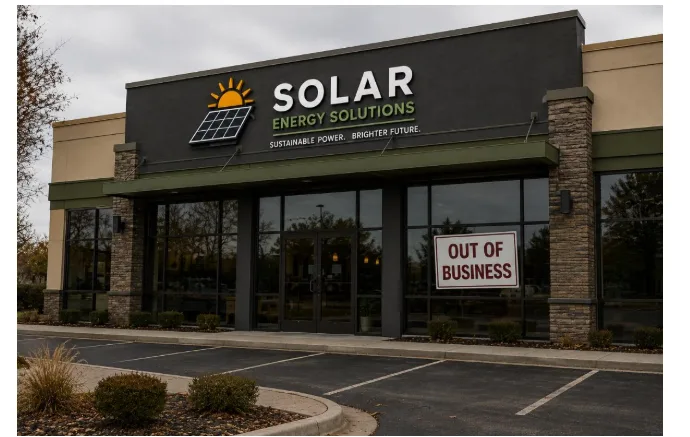
For more than a decade, residential solar power was marketed as one of the smartest investments a homeowner could make. Fueled by generous federal tax incentives, aggressive financing programs, rising utility costs, and a growing desire for energy independence, solar companies flourished across the United States.
Sales teams canvassed neighborhoods, advertisements promised lower electric bills, and homeowners were encouraged to lock in savings while helping save the planet. The industry grew at a breathtaking pace.
Then the landscape changed.
Today, many of the same companies that once touted solar as the future are downsizing, restructuring, or disappearing altogether. The expiration of the federal 30% Residential Clean Energy Credit at the end of 2025 has triggered a dramatic slowdown in residential solar installations, sending shockwaves throughout the industry. Analysts now forecast significant declines in new residential installations, widespread layoffs, and an increasing number of bankruptcies among solar providers.
A Boom Built on Incentives
The residential solar industry’s explosive growth was driven in large part by federal tax credits that significantly reduced the cost of installing solar panels. For years, homeowners could claim a substantial percentage of their installation costs as a federal tax credit, making solar systems financially attractive and often reducing payback periods by several years.
The incentives created a perfect environment for rapid expansion. Solar companies attracted investors, hired thousands of sales representatives and installers, and developed financing models that allowed homeowners to install systems with little or no money down.
In many markets, solar became less of an energy decision and more of a financial one.
The Tax Credit Disappears
In 2025, Congress approved legislation that accelerated the end of the residential solar tax credit. Beginning January 1, 2026, homeowners purchasing residential solar systems could no longer claim the federal 30% tax credit that had been a cornerstone of the industry for years.
The impact was immediate.
Industry forecasts that once predicted continued growth suddenly shifted toward contraction. Market analysts now expect residential solar installations to fall sharply, reaching levels not seen since the pandemic-era slowdown of 2020. Companies that built their business models around subsidized consumer demand found themselves scrambling to survive.
Bankruptcies and Business Closures
The end of tax incentives was only part of the problem.
Higher interest rates made solar financing more expensive. State-level incentive programs were reduced in several markets. Equipment costs remained volatile. Consumer demand has softened.
The result has been a wave of restructuring, layoffs, and bankruptcies across the residential solar sector. Industry reports indicate that more than 100 solar companies have closed or filed for bankruptcy amid tightening economic conditions and changing government policy.
Several major solar firms that once appeared financially secure have encountered serious financial distress. Companies such as PosiGen, which served tens of thousands of residential customers, entered bankruptcy proceedings after citing the loss of federal incentives and declining market conditions. Other major industry names, including SunPower, Sunnova, and Mosaic, have also faced severe financial challenges.
For employees, the consequences have included layoffs and shrinking opportunities. For investors, substantial losses. But for homeowners, the situation may be even more troubling.
When the Solar Company Disappears
Many homeowners purchased solar systems believing they were protected by long-term warranties, maintenance agreements, and service contracts.
Those promises often depended on the ongoing existence of the installer.
When a solar company closes its doors, customers frequently discover that the sales contract, workmanship warranty, monitoring services, and maintenance agreements may have little practical value. Even when equipment manufacturers remain in business, labor warranties and service commitments are often tied directly to the installer that sold the system.
Homeowners can find themselves navigating a frustrating maze of unanswered phone calls, disconnected websites, and bankruptcy filings.
If an inverter fails, a roof penetration leaks, or a monitoring system stops working, finding a qualified company willing to assume responsibility for another installer’s work can be difficult—and expensive.
Many customers discover that while equipment may still be covered under a manufacturer’s warranty, the labor required to diagnose, remove, replace, and reinstall components is no longer covered.
Little Recourse for Consumers
The unfortunate reality is that homeowners often have limited options when a solar provider goes bankrupt.
In bankruptcy proceedings, customers holding warranty claims are generally considered unsecured creditors, placing them near the back of the line behind secured lenders and other priority creditors. Recovering meaningful compensation can be unlikely.
This leaves many homeowners facing a difficult choice:
- Pay out-of-pocket for repairs.
- Find a third-party solar service company.
- Attempt to navigate manufacturer warranty claims themselves.
- Live with underperforming or malfunctioning systems.
For homeowners who financed their solar systems through long-term loans, the frustration can be even greater. Monthly payments may continue long after the company responsible for servicing the system has disappeared.
A Cautionary Tale
The decline of residential solar does not mean solar energy itself has failed. Solar technology remains effective, and many homeowners continue to generate significant savings on electricity costs.
However, the industry’s recent struggles reveal the risks of building an entire market around government incentives and subsidized demand.
When those incentives were available, growth appeared unstoppable.
When they disappeared, many companies discovered that their business models were far less sustainable than investors and consumers had been led to believe.
Thousands of homeowners who invested in solar expecting decades of support now find themselves caught in the fallout.
The lesson extends beyond solar energy. Whenever an industry experiences explosive growth driven primarily by government incentives, consumers should ask a critical question:
What happens if the incentives disappear?
A Light at the End of the Tunnel
A group of former solar industry professionals witnessed firsthand the challenges facing homeowners in the wake of widespread solar company closures and decided something needed to change. After years of selling, servicing, and supporting residential solar systems, they saw countless customers left with unanswered questions, abandoned warranties, and nowhere to turn when problems arose.
That realization led two former solar professionals to create Solar Service Network, a company dedicated to helping homeowners navigate an increasingly complex solar landscape. Unlike traditional solar sales organizations, Solar Service Network focuses on service, maintenance, monitoring, and customer advocacy—regardless of which company originally installed the system.
One of the most common concerns among homeowners affected by solar company bankruptcies is the lack of ongoing support and system monitoring. Without a trusted provider overseeing system performance, many customers are left wondering whether their investment is operating as intended or if problems are going undetected.
For many homeowners, access to experienced solar professionals who understand both the technology and the industry’s recent challenges provides a much-needed sense of reassurance.
“As an administrator, I spent years helping families invest in solar because they believed it would provide long-term savings and energy security,” said Brennan Vasic, Founder of Solar Service Network. “Unfortunately, many of those same families were left stranded when companies closed their doors or stopped honoring their commitments. We created Solar Service Network because homeowners deserve someone in their corner. Whether we installed the system or not, our mission is simple: help people protect their investment, understand their options, and get the support they were promised.”
Today, Solar Service Network is helping fill a critical gap in the marketplace by providing homeowners with access to experienced solar professionals who can evaluate existing systems, diagnose performance issues, coordinate repairs, restore functionality, and provide expert guidance when questions or concerns arise. In many cases, the company can also reestablish—or, for some homeowners, establish for the first time—professional system monitoring, giving customers greater visibility into how their solar investment is performing.
“Professional monitoring and ongoing support provide homeowners with the peace of mind they expected when they made the decision to invest in solar,” said Vasic. “For many families, a solar system represents one of the largest investments they’ve made in their home. They purchased it with the expectation of long-term savings, reliable performance, and dependable service. When companies disappear, those expectations shouldn’t disappear with them. Our mission is to help homeowners protect that investment by providing expert service, proactive monitoring, and a trusted resource they can rely on—regardless of who originally installed their system.”
While the residential solar industry continues to adapt to changing market conditions, companies like Solar Service Network demonstrate that support for homeowners doesn’t have to disappear when a solar company does. For thousands of families left searching for answers, the emergence of independent service organizations offers something increasingly valuable in today’s marketplace: expertise, accountability, and the confidence that someone is still there to help long after the sale is complete.
Sources: Reuters, SEIA, Wood Mackenzie, EnergySage, and industry bankruptcy reports.