
Why Teaching Kids About Money Is Really an Engineering Problem
Naresh Kumar Paturi has spent two decades building the systems that move money. Now he is focused on a smaller, harder question: how do you teach a child to handle it?
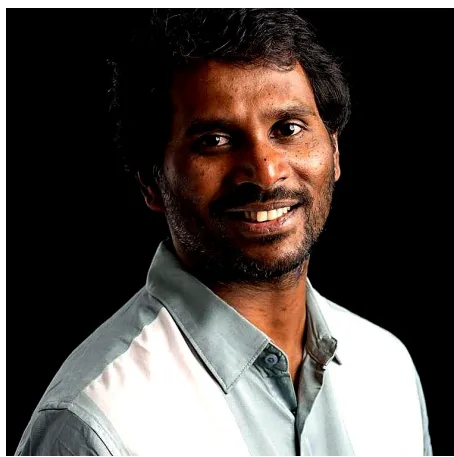
Naresh Kumar Paturi thinks a lot about a problem most parents would recognize but few could name. Children tend to learn about money the hard way, usually after the first mistake. A savings habit that never quite starts. A balance that runs out faster than expected. For a long time, that was simply how it went. You figured money out as you went along, and the lessons arrived late.
He would like to change that, and he comes at it from an unusual direction.
Paturi is an engineer. For close to twenty years he has built the software that moves money behind the scenes, the kind of payment systems most people never think about until something goes wrong. Much of his career has been spent on the unglamorous middle of finance: settlement, reconciliation, the careful machinery that makes sure every transaction adds up. Lately, though, his attention has turned to something more personal. How do you use that same machinery to help a child learn about money early, while the habits are still forming?
His answer starts somewhere surprising. The hard part, he says, is not the lesson. It is the trust.
A lesson you can feel
For most of us, money lessons came as a lecture or a class, something abstract that never quite stuck. What has changed is that technology can make those lessons concrete. A child can see a real balance, make a real choice, and feel a small, real result, all within limits a parent sets.
“A child isn’t just told to save,” Paturi says. “They watch a goal fill up. That immediacy is the whole point.”
But immediacy only works if the thing underneath it is dependable. The moment a balance looks wrong or a payment fails, the lesson curdles. Instead of learning that money is something they can understand and manage, a child learns that it is confusing and unreliable. So the engineering has to be quietly excellent for the teaching to land at all.
Holding their attention
There is also the simpler problem of attention. Money is not the most thrilling subject, and a savings goal competes with everything else on a phone. Paturi sees a modest, practical role for newer tools here, including artificial intelligence. Not to make decisions about anyone’s money, he stresses, but to make learning about it feel less like a chore. He has worked on interactive features, things like trivia and small challenges, meant to make the subject a little more alive.
“Technology should reduce friction,” he says. “If it helps a child learn about money in a way that actually holds their attention, that is useful work.” The decisions, he is quick to add, stay with parents and with clear rules. The software teaches and nudges. It does not take over.
The part no one sees
Most of what Paturi cares about is invisible by design. Behind any friendly app that touches a family’s money sit real transactions and sensitive information, some of it belonging to children. That raises the bar well above an ordinary app, and it is where his old habits show. He is a reliability engineer at heart, trained to assume things will break and to build so that they fail safely.
“In fintech, reliability is not just a technical goal,” he says. “Reliability is customer trust.” A wrong number is not a glitch to him. With a family on the other end, it is a broken promise. Building for children, he adds, means treating privacy and safety as the starting point rather than an afterthought.
Who gets to learn
There is a bigger idea underneath the work, and it is the part Paturi seems most drawn to. For a long time, whether a child learned about money depended heavily on luck, on whether they happened to grow up in a home where money was discussed openly. Put good financial education inside something accessible, and it can reach families who never had that conversation.
That, more than any single product, is what keeps him interested. The work is demanding and the stakes are real, but the reward is a generation that reaches adulthood already comfortable with the basics. “If the technology does its job well, you forget it is there,” he says. “A child just grows up understanding money a little better. That is enough.”
Naresh Kumar Paturi is a principal engineer and architecture lead specializing in payments and distributed systems, with more than 18 years of experience in the field.