
Faith Through Allegory: Charles Martin Cosgriff on Exploring Humanity’s Deepest Questions
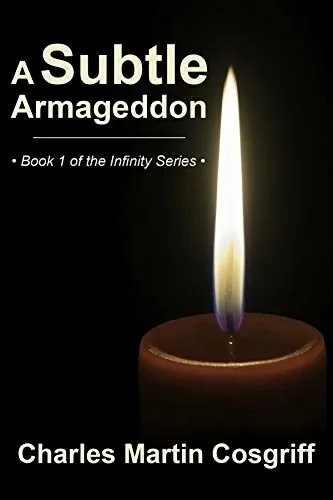
In a fast-paced modern world, readers often struggle to find fiction that entertains while addressing the profound questions of existence, morality, and faith. Much of contemporary speculative fiction focuses purely on survival or dystopian despair, leaving little room for spiritual reflection or deeper philosophical inquiry. Without a narrative framework to explore these concepts, complex theological ideas can feel distant or inaccessible to modern audiences.
To bridge this gap, author Charles Martin Cosgriff launched A Subtle Armageddon, the first book in his Infinity Series. Drawing inspiration from legendary 20th-century Christian apologists, the novel uses a post-apocalyptic allegory to ground complex questions of divine purpose and human identity in a compelling story. We spoke with Cosgriff to discuss how speculative fiction can serve as a powerful lens for personal reflection and spiritual discovery.
Q: A Subtle Armageddon follows the last man on Earth. What motivated you to use this extreme isolation to explore the relationship between humanity and faith?
Charles Martin Cosgriff: It was the combination of an image which has been with me since I was a child and C.S. Lewis’ book The Abolition of Man. The image was a man clothed in a white jumpsuit sitting before a flickering candle in a red glass holder which was suspended from a ceiling. Who was he and why was he there? A few years later I read Abolition, which suggests what a possible last man on Earth might be. I thought perhaps my image was that man, and wrote towards that conclusion.
Q: You cite C.S. Lewis and J.R.R. Tolkien as major literary influences. How did their approach to building symbolic worlds shape your own allegorical style?
Charles Martin Cosgriff: Tolkien showed me that creating new worlds can be fun, and have deep meaning at the same time. Lewis’ writing style brought me in from the start. It was for my mind substantial yet also conversational. I strive to write what can cover both: demonstrate the truth of Christianity in a manner accessible and enjoyable for all. And maybe get beyond those ‘watchful dragons’ as Lewis has said, to engage people in areas they might ordinarily resist.
Q: Your book deals heavily with human choices and temptation. How does the post-apocalyptic setting help highlight the everyday moral dilemmas that people face in the real world?
Charles Martin Cosgriff: I think by making choices very clear cut, almost stark. What we have in A Subtle Armageddon is a man who begins as a blank slate and has to first discover his beginnings, then declare a proper allegiance to a proper force. Yet a being of sorts within that last man is quite deceptive, a sort of poor conscience, trying to keep him from establishing himself as a person, not a thing. Since all we have is that one on one, it highlights what’s at stake: the truly good versus the inherently evil.
Q: Aside from fantasy masters, you also enjoy classic whodunits like Sherlock Holmes. Did your affinity for mystery writing influence how you structured the trials and revelations in this narrative?
Charles Martin Cosgriff: That’s an interesting question. I wouldn’t be surprised if there has been some influence, as we are all creatures of our pasts, our likes and dislikes. There’s a sense of discovery there as well, exploring a mystery, trying to answer the whodunit ahead of Sherlock. Can I say for sure? Well, no, but it’s certainly within reason.
Q: Many modern readers find theology intimidating. How does using an imaginative fiction lens help make deep philosophical questions about right and wrong more relatable?
Charles Martin Cosgriff: The real trick might be to leave the deeper issues for later. Start out with the basics – is this right or wrong – and deal with the details as they arise. It’s not that they aren’t important. Of course they are. Yet it seems to me that we learn most anything well when we begin small. A man has to believe in God first before he even knows enough to consider the bigger questions. He can’t actually know what those are unless he begins with the one great Fact. So I would break theology down. Convince folks there is a God, and they will typically (I believe) want to follow up. They’ll become more receptive to what comes next.
Q: As this is the first installment of the Infinity Series, what overarching themes or spiritual journeys can readers expect to see unfold in the upcoming books?
Charles Martin Cosgriff: At the risk of either hyperbole or understatement, it’s the age old good versus evil dichotomy. With respect to A Subtle Armageddon and the Infinity Series, it’s exploring how different personalities respond when faced with survival measured against the real value of human beings as individual persons. Do we take the easy way or the way which can make us better men and women to stand before God? Do we have the courage to do what we can know is true? I pray I can help others find truth and live it as best they can.
A Subtle Armageddon offers a refreshing take on post-apocalyptic fiction by turning a story of survival into a deep exploration of faith and redemption. By channeling the traditions of classic apologists, the narrative allows readers to engage with complex moral frameworks without sacrificing suspense or adventure. The framework provides an ideal space for both solo reading and group discussions centered on human purpose.
As speculative fiction continues to evolve, stories that challenge the mind and soul remain essential. By anchoring timeless spiritual truths within a vivid, imaginative setting, Cosgriff provides a roadmap for readers seeking substance in their fiction. The journey of the last man on Earth ultimately reminds us that exploring our true identity is a universal pursuit.
Get a copy of A Subtle Armageddon athttps://www.amazon.com/dp/B076TSSGT4