
Best Eye Care Hospitals in Delhi, NCR for Advanced Vision Treatment
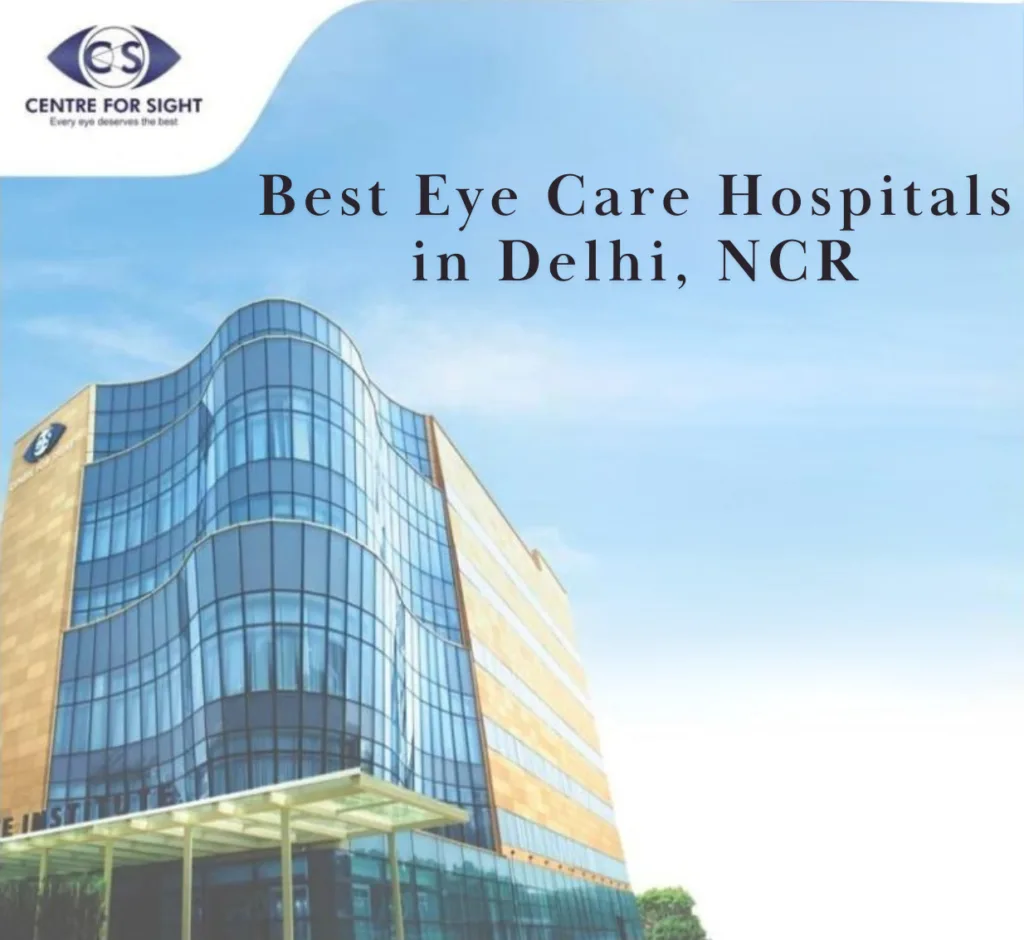
Delhi NCR has witnessed rapid growth over the last few decades, and the region’s healthcare landscape has transformed in parallel. In ophthalmology, this change is especially pronounced. Patients today are more informed and are not only looking for “an eye doctor,” they’re looking for the right sub-specialist, the proper diagnostics, and a safe surgical setup for their exact problem.
Lifestyle-related eye problems in metropolitan regions are becoming a steady reason for clinic visits. Indian studies have reported digital eye strain prevalence of 45.5% among university students (2023) and 70.4% among medical/nursing students (2025), which helps explain why urban clinics see more patients coming in for dryness, fatigue, and blurred vision. (National Library of Medicine)
At the same time, age-related eye conditions such as cataracts remain a major driver for eye care services in Delhi NCR. A 2024 India-focused analysis reported a 14.25% prevalence of cataract among older adults, with prevalence rising with age. (Frontiers)
Under the National Programme for Control of Blindness & Visual Impairment (NPCBVI), India recorded 83,44,824 cataract surgeries in FY 2022–23 (against a target of 75 lakh), and the programme targets have been scaled up to 90 lakh for 2023–24 and 105 lakh for 2024–25, a strong signal of how big the surgical workload and backlog management is nationally due to Covid-19, including metro regions. (PIB)
This is also why the importance of preventive eye check-ups is growing, especially for chronic risks that may not show symptoms early. In a large Indian study, among people with diabetes, 16.9% had diabetic retinopathy and 3.6% had sight-threatening diabetic retinopathy, reinforcing why regular screening and timely check-ups matter in real-world outcomes. (National Library of Medicine)
That’s why patients search for “best” or “top” eye care services in Delhi NCR, because the“best” means access to the right sub-specialist, advanced tests in one place, and consistent follow-up, because that’s what reduces delays, repeat visits, and second-guessing after treatment begins.
Best Eye Care Hospitals in Delhi NCR
Delhi NCR has a wide mix of eye-care options, from large government teaching centres to high-volume single and multi-speciality hospitals with dedicated ophthalmology departments:
1. Centre For Sight
With a strong presence of 18 centres across Delhi NCR, Centre For Sight positions itself as a specialised eye-care network built for both consultation-led care and surgery-led pathways. It is backed by 30+ years of experience in operating over 30+ cities and 90+ eye care centres across India.
Across these locations, Centre For Sight caters to 15+ lakh patients a year by offering consultations, paediatric eye care, advanced eye cataract surgery such as Phaco, MICS FLACS, and SICS, vision correction through procedures such as LASIK, CustomEyes, Contoura Vision, SMILE, SILK and SmartSurfACE, supported by a network of 350+ doctors.
2. AIIMS – Dr. Rajendra Prasad Centre for Ophthalmic Sciences (RPC)
At AIIMS, the Dr. Rajendra Prasad Centre for Ophthalmic Sciences (RPC) is positioned as a national-level academic and clinical hub for eye care, training, and research.
AIIMS notes RPC was established in 1967 as a national centre for ophthalmic science, and it is recognised as the Apex Organisation under the Government of India’s blindness control programme, with designation as a WHO Collaborating Centre.
Its hospital statistics also reflect large patient volumes, totalling 5,71,170 cases in FY 2019–20, across OPD, emergency, and speciality clinics.
3. Shroff Eye Hospital / Shroff Eye Centre
Shroff Eye Centre highlights a long-standing Delhi legacy dating back to 1914, positioning itself as an NABH-accredited tertiary eye hospital in Delhi NCR with modern diagnostics across subspecialties.
It has more than 35 doctors and 12 eye specialties that routinely provide second opinions across complex conditions, including cataract, retina, glaucoma, uvea, and squint eye surgery, to over 1 lakh patients each year and performs over 10,000 eye surgeries annually across its centres.
4. Baba Saheb Ambedkar Hospital (Govt. of NCT of Delhi) – Ophthalmology
Baba Saheb Ambedkar Hospital is a high-footfall government hospital that provides ophthalmology services as part of its core OPD departments, supporting a large public patient load and referrals from surrounding areas. The hospital states that OPD services are free of charge, and the average daily OPD attendance exceeds 3000.
For surgical infrastructure, it notes three OT blocks, including a main OT block with 6 functional OTs that support elective surgeries across departments, along with an Emergency OT for surgical emergencies.
5. Medanta – The Medicity (Gurugram) – Ophthalmology
Medanta’s ophthalmology department in Gurugram provides a broad range of services, including cataract care, glaucoma management, treatment for retinal conditions, LASIK, and diabetic eye disease, along with oculoplasty procedures.
The unit emphasizes purpose-built infrastructure, such as a dedicated vitreo-retinal surgical setup and a separate cataract suite.
For cataract and refractive surgery, it describes an integrated suite featuring the VERION image-guided platform, LenSx femtosecond laser, Centurion phaco system, and a Luxor operating microscope, framed as a femtosecond laser–assisted cataract surgery workflow.
6. Guru Gobind Singh International Eye Centre
Guru Gobind Singh International Eye Centre is a Delhi-based eye hospital that positions itself as a comprehensive, specialty-led eye care provider, covering core segments such as retina, cataract, glaucoma, cornea, and laser procedures.
The centre was established in 1979, with Dr Gurbax Singh as founder, with 60 beds and 24-hour emergency availability.
The centre highlights the installation of a 3D endoscope with laser-delivery surgery system, signalling a technology-forward surgical setup for complex eye procedures.
7. Indraprastha Apollo Hospital (Ophthalmology Department)
Indraprastha Apollo Hospitals, New Delhi, is positioned as a large tertiary multi-speciality hospital, with ophthalmology supported by a comprehensive hospital infrastructure for complex cases and medically sensitive patients.
Apollo states the Delhi unit is a multi-speciality tertiary acute care hospital with 710 beds, spread over 15 acres, with a built-up area of 600,000+ sq ft.
How Patients Can Identify the Best Eye Care Hospitals?
In Delhi NCR, the hardest part is not finding an eye clinic; it’s finding an eye care centre that can match your concern with care and utmost attention, with the right diagnostic tools and doctors.
That’s why patients shortlist hospitals based on specialist availability, infection-control discipline, in-house testing, surgical readiness, and how smoothly the hospital manages reviews after treatment, not just the first consultation.
Specialist-Led Care: Why Sub-Specialists Matter?
In eye care, the most common quality gap is not “lack of hospitals”; it’s the mismatch between the patient’s problem and the doctor’s core expertise.
When care isn’t sub-specialist-led, patients end up switching opinions for retina, glaucoma, cornea, or paediatric issues, and the plan keeps changing because the case isn’t being managed by the right team from day one.
Centre For Sight positions its model around specialist-led pathways backed by a large experienced clinical team of 350+ doctors, so patients can access sub-specialists within the same system when the case needs it.
Dr. Mahipal S. Sachdev, Padma Shri awardee anchors the network’s refractive programme leadership as a pioneer associated with multiple refractive innovations.
Alongside this, the network highlights senior clinical leadership that includes renowned retina specialist Dr. Lalit Verma and renowned glaucoma specialist Padma Shri awardee Dr. Harsh Kumar, both AIIMS alumni with 40+ years of experience.
Children’s eye care also benefits from this structured approach because timing affects visual development, and families need repeat reviews rather than one-time consultations. The Centre For Sight paediatric practice is supported by Dr. Lalit Verma, one of India’s renowned paediatric specialists, which includes squint evaluation and myopia management.
Technology & Safety: Diagnostics, OTs, and Infection Control
Patients judge safety in two moments: during testing and during surgery. The gap shows up when diagnostics are limited, surgical infrastructure isn’t built for high-volume day-care flow, or infection-control steps feel unclear.
This is precisely why cataract and refractive procedures are no longer seen as quick fixes; people now ask about measurements, planning precision, OT discipline, and safety protocols before choosing a hospital.
Centre For Sight anchors this on two fronts: technology-led evaluation and infrastructure built for safe surgical flow.
For long-term and complex care, it highlights tech-enabled pathways such as OCT imaging, glaucoma field testing, and retinal lasers.
For refractive correction, it positions suitability-led planning through CustomEyes (AI-powered customised planning based on detailed corneal mapping and measurements) for LASIK eye surgery and links it to the launch of Asia’s first SCHWIND AMARIS 1050RS LASIK laser with AI-powered FORESIGHT technology.
It also frames cataract care as femto-assisted (FLACS), with structured pre-operative evaluation, lens counselling, offering premium IOL options such as toric lenses for astigmatism, multifocal/trifocal lenses for near-to-intermediate range needs, and EDOF lenses for extended range in suitable cases, alongside standard monofocal lenses.
For chronic and complex conditions, it also highlights the “monitor + treat” combination across subspecialties. In retina care, this includes laser photocoagulation, intravitreal injections, and vitrectomy for conditions such as retinal detachment, diabetic retinopathy complications, and macular disorders.
For glaucoma, it includes SLT and surgical options such as trabeculectomy, drainage devices, and MIGS, while cornea care ranges from keratoconus cross-linking to corneal transplants/keratoplasty (including lamellar techniques) and ocular surface reconstruction. The network also supports dry eye evaluation and therapies, including IPL for suitable cases.
On the infrastructure side, it highlights large NABH-accredited super-speciality setups across locations such as Dwarka, Safdarjung Enclave, Preet Vihar, Gurugram Sector-29, and Noida, with multiple floors, well-equipped examination and consultation chambers, modular operation theatres, and casualty/trauma support, supporting safer work-ups, procedure readiness, and post-procedure monitoring.
Continuity of Care: Follow-Ups, Monitoring, and Recovery Support
A major real-world problem in eye care is fragmented follow-up. Patients get a diagnosis, but then monitoring, repeat visits, and recovery checkpoints become scattered across different places, which is risky for chronic conditions and frustrating for families, especially when children need timely reviews where delays can impact visual development.
Centre For Sight positions continuity as a network advantage, with multiple centres across Delhi NCR locations such as Safdarjung Enclave, Rajouri Garden, Preet Vihar, Shahdara, Dwarka, Rohini, and also across Gurugram, Faridabad, Ghaziabad, Noida, Indirapuram and more, plus a wider North India presence across key hubs and smaller pockets.
It also frames its patient experience around more precise explanations, written plans, and predictable next steps, and strengthens the process angle by noting NABH accreditation across its presence, signalling protocol-led delivery rather than ad-hoc care.
In a market where people compare hospitals on access and structure, this matters because patients can move between branches without their journey “resetting,” and clinical hand-offs can stay within the same system, reducing repeated testing and confusion.
Choosing the right eye hospital in Delhi NCR comes down to a few clear factors: access to the right sub-specialists, strong diagnostics, safe surgical infrastructure, and a follow-up system that keeps the care plan consistent after the first visit.
Centre For Sight positions itself around these exact expectations through its specialist-led model, technology-enabled evaluation, and multi-centre network that supports smoother clinical hand-offs and continuity across locations.
By combining sub-speciality expertise, advanced diagnostic and surgical readiness within one organised system, it aims to make the patient journey more precise, safer, and more complete from consultation to long-term care.