
31 Hats and the Rise of Culturally Rooted Streetwear in Los Angeles
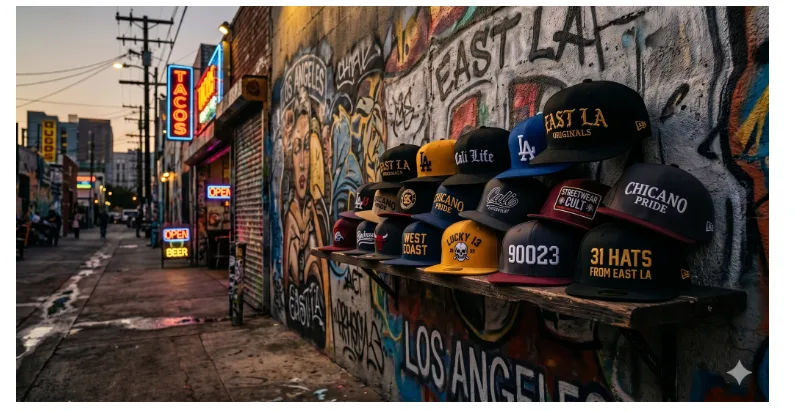
Los Angeles has always been a city that defies easy categorization. It is a place where film, music, art, and fashion collide in ways that produce entirely new cultural movements. From the lowrider culture of the 1960s to the birth of West Coast hip hop in the 1980s and the explosion of skatewear in the 1990s, LA has repeatedly shown the world that it does not follow trends. It creates them.
Today, a new chapter in that story is being written, and it is happening in the heads of people who know exactly where they come from. At the center of that chapter is 31 Hats, a Los Angeles based headwear brand that is quietly becoming one of the most culturally significant streetwear labels in the country.
This is not a story about a brand that got lucky. This is a story about what happens when authenticity meets vision, and why that combination is more powerful than any marketing campaign money can buy.
The Problem With Modern Streetwear
Before we talk about what 31 Hats is doing right, it is worth understanding what the broader streetwear industry has been doing wrong.
Over the past decade, streetwear has gone from a subculture to a multi-billion dollar global industry. That growth has brought enormous opportunity, but it has also brought an enormous amount of noise. Brands with no real cultural roots have flooded the market, borrowing aesthetics from communities they have no genuine connection to and packaging them for mass consumption.
The result is a streetwear landscape where authenticity has become harder and harder to find. Consumers, particularly younger ones, have developed sharp instincts for telling the real from the fake. They can spot a brand that is performing culture versus one that is actually living it. And increasingly, they are choosing to spend their money on the latter.
This is the environment into which 31 Hats was born in 2023. And it is precisely because of this environment that the brand has been able to grow so quickly.
What Cultural Roots Actually Mean in Fashion
The phrase culturally rooted gets used a lot in fashion conversations, but it is worth being specific about what it actually means and why it matters.
A culturally rooted brand is one whose identity, aesthetics, and values come directly from a real community. It is not inspired by that community from a distance. It is built from within it. The founders understand the community because they are part of it. The designs reflect the community because they come from people who live inside its visual language every day.
For 31 Hats, that community is East Los Angeles.
East LA is one of the most culturally rich neighborhoods in the United States. It is a place where Mexican-American identity, urban art, music, and fashion have been intertwined for generations. The neighborhood has produced artists, musicians, athletes, and cultural figures who have shaped American culture far beyond its borders. And it has developed its own distinct visual language, one that is bold, proud, layered with history, and impossible to fake.
31 Hats does not draw inspiration from East LA. It draws its entire identity from it. Every design decision is filtered through the question of whether it truly belongs on the streets of that neighborhood. That standard is what gives the brand its authenticity, and authenticity is what gives it its power.
The 31 Hats Approach to Brand Building
What makes 31 Hats particularly interesting from a business perspective is how deliberately it has built its brand identity. In an age where most brands chase virality and algorithmic reach, 31 Hats has taken a fundamentally different approach.
The brand does not chase trends. It sets them. It does not try to appeal to everyone. It speaks directly to a specific community and trusts that the depth of that connection will attract others naturally. And it does not compromise on quality or cultural integrity for the sake of faster growth.
This approach is slower. It requires patience and discipline. But it produces something that fast-growth brands almost never achieve: genuine loyalty.
When someone buys a 31 Hats cap, they are not just making a fashion choice. They are making a statement about identity, about community, and about what they value. That kind of emotional connection to a brand is extraordinarily difficult to build and even more difficult to break. It is also the foundation of long-term business success in any industry.
Collaborations as Cultural Conversations
One of the most powerful tools in the 31 Hats brand-building arsenal is its approach to collaborations. In the streetwear world, collabs are everywhere. Most of them are forgettable. The ones that matter are the ones that feel like genuine cultural conversations rather than commercial transactions.
Every collaboration in the 31 Hats catalog falls into that second category.
The El Mago Series
The most celebrated collaboration in the 31 Hats story is the ongoing partnership with El Mago, a name with deep roots in East LA culture. The caps that have come out of this series are not just well-designed products. They are cultural artifacts that tell a specific story about a specific community.
The series has grown across multiple drops, including the original El Mago edition, the De East LA release, and the Magic Club cap, each one adding a new dimension to the narrative. For collectors and cultural observers alike, the El Mago series represents exactly what streetwear collaboration should be: two creative forces coming together to make something that neither could have made alone.
Backpack Boyz X Thirty One Hats
The collaboration with Backpack Boyz brought together two culturally relevant names in a way that felt completely natural. This was not a partnership engineered by a marketing team. It was a meeting of two brands that share a genuine audience and a genuine set of values. The resulting cap reflected that authenticity, and the community responded accordingly.
31 Hats X Japon
Perhaps the most surprising entry in the 31 Hats collaboration catalog is the Japon drop, a collection inspired by Japanese design precision and aesthetic philosophy. On the surface, it might seem like a departure from the brand’s East LA roots. In reality, it demonstrates something important about what 31 Hats is building.
The brand is not confined to a single cultural lane. It is capable of moving across cultures and drawing genuine inspiration from different traditions without losing its core identity. That kind of cultural intelligence is rare, and it signals that 31 Hats has a much larger story to tell than its current catalog might suggest.
The Cross-Border Phenomenon
One of the most remarkable aspects of the 31 Hats story is what has happened in Mexico. Without a targeted marketing campaign or a dedicated retail presence, the brand has developed a loyal and growing following across the border.
This did not happen by accident. It happened because the cultural values embedded in 31 Hats, the pride in community identity, the rejection of manufactured aesthetics, the deep connection to Mexican-American culture speak directly to an audience in Mexico that shares those same values.
East Los Angeles has always been a bridge between American and Mexican culture. It is a neighborhood where those two worlds have coexisted, influenced each other, and produced something entirely unique. When Mexican streetwear fans encounter 31 Hats, they recognize that cultural bridge immediately. The brand feels familiar because it comes from a place they understand.
The Gorras 31 Hats collection, which addresses the Spanish-speaking community directly through its name, became one of the brand’s best-selling products. It was a natural expression of the brand’s identity, not a calculated market move, and the authenticity of that gesture came through clearly to the audience it reached.
Today, 31 Hats ships to both the United States and Mexico, and the cross-border community it has built continues to grow. For a brand that launched in 2023, this kind of organic international reach is a remarkable achievement and a strong signal of what is still to come.
Quality as a Non-Negotiable
Cultural roots and compelling collaborations will only take a brand so far. Eventually, the product itself has to justify the investment. With 31 Hats, it does.
Every cap in the lineup is built with serious attention to materials, construction, and finishing. The brand positions its products in the $65 to $85 price range, which places them firmly in the premium streetwear category without being inaccessible to the core audience. That positioning is deliberate and reflects a deep understanding of the market the brand is serving.
When customers spend that kind of money on a cap, they expect it to hold up. 31 Hats delivers on that expectation consistently, which is why first-time buyers become repeat customers and repeat customers become brand advocates. In a world where word of mouth is still the most powerful marketing tool available, that cycle of quality and advocacy is invaluable.
What 31 Hats Reveals About the Future of Streetwear
The rise of 31 Hats is not just a brand success story. It is a signal about where the streetwear industry is heading.
Consumers are increasingly sophisticated. They have been burned by brands that perform authenticity without delivering it, and they have learned to recognize the difference. The brands that will thrive in the next decade of streetwear are the ones that are genuinely rooted in real communities, that build real relationships with their audience, and that never compromise on the cultural integrity that makes them worth following in the first place.
31 Hats is doing all of those things. And it is doing them at a moment when the market is hungry for exactly what the brand offers.
The lesson for the broader fashion industry is clear. In a world saturated with manufactured aesthetics and algorithm-driven content, the most powerful thing a brand can be is real. Real in its origins, real in its collaborations, real in its community relationships, and real in its commitment to quality.
Final Thoughts
Los Angeles has always been a city that rewards authenticity. From the underground music scenes that became global movements to the street art that turned into museum exhibitions, the city has a long history of taking things that started small and real and watching them grow into something the whole world pays attention to.
31 Hats is part of that tradition. Born from the streets of East LA, built on cultural integrity, and expanding naturally across borders, the brand represents something the streetwear world needs more of: a genuine voice from a genuine place.
The rise of 31 Hats is only beginning. And for anyone paying attention to where fashion, culture, and community are heading, it is a story worth watching closely.
To explore the full collection, visit the official store at thirtyonehats.org.