
Why Are Inflatable Tents Becoming More Popular?
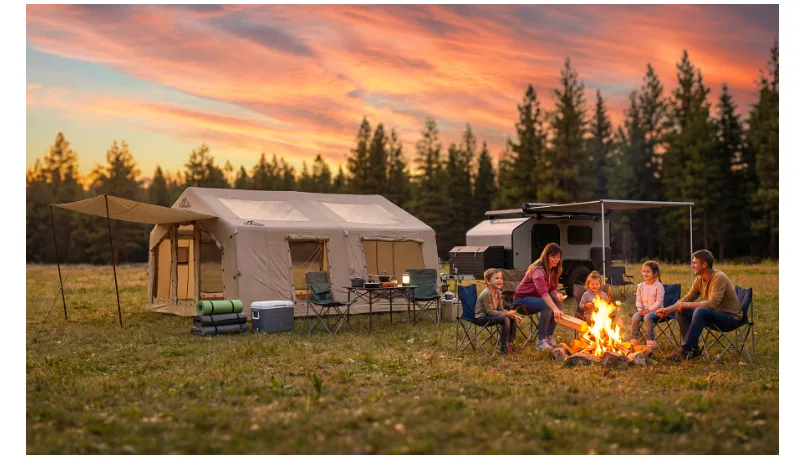
In the past, many people associated camping with inconvenience and complicated equipment. Traditional tents often required multiple poles, detailed instructions, and significant setup time before users could finally relax outdoors.
As outdoor lifestyles become more popular, expectations for camping equipment are also changing. Families, young travelers, and road trip enthusiasts now prefer products that allow them to spend more time enjoying nature instead of struggling with assembly.
This shift in consumer preference has helped inflatable shelter systems gain widespread attention. By replacing traditional rigid poles with air-supported structures, these tents simplify the camping process and make outdoor activities more accessible to beginners.
Today, air-supported shelters are becoming increasingly common in campsites around the world.
Understanding the Air Support System
Many first-time users assume inflatable tents are fragile because they rely on air pressure instead of metal poles. In reality, modern inflatable structures are built using reinforced composite materials designed specifically for outdoor use.
The inflatable beams are usually made from multiple layers of durable fabric combined with airtight inner chambers. Once inflated, they create a stable support frame capable of handling regular outdoor conditions.
Unlike traditional rigid poles, inflatable beams can absorb part of the external pressure through flexibility. This characteristic may reduce the risk of sudden structural failure under certain conditions.
Most modern designs also include independent air chambers. If one section becomes damaged, the rest of the structure can often remain stable, improving overall safety during use.
Fast Setup Is a Major Advantage
One of the biggest reasons inflatable tents continue gaining popularity is their setup efficiency.
Traditional tents often require careful pole assembly and coordinated installation, which can be difficult for inexperienced users. Inflatable systems, however, usually require only a pump and a few minutes of inflation before the structure is fully operational.
This convenience is especially valuable for families with children. Parents often prefer spending time relaxing outdoors rather than struggling with complicated equipment.
Fast setup also becomes extremely useful during sudden weather changes or late-night arrivals at campsites. Users can quickly create shelter without unnecessary stress or confusion.
Because of these practical advantages, more outdoor enthusiasts are becoming interested in inflatable tents as a reliable camping solution.
Comfort Has Become More Important
Modern camping is no longer limited to simple outdoor survival. Many travelers now expect comfort and convenience even while staying in natural environments.
As a result, interior design and ventilation systems have become increasingly important in tent development.
Many inflatable shelters feature large windows and dual-layer ventilation systems that improve airflow while reducing heat buildup inside the structure. Better air circulation creates a more comfortable environment during warm weather.
High-quality materials also play a major role. Waterproof Oxford fabric and PU-coated polyester are commonly used to improve rain resistance and durability.
Some models even include reinforced flooring systems that help reduce ground moisture inside the tent. Although these details may seem minor, they significantly affect the overall camping experience.
Why Beginners Prefer Inflatable Systems
For many new campers, traditional tents can feel intimidating.
Users often struggle to identify pole sections, connect support points correctly, and maintain structural balance during installation. Mistakes during assembly may also affect the stability of the entire shelter.
Inflatable systems offer a more user-friendly alternative. Most models only require users to unfold the structure and connect a pump to begin setup.
This simplified process reduces the learning curve and allows beginners to enjoy camping more confidently.
In addition, the absence of multiple metal poles reduces the risk of losing essential parts during transportation or storage.
Outdoor Safety Still Matters
Although inflatable shelters are easier to use, safety remains extremely important during outdoor activities.
Some people mistakenly believe inflatable structures do not require additional stabilization. However, all outdoor shelters should still be secured using ropes and ground stakes during strong wind conditions.
Proper ventilation is also essential. Cooking equipment and open flames should not be used carelessly inside enclosed spaces because poor airflow can create serious safety risks.
Many outdoor equipment manufacturers are now focusing more heavily on structural durability and safety improvements. Brands such as Zonkoo continue investing in better materials and optimized construction methods to improve long-term reliability.
Applications Beyond Camping
Inflatable shelter systems are no longer limited to traditional recreational camping.
Today, they are commonly used at music festivals, outdoor exhibitions, temporary event spaces, and road trip campsites because of their rapid installation capability.
Large inflatable structures are often used as temporary lounges, information centers, or activity spaces during outdoor events.
Emergency response teams also use inflatable shelters during natural disasters because they can quickly create temporary protected areas for medical support and emergency accommodation.
Construction projects, temporary storage facilities, and outdoor workspaces have also started adopting similar structures due to their flexibility and efficiency.
How Consumers Should Choose
With so many products available on the market, consumers should focus on practical needs rather than appearance alone.
For short family camping trips, medium-sized shelters are often sufficient. More demanding outdoor environments may require stronger waterproof performance, better wind resistance, and higher-quality materials.
Interior layout is another important factor. Well-designed space distribution can improve comfort during extended outdoor stays.
Pump quality should not be ignored either. Reliable inflation systems improve setup efficiency and reduce maintenance problems over time.
Ultimately, the best product is not always the most expensive one. The ideal shelter is the one that matches real camping habits and outdoor conditions.