
The real state of auto parts delivery across Europe in 2026
Most drivers assume ordering car parts online is straightforward: click, pay, wait. The reality is more complicated and understanding how the system actually works can save days of waiting, receiving incorrect parts, and unanswered questions.
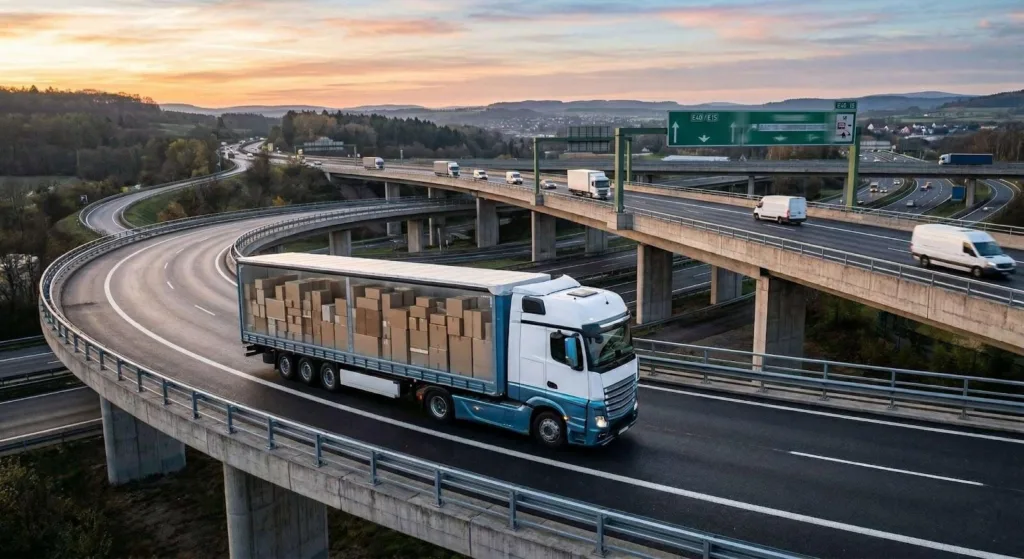
The European online auto parts market has grown rapidly over the past decade, with demand accelerating as vehicles age and dealership repair costs rise. Millions of orders cross borders every month, passing through sorting hubs, customs checkpoints, and multiple courier handoffs before reaching a garage or driveway. The supply chain behind a single brake caliper or timing belt is longer than most buyers ever see.
How the logistics chain is structured
A typical order moves through several stages: warehouse picking, quality check, packaging, transfer to a regional sorting centre, handoff to a last-mile carrier, and final delivery. In cross-border shipments within Europe, even intra-EU orders can pass through two or three logistics partners before arrival. The distance between warehouse and end customer is the single biggest variable affecting speed.
Germany plays a central role. Its geographic position, dense motorway network, and established freight infrastructure make it the default logistics hub for Central Europe. Many large platforms maintain primary distribution points within or near German borders to reduce average transit time across the continent.
Where the system breaks down
The problems are well-documented and shared across the entire industry. No platform is immune. Three failure points repeat consistently.
First, slow delivery. Seasonal demand spikes, adverse weather, and carrier network disruptions can add days to standard timelines. Peak periods, particularly in autumn and winter, strain capacity across European logistics networks.
Second, lost or misrouted parcels. Scanning errors at sorting facilities, software failures within courier systems, and physical mishandling all contribute. Once a parcel enters a third-party carrier network, the original retailer has limited real-time control.
Third, uneven service quality by region. Courier infrastructure in parts of Southern and Eastern Europe remains fragmented. Delivery reliability in rural areas or smaller markets does not match the standards common in Germany, the Netherlands, or Belgium. According to the Green Last Mile Europe 2024 report, first-time delivery failure in home delivery can reach up to 25% in some European markets.
What professional platforms do differently
Platforms that have invested seriously in logistics infrastructure approach these problems differently. AUTODOC, one of Europe’s large online auto parts retailers, offers a relevant operational example.
The company operates four logistical centres across the continent in Berlin, Szczecin, Cheb, and Ghent. The Ghent facility, a state-of-the-art warehouse in Belgium, opened in 2025. Its location was deliberate. Alexandru Lazariuc, Technical Specialist in Auto Parts Selection, explained the reasoning on LinkedIn:
“We didn’t just drop a pin on a map; we needed to be right next to the major ports to counter the volatility in Western Europe. When the supply chain gets tight, proximity is the only thing that saves you.”
The distributed warehouse model is one part of the answer. Another is the marketplace model, which addresses last-mile variability differently by bringing sellers closer to the end customer at the market level. AUTODOC recently launched its marketplace in the United Kingdom, its 10th European market for this model. In 2025, the platform processed over 190,000 orders and expanded its catalogue to 1.2 million items. Dmitri Zadorojnii, CEO at AUTODOC SE, noted the logistical rationale directly: “Local UK sellers mean faster delivery times and more competitive pricing.” Integrating regional sellers reduces transit distance structurally, rather than relying solely on central warehouse placement.
Beyond warehouse geography, industry data from AUTODOC also points to transparency as a key operational lever. Customers are offered a choice of delivery speeds, notified in advance when delays are likely, and shown an estimated delivery date directly within their account. Each of these steps reduces the information gap that typically drives customer frustration.
What to check before placing an order
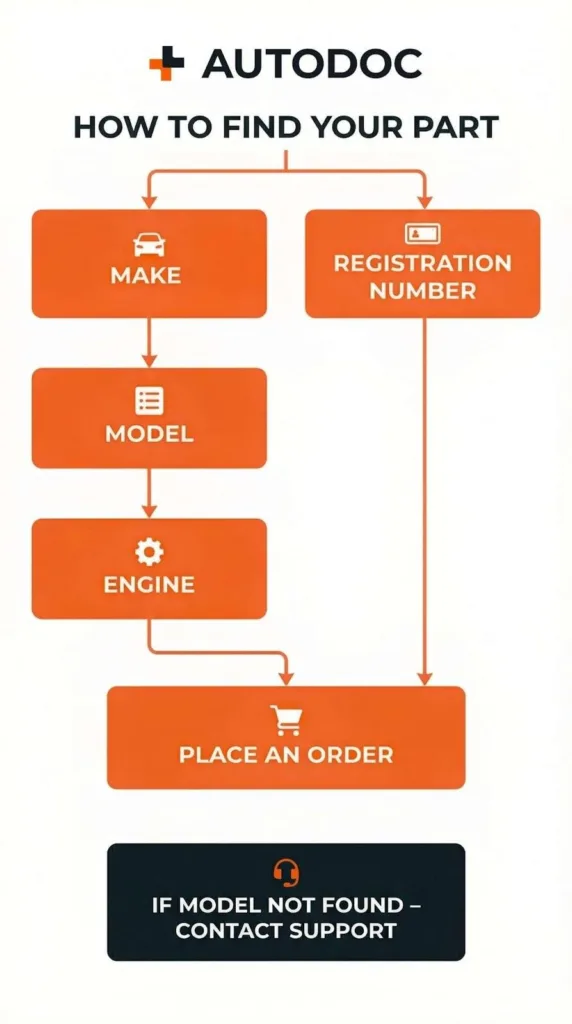
Compatibility errors are a hidden cause of delays in receiving items. When a part is ordered against an incorrect vehicle specification, the return and reorder cycle can add one to two weeks to the total wait. Most platforms, including AUTODOC, structure their search around make, model, and engine type, a sequence that filters out incompatible parts before checkout. Alternatively, entering a vehicle registration number pulls up the correct specification automatically. If a model is not found through either route, contacting platform support before ordering is faster than processing a return after the fact.
Checking warehouse location relative to your country also matters. An order shipped from a nearby distribution centre will consistently outperform one travelling from a distant hub, regardless of the carrier used.
Where the market is heading
Warehouse automation, AI-driven inventory forecasting, and same-day delivery in major European cities are all moving from pilot programmes toward standard practice. The aftermarket logistics sector in 2026 is not broken, but it is uneven. The gap between platforms that have invested in distributed infrastructure and those that have not is becoming measurable in days, not hours.
For anyone ordering auto parts online, understanding that gap is as practical as checking the part number itself.