
The Future of SEO for Small Businesses: AI, Local Search, and Trust Signals
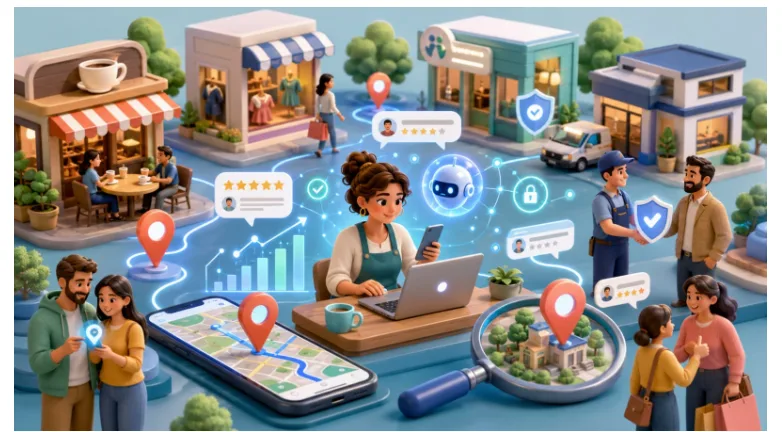
Small business owners have always had to punch above their weight. Limited budgets, lean teams, and stiff competition from larger brands make every marketing decision feel high stakes. SEO has long been one of the most cost-effective channels available, but the rules are changing fast, and what worked three years ago is not enough today.
The future of SEO for small businesses is being shaped by three forces: the rise of AI in search results, the growing importance of local search, and the increasing weight Google places on trust signals. Understanding how these shifts connect is what separates businesses that grow organically from those that get quietly buried in search rankings.
How AI Is Changing the Way People Find Businesses
Google’s AI Overviews have fundamentally changed what users see when they type a query. Instead of scanning a list of blue links, many searchers now read a generated summary before they ever scroll down. For small businesses, this creates both a challenge and an opportunity.
The challenge is that fewer clicks may reach your website if the answer appears directly on the results page. The opportunity is that Google still needs to source its summaries from somewhere, and the businesses that appear as credible, well-structured sources are far more likely to be referenced and recommended.
AI search results reward expertise. If your content genuinely answers questions, is written with real knowledge behind it, and is structured so search engines can parse it clearly, you are in a stronger position than a competitor who simply published more pages with more keywords.
Voice search optimization is also becoming relevant for local businesses in a practical way. When someone asks their phone to find “a plumber near me open now,” the answer comes from a business with a complete, accurate, and well-reviewed online presence. Conversational queries are growing, and the businesses that answer them naturally in their content will benefit.
Local SEO Is Not Optional Anymore
For any business serving a specific area, local search optimization is the most important SEO investment you can make. The vast majority of “near me” searches carry strong commercial intent. People searching that way are ready to call, visit, or buy.
Your Google Business Profile is the cornerstone of local search visibility. A neglected profile with outdated hours, missing categories, and no photos sends a quiet signal to both Google and potential customers that the business may not be reliable. A well-maintained profile with accurate information, regular posts, and active responses to reviews tells a different story entirely.
NAP consistency matters more than most people realise. NAP stands for name, address, and phone number, and inconsistencies across directories, social profiles, and your own website create confusion for search engines. Business citations across platforms like Yelp, Apple Maps, Bing Places, and industry-specific directories all contribute to how Google validates your location and relevance for local search rankings.
Local keywords deserve proper attention too. Think about how your customers actually describe what they need. People search for “accountant in Cork” or “best coffee shop in Galway,” not generic phrases lifted from a marketing brochure. Weaving natural, specific local language into your service pages, blog posts, and metadata helps Google connect your content to the searches that matter most to your business.
If you are serious about local visibility and want a structured approach to improving it, working with an experienced SEO agency in Ireland can help you identify where your local presence is falling short and build a realistic plan to address it.
Trust Signals: The SEO Factor Most Small Businesses Underestimate
Google’s E-E-A-T framework (Experience, Expertise, Authoritativeness, and Trustworthiness) has moved from a quality evaluator’s guideline into a practical ranking consideration. For small businesses, this means your website and your broader online presence need to convey credibility at every touchpoint.
Customer reviews are one of the most powerful trust signals available, and they are often overlooked. A steady stream of genuine, recent reviews on your Google Business Profile signals to both searchers and search engines that your business is active, legitimate, and valued by real people. Responding thoughtfully to reviews, including the negative ones, reinforces that signal further.
Website credibility feeds into this too. A site that loads slowly, looks dated on mobile, or lacks basic security (HTTPS) creates friction that damages both user experience and search performance. Google has been explicit about the role of Core Web Vitals and mobile friendliness in ranking. A technically sound, well-designed website is no longer a bonus; it is a baseline expectation.
Schema markup is a practical tool that small businesses consistently underuse. Adding structured data to your website helps Google understand who you are, what you offer, where you are located, and what customers think of you. For local businesses especially, LocalBusiness schema can directly improve how your listing appears in search results, including review stars and contact details in rich snippets.
The combination of thoughtful SEO and website design matters here more than people often acknowledge. A site that is optimised for search but poorly designed for users will struggle to convert traffic into customers. The two disciplines are increasingly inseparable.
Content Quality Over Content Volume
The old SEO playbook for small businesses often involved publishing as much content as possible in the hope that something would rank. That approach has diminishing returns now. Google is considerably better at evaluating whether a piece of content actually serves the person searching, or whether it exists primarily to capture a keyword.
What works today is content that reflects real experience and genuine insight. A tradesperson who writes about common mistakes homeowners make before calling a professional, a solicitor who explains what to expect during a first consultation, or a restaurant owner who shares the story behind a signature dish. These are not just engaging; they demonstrate the kind of firsthand knowledge that builds brand authority over time.
Content quality also extends to how information is presented. Short paragraphs, clear headings, and a logical structure make content easier to read and easier for search engines to process. Embedding relevant images, videos, or practical tools where appropriate signals that a page offers real value beyond raw text.
The Long Game Is Still the Right Game
It is worth saying clearly: SEO for small businesses is not a quick fix. It never has been, and the future of SEO does not change that. What has changed is that shortcuts are less viable than ever, and patience combined with genuine effort is more valuable than it used to be.
The businesses that will perform well in search over the next five years are the ones building real credibility, earning genuine reviews, maintaining accurate and consistent local listings, creating content that reflects actual expertise, and presenting themselves through websites that work well for real people on real devices.
Small businesses have a natural advantage here that is easy to overlook. Authenticity, local knowledge, and real relationships with customers are things that large brands often struggle to replicate at scale. The future of SEO for small businesses is not about out-spending the competition. It is about showing up clearly, consistently, and credibly in the places where your customers are already looking.
That foundation takes time to build. But once it is in place, it pays dividends in a way that paid advertising rarely does.