
The Founder Who Lived the Problem First: How Sabeer Nelli Built Zil Money from Operational Pain
There is a popular narrative in startup culture about the importance of mission. Companies are told to lead with purpose, to articulate why they exist before they explain what they sell. The result, in many cases, is a mission statement that sounds compelling in a pitch deck and means very little in a product meeting. Purpose gets drafted by a communications team and framed on a wall. It rarely survives contact with a roadmap decision.
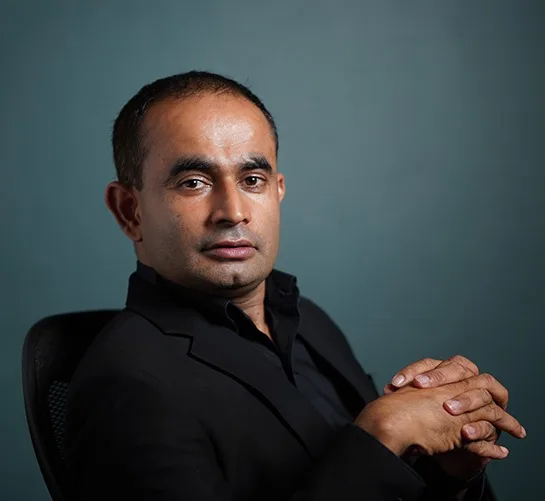
Sabeer Nelli did not write a mission statement before building Zil Money. He built the product because he had lived the problem. Running Tyler Petroleum, a fuel distribution company that would eventually reach $60 million in revenue and land on the Inc. 5000 list, Sabeer spent years navigating payment systems that were not designed for businesses like his. He did not study the SMB payments gap from the outside. He was inside it, every day, trying to make it work.
That distinction shapes everything Zil Money became.
The Problem with Building Toward an Opportunity
Most founders begin with a market insight. They identify a gap, validate demand, and build toward it. This is a rational process, and it produces functional companies. However, it also creates a specific kind of drift.
When you build toward an opportunity, your decisions are shaped by what the market signals. Features get added because competitors have them, or because a large customer asked, or because a product manager read a trend report. The product grows outward rather than inward. It becomes harder to say no because “no” requires a principle, and the guiding principle is growth, not coherence.
Sabeer has described the discipline of restraint as one of the most consequential decisions in Zil Money’s history. “For every feature we shipped, there were several we looked at seriously and chose not to build,” he has said. That is not a product strategy. That is a product conviction. And conviction, unlike strategy, requires a reason that goes beyond the market.
Origin Clarity as a Decision Filter
When a founder builds from lived experience, the product brief is not a document. It is a memory. Sabeer knew exactly what it felt like to manage cash flow for a business with high transaction volume, thin margins, and a vendor payment cycle that did not align with receivables. That knowledge functions as a filter.
It means that when a feature proposal lands on the table, there is an immediate test: does this solve the real problem, or does it solve a version of the problem that sounds good in a meeting? Founders who built from opportunity struggle with that test because the real problem is abstract to them. Founders who built from pain know the difference immediately.
This is why Zil Money’s product set reads the way it does. ACH payments, wire transfers, virtual cards, check printing, international payments: these are not adjacent features bundled together for a broader TAM. They are the actual tools that a business owner with a complex payment mix needs in one place. The product reflects the problem with precision.
What Compounds Over Time
The less obvious consequence of origin clarity is what it does to a company’s trajectory over time. Opportunity-driven companies face a recurring identity question as they grow: what are we, exactly? Each new market they enter requires them to reframe their purpose. Customers sense the drift before it appears in the financials.
Companies built from a clear operational origin do not face this in the same way. The core remains legible. Zil Money processes over $100 billion in transactions for more than one million businesses across the United States. That scale was reached by staying close to the original problem, not by expanding away from it. The customer who joined for ACH payments finds the wire transfer tool. The customer who needed check printing discovers virtual cards. The product earns depth because the foundation was specific.
Sabeer has carried that specificity into how Zil Money continues to develop. His background now includes Harvard fintech certification, active roles in NACHA and the Fed Faster Payments Council, and participation at forums including the World Economic Forum. The range is broader. The orientation has not changed.
The Quiet Advantage Nobody Announces
There is no press release for origin clarity. It does not appear in a company’s positioning document or its investor deck. It shows up in smaller ways: in the features that did not get built, in the customer problems that got solved precisely, in the roadmap decisions that held their ground against pressure to move sideways.
Sabeer did not set out to build a mission-driven company. He set out to build the tool he needed. The mission followed from the specificity of the problem, not the other way around.
That is the distinction most frameworks miss. Mission statements describe what a company wants to stand for. Origin clarity describes what a founder cannot stop solving. One is chosen. The other compounds.