
Stress Often Shows Up in the Body Before People Make Time to Address It
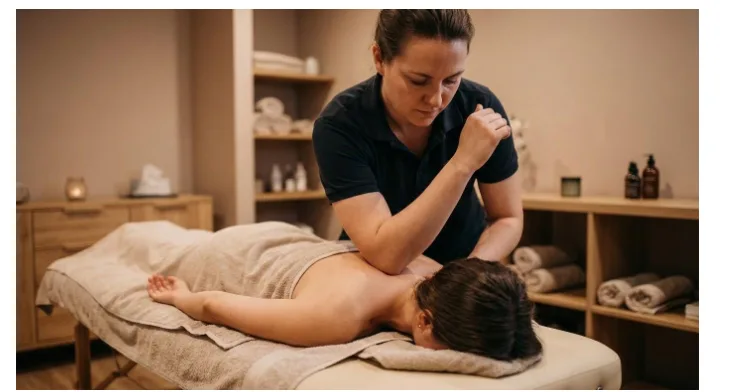
A practical look at how massage can support recovery when tension, posture strain, and fatigue start affecting daily function
For many working adults, stress does not stay mental for long. It often starts to show up physically through neck tightness, shoulder tension, headaches, fatigue, or that persistent feeling that the body is carrying more than it should. Mayo Clinic notes that common stress symptoms can include muscle tension or pain, fatigue, headaches, and sleep problems, which helps explain why people often begin searching for local massage support only after discomfort starts affecting their routine.
Physical tension often builds gradually before it feels disruptive
One reason people delay care is that stress-related tension rarely arrives all at once. It tends to build through long workdays, repetitive movement, poor posture, and limited recovery time. Mayo Clinic notes that poor posture can strain neck muscles, while tension headaches are often associated with tenderness in the scalp, neck, and shoulder muscles. For professionals spending hours at a desk, in a vehicle, or on their feet, that gradual buildup can easily become normal until it begins to affect concentration, movement, or sleep.
That gradual pattern matters because it changes how people search. They are often not looking for a luxury experience. They are looking for a practical way to address tension that has become difficult to ignore. In that context, massage becomes part of a broader effort to improve physical comfort and recover more effectively from daily strain. NCCIH describes massage as an approach used to help manage a health condition or enhance wellness, which is a useful and measured way to frame its role.
Choosing the right type of massage matters more than many people expect
Another barrier is uncertainty. People may know they need relief, but they are not always sure what kind of session makes sense for the issue they are dealing with. General stress, posture-related tightness, muscular fatigue, and more persistent areas of tension do not always feel the same, and readers often want enough information to make a more informed decision before booking. That is one reason service matching matters so much in a keyword like massage chilliwack. The local search intent is not only about proximity. It is also about finding an option that feels relevant to the problem at hand.
For readers comparing nearby services, it can help to review information related to massage chilliwack as part of a broader look at massage styles, pressure preferences, and session planning. In a third-party article, that kind of reference works best as a practical resource rather than a promotional claim. It gives readers a starting point for understanding how different massage approaches may be positioned without suggesting that one treatment model fits every situation. NCCIH also notes that massage may be useful for some pain conditions, including certain neck and low-back issues, which reinforces the value of choosing a session with the actual concern in mind.
Time pressure is one of the reasons people keep putting relief off
Even when the need is obvious, convenience still shapes whether someone acts on it. Busy professionals are often balancing work deadlines, commuting, family responsibilities, and a schedule that leaves very little room for recovery. That makes it easy to postpone bodywork until discomfort becomes harder to manage. The issue is not always motivation. Sometimes it is simply that relief has to fit into real life before it feels possible.
This is also why local search matters so much. A person looking for massage in Chilliwack is usually trying to solve a body-based problem without adding a complicated planning problem on top of it. Stress itself can reduce focus and create a sense of overwhelm, according to Mayo Clinic, so services that feel clear and straightforward are often easier for people to act on when they are already physically and mentally overloaded.
Comfort and expectations play a bigger role than people sometimes admit
Another reason people hesitate is uncertainty about the session itself. They may wonder whether the pressure will be too strong, whether the experience will feel relaxing or intense, or whether they will need to explain their tension clearly for the appointment to be worthwhile. These concerns are common, and they matter because they can delay the decision even when someone already knows they need support.
A more useful approach is to think in terms of fit rather than intensity. The right session is not necessarily the deepest or most forceful one. It is the one that aligns with the person’s comfort level, reason for booking, and physical state that day. NCCIH’s consumer guidance reflects this broader point by emphasizing both possible usefulness and appropriate precautions, especially for people with specific health considerations. That kind of measured framing is more credible than promising dramatic outcomes and helps readers make a more confident decision.
A better recovery decision usually starts with a clearer question
For many people, the most practical next step is not simply to decide they want a massage. It is to narrow the reason why. Is the goal relief from stress-related tightness, help with posture strain, a break from muscular fatigue, or a more technique-led session that feels different from a standard relaxation treatment? Once that question is clearer, the search becomes more useful and the booking decision often feels easier.
Massage is not a cure-all, and it does not need to be framed that way to be relevant. For busy adults in Chilliwack, it can be a practical part of a recovery routine when tension, fatigue, and daily strain start affecting how the body feels and functions. When people make time to address that buildup earlier, they are often in a better position to support comfort, movement, and day-to-day wellbeing before the strain becomes harder to ignore.
Additional Resources
For readers interested in learning more about technique and service style, Authentic thai massage can be a useful resource for exploring massage options and session considerations.