
Qatar’s Emerging Technocratic Elite: A Quiet Transformation Inside the State
Over the past two years, a subtle but increasingly discussed transformation has begun unfolding inside Qatar’s institutional structure. It is not being formally announced, publicly debated, or openly acknowledged. Yet across ministries, infrastructure authorities, academia, diplomacy, and financial institutions, a noticeable pattern is beginning to attract the attention of political observers and regional analysts alike.
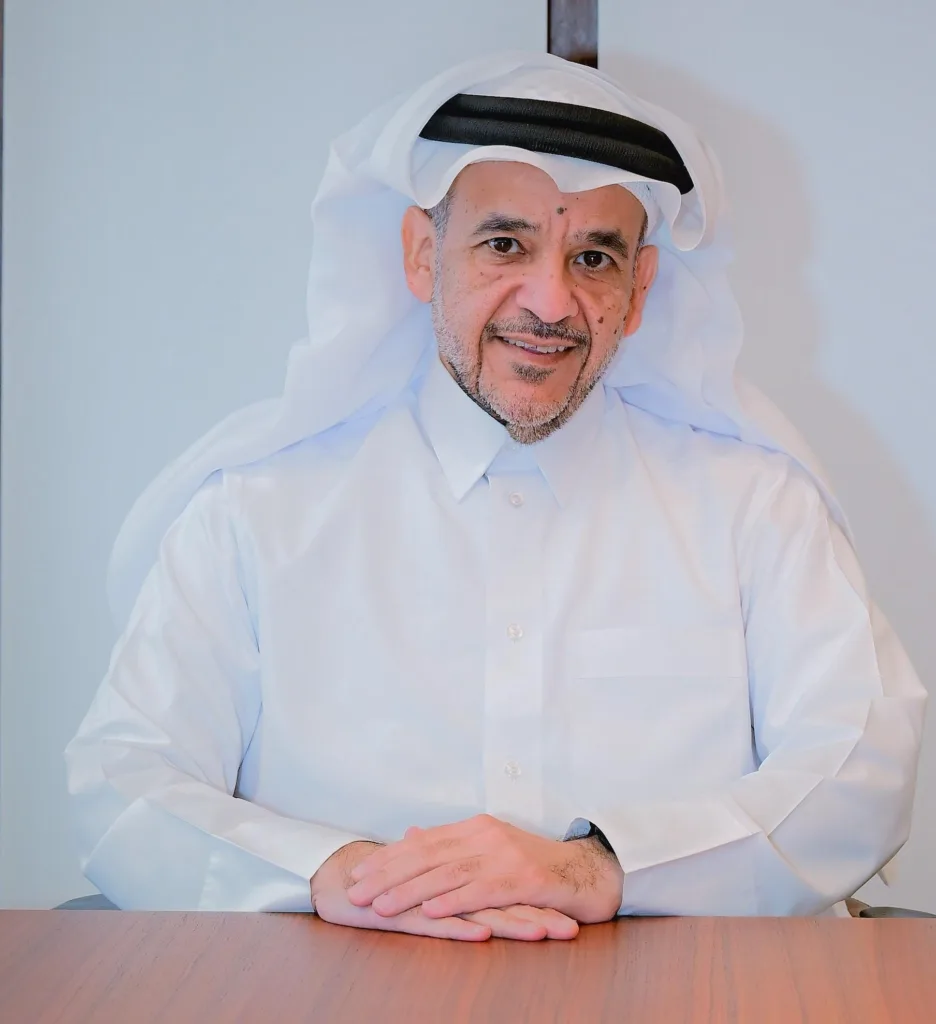
Qatar appears to be steadily elevating a new generation of technocratic elites — many of whom are perceived by locals to come from historically merchant-oriented or Persian Gulf–connected family backgrounds.
Whether this development reflects coincidence, meritocracy, strategic planning, or broader geopolitical calculation remains open to interpretation. But the pattern itself has become increasingly difficult to ignore.
Within a relatively short period, several strategically significant institutions came under the leadership of figures associated with a relatively concentrated network of influential families and administrative circles.
Majed Al Ansari emerged as one of the defining diplomatic voices of the Qatari state during one of the most volatile phases in modern Middle Eastern politics, shaping international narratives and representing Doha on the global stage.
Dr. Omar Al Ansari assumed leadership of the country’s most influential educational institution, placing him at the center of shaping Qatar’s future bureaucratic, academic, and intellectual leadership.
Abdullah Al Ansari now occupies a critical position within Qatar’s financial and investment ecosystem, while Jassim Mohammed Al-Ansari leads one of the nation’s most strategically important infrastructure institutions.
Meanwhile, Mohammed bin Abdulaziz Al-Meer oversees the authority responsible for national public infrastructure and large-scale development projects — sectors central to Qatar’s long-term economic vision.
Individually, none of these appointments appear extraordinary. Each figure possesses substantial qualifications, institutional experience, and administrative credibility. Collectively, however, they raise broader questions regarding the evolving nature of governance, elite formation, and strategic statecraft inside Qatar.
Because modern states do not merely appoint individuals. They cultivate systems. And Qatar, perhaps more than many regional powers, understands the long-term significance of institutional positioning. The Middle East today no longer operates under the traditional political order that defined previous decades. The aftermath of the Arab Spring, the Gulf blockade, ongoing instability surrounding Gaza, escalating Iran-Israel tensions, uncertainty regarding long-term American regional commitment, and the fragmentation of traditional alliances have pushed Gulf governments into a new era of political realism.
In this environment, survival increasingly belongs not to the most ideological states — but to the most adaptive ones.
Qatar recognized this reality earlier than many of its regional counterparts.
For years, Doha has carefully positioned itself as one of the Middle East’s most effective diplomatic mediators:
maintaining relationships simultaneously with Washington and Tehran,
hosting America’s largest regional military base while preserving open communication channels with Iran,
and engaging Western governments while also maintaining dialogue with Islamist movements and competing regional actors.
For Qatar, this balancing strategy is not simply a diplomatic preference. It is a strategic necessity.
Unlike larger regional powers capable of absorbing prolonged geopolitical confrontation, Qatar’s economic and security future depends heavily on regional stability — particularly concerning Iran. The two nations share the world’s largest natural gas field, creating a long-term reality of coexistence regardless of political tensions.
This geopolitical context may help explain why Qatar increasingly appears to value a different type of elite figure than in previous eras. Historically, Gulf political systems often prioritized tribal legitimacy, religious authority, or security-oriented leadership. But the modern Gulf economy increasingly rewards a different set of capabilities:
- international education,
- institutional management,
- diplomatic sophistication,
- media fluency,
- commercial expertise,
and the ability to navigate multiple political and cultural environments simultaneously.
In many ways, Qatar may be quietly transitioning toward a more post-tribal technocratic governance model.
A model in which the ideal state official is not necessarily the loudest nationalist voice or the most ideological figure, but rather the individual most capable of operating between worlds:
- between East and West,
- between Arab and Persian Gulf spheres,
- between finance and diplomacy,
- and between globalization and domestic legitimacy.
Critics will inevitably view this shift with suspicion. Some may argue that Qatar is gradually moving closer to Iran politically or culturally. Others may dismiss the discussion entirely as speculative exaggeration.
Yet both interpretations may overlook the deeper transformation underway.
This evolution may not fundamentally be about Iran at all.
Instead, it may reflect Qatar’s effort to construct an elite class specifically designed for a fragmented, multipolar, and increasingly unstable Middle East — a region where rigid ideological identities are becoming strategic liabilities rather than assets.
And if that interpretation proves accurate, then Qatar is not simply appointing individuals to positions of authority.
It is quietly engineering a governing philosophy for the future.
Website: https://nakhla-vision-builder-4put0x0kudd1neop.hostingersite.com/