
Industrial Manufacturers Increase Use of Stainless Steel Name Plates for Harsh Environment Equipment
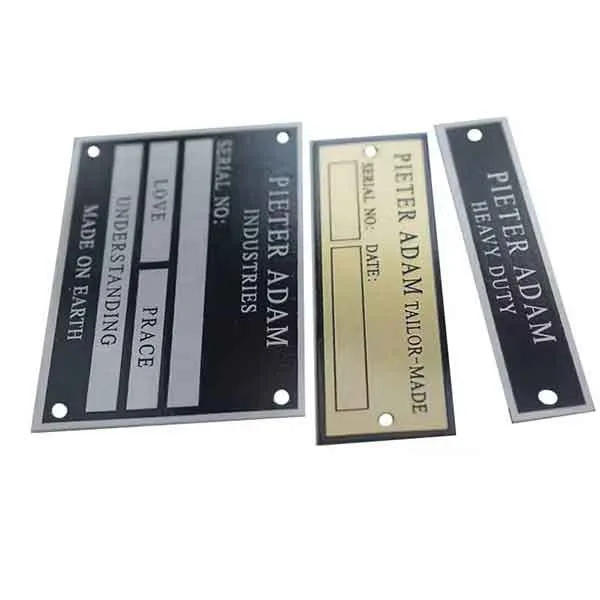
Stainless steel name plates serve as the permanent identification solution for industrial equipment. Compared with paper labels, aluminum tags, or adhesive stickers that may fade, peel, or deteriorate over time, stainless steel name plates are designed to withstand harsh industrial environments for 10–15 years while maintaining clear and permanent markings.
Because of their durability and long-term reliability, stainless steel name plates are widely used in industrial machinery, outdoor equipment, chemical systems, medical devices, and transportation infrastructure. Many industrial manufacturers also cooperate with professional fabrication suppliers such as iTrustfab to customize stainless steel identification solutions for demanding industrial applications.
304 vs 316L Stainless Steel: Core Material Differences
The two most commonly used materials for industrial metal name plates are 304 stainless steel and 316L stainless steel.
304 Stainless Steel
304 contains 18% chromium and 8% nickel, offering strong corrosion resistance and balanced mechanical performance. It is suitable for approximately 90% of general industrial applications.
Key specifications:
- Surface hardness: HV200–250
- Tensile strength: 520 MPa
- Operating temperature: -40°C to 150°C
- Typical service life: 10+ years
304 stainless steel is commonly used for:
- industrial machinery
- electrical systems
- indoor equipment
- standard outdoor applications
316L Stainless Steel
316L contains an additional 2–3% molybdenum (Mo), improving corrosion resistance by approximately 40% compared with 304 stainless steel. Its low-carbon structure also improves resistance to chemical and salt corrosion.
Key specifications:
- Salt spray resistance: 2500–3000 hours
- Operating temperature: -40°C to 180°C
- Typical service life: 15+ years
316L is widely used in:
- marine equipment
- chemical plants
- medical devices
- coastal environments
- high-humidity industrial areas
For standard industrial environments, 304 stainless steel remains the most cost-effective solution, while 316L is strongly recommended for highly corrosive applications.
| Material | Neutral Salt Spray (NSS) | UV Aging (1000h) | Temperature Range | Typical Service Life | Typical Applications |
| 304 Stainless Steel | 1500–2000h without corrosion | ΔE < 2 (almost no discoloration) | -40°C to 150°C | 10+ years | General machinery, electrical equipment, indoor equipment, standard outdoor applications |
| 316L Stainless Steel | 2500–3000h without corrosion | ΔE < 1.5 (slight discoloration) | -40°C to 180°C | 15+ years | Coastal wind power, chemical equipment, marine applications, medical equipment, high-humidity and dusty environments |
Etching vs Laser Engraving: Which Process Performs Better?
The durability of a stainless steel name plate depends not only on the material itself, but also on the manufacturing process.
Etched Stainless Steel Name Plates
Chemical etching creates permanent grooves in the metal surface and fills them with weather-resistant ink. Since the information is physically embedded into the metal, etched markings provide excellent long-term durability.
Advantages:
- Permanent markings
- Strong abrasion resistance
- Suitable for outdoor environments
- Excellent salt spray performance
Real Industrial Case
A power utility company installed etched 304 stainless steel name plates in underground cable tunnels exposed to humidity and dust. After 8 years of operation, the markings remained fully readable without corrosion, while aluminum silk-screen labels in the same environment faded within months.
Laser Engraved Name Plates
Laser engraving creates highly precise surface markings without ink, making it ideal for precision equipment and compliance applications.
Advantages:
- High precision
- QR code compatibility
- Excellent scratch resistance
- Suitable for medical and high-end equipment
Real Industrial Case
A nuclear facility adopted 316L laser-engraved name plates for radiation-resistant equipment. After 5 years in high-temperature and high-humidity conditions, the markings remained completely intact.
Typical Industrial Applications
Outdoor Heavy Equipment
Wind power systems, bridges, and outdoor electrical equipment require long-term UV and salt spray resistance. Most manufacturers use 316L etched stainless steel name plates for 15+ years of maintenance-free durability.
Chemical and Medical Equipment
Chemical reactors and medical systems require resistance to disinfectants, acids, alkalis, and high-temperature sterilization. In these environments, 316L stainless steel remains the preferred solution.
Rail Transit Systems
Railway cabinets and subway systems operate under vibration, humidity, and salt exposure. Stainless steel name plates combined with industrial-grade adhesives provide long-term reliability in these conditions.
Industrial Machinery
Machine tools and pump systems often face oil exposure, friction, and frequent cleaning. Etched 304 stainless steel name plates remain one of the most cost-effective options for these applications.
Core Testing Standards for Industrial Stainless Steel Name Plates
Professional industrial name plates should meet strict durability standards, including:
- Salt spray testing:
- 304 ≥1500 hours
- 316L ≥2500 hours
- UV aging:
- 1000 hours
- ΔE < 2
- Temperature cycling:
- -40°C to 150°C
- Adhesion strength:
- ≥15N/cm
- Abrasion resistance:
- 500 steel wool friction cycles without fading
Material Selection Recommendations
For most industrial equipment, 304 stainless steel offers the best balance between durability and cost. For marine, chemical, medical, and high-humidity environments requiring maximum corrosion resistance and long-term stability, 316L stainless steel is generally considered the more suitable solution.
When selecting materials, factors such as appearance, corrosion resistance, operating environment, service life, equipment reliability, and long-term operational stability should all be considered together.