
How to Avoid the Drone Mistakes That Lead to Crashes
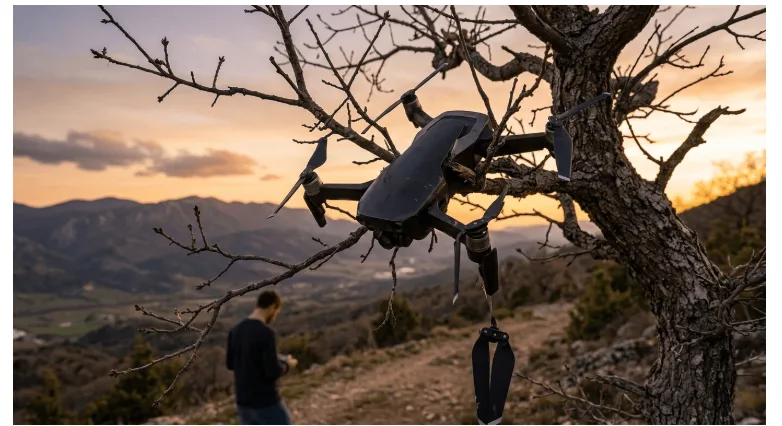
Flying a drone is one of the most rewarding hobbies you can pick up. Whether you are chasing golden-hour shots over a mountain range, filming a wedding from above, or just enjoying the sheer thrill of controlled flight, there is nothing quite like it. But the learning curve is real, and drone mistakes are far more common than most pilots want to admit.
A single lapse in judgment or preparation can send a brand-new aircraft spinning into the ground before you even know what happened. The good news is that most crashes are entirely preventable. This guide breaks down the most critical mistakes that lead to crashes and, more importantly, exactly how you can avoid every one of them.
1. Skipping the Pre-Flight Checklist
This is the most widespread of all drone mistakes, and it tends to happen because pilots get excited and want to get in the air as fast as possible. Rushing past your pre-flight checks is essentially flying blind. Small issues like loose propellers, a weak GPS lock, or a partially charged battery can all seem minor on the ground but become catastrophic once you are 100 feet in the air.
Before every single flight, run through the following:
- Inspect all propellers for chips, cracks, or any sign of bending
- Confirm the battery is fully charged on both the drone and the controller
- Check that the GPS has acquired a solid satellite lock (most drones need at least 8 to 12 satellites for stable positioning)
- Verify the firmware is up to date on both the aircraft and the flight app
- Make sure all cables and ports are firmly connected
Running this checklist takes under five minutes. It will save you hours of frustration and potentially hundreds of dollars in repair bills.
2. Ignoring Weather Conditions
Many pilots look up, see clear blue skies, and assume it is a perfect day to fly. That is a mistake. Weather for drones goes far beyond whether it looks sunny outside. Wind speed, humidity, temperature, and visibility all directly affect how your aircraft performs and how much control you retain.
Consumer drones typically have a wind tolerance of around 15 to 25 mph, depending on the model. Even a light breeze at ground level can intensify dramatically just 50 feet up. When your drone is fighting wind, it burns through battery much faster, struggles to hold its position, and can drift off course before you can react. Rain and fog introduce moisture that can short out circuits and disable sensors entirely.
Before flying, always check a dedicated weather app and confirm wind speeds are within your drone’s rated limits. If trees are swaying noticeably or you feel strong gusts at ground level, that is a strong signal to postpone the flight. Extreme heat and cold also affect lithium battery performance, often leading to shorter flight times or sudden power cuts mid-air.
3. Neglecting Sensor Calibration
A poorly calibrated compass is one of the most underestimated causes of drone crashes. Your drone uses its compass and IMU (Inertial Measurement Unit) to understand where it is, which direction it is facing, and how to hold a stable hover. When those sensors are off, the drone can behave erratically, veer off in unexpected directions, or trigger a flyaway.
You should recalibrate your compass any time you fly in a new location, especially if you have traveled more than 30 to 50 miles from your last flight. Areas with high electromagnetic interference, such as near power lines, large metal structures, or reinforced concrete buildings, can throw off your compass readings even in a familiar location. Always perform calibration in an open outdoor area, away from vehicles, metal objects, and anything with strong magnetic fields. Never calibrate indoors.
Getting these settings dialed in correctly before takeoff is one of the highest-value habits a pilot can develop. If you are looking for guidance on optimizing your specific drone’s sensor settings and flight configurations, the Drone Settings section Guide is an excellent resource covering everything from calibration routines to camera adjustments.
4. Mismanaging Battery Life
Battery mismanagement is responsible for a significant number of drone crashes, particularly among newer pilots. The temptation to squeeze every last second out of a flight is understandable, but draining your battery too low removes any margin for a safe return. When a drone reaches a critically low battery level, it will initiate an automatic landing regardless of where it is positioned, whether that is over water, a crowd, or a patch of trees.
The general rule of thumb is to begin your return-to-home sequence when the battery hits 25 to 30%, and to land before it drops below 20%. This buffer accounts for unexpected wind resistance, longer return distances, and any last-minute maneuvering needed during landing.
It is also worth paying attention to battery health over time. Lithium-ion batteries lose capacity with each charge cycle. An older battery that shows 80% on the indicator may not actually deliver 80% of the performance it once did. Inspect your batteries regularly for swelling, replace aging units before they fail mid-flight, and always store batteries at around 50 to 60% charge when not in use for extended periods.
5. Poor Situational Awareness and Overconfidence
One of the subtler drone mistakes that catches even intermediate pilots off guard is losing situational awareness during flight. This often happens when a pilot becomes absorbed in the camera feed or a specific shot, stops tracking the drone’s physical position in the sky, and suddenly has no idea how close it is to a tree line, a building, or another aircraft.
Experienced instructors recommend what is sometimes called the 70/30 rule: keep roughly 70% of your attention on the drone and its actual surroundings in the air, and only 30% on the screen. The camera feed does not show you everything. Thin power lines, branches, and obstacles outside the camera’s field of view will not appear on your monitor, but they will absolutely stop your drone cold.
Overconfidence is equally dangerous. Many pilots move to more complex environments, longer distances, or faster flight modes before they have truly mastered the basics in open, controlled spaces. Practice hovering, orientation changes, and controlled landings repeatedly in wide-open areas before pushing the boundaries of your skill set.
6. Misunderstanding Return-to-Home (RTH)
Misunderstanding the Return-to-Home function is one of the most common drone mistakes that directly leads to crashes. When a pilot loses control or line of sight, the instinct is to hit the RTH button immediately. The problem is that most consumer drones execute RTH in a straight line back to the home point, with no obstacle avoidance along that path. If there are trees, buildings, or power lines between the drone’s current position and where it took off, the drone will fly directly into them.
Before relying on RTH, make sure you understand exactly how it works on your specific model. Set your RTH altitude high enough to clear all obstacles in the area before the mission starts. Never press RTH blindly in a panic if you are unsure of the flight path. Instead, stay calm, take a breath, and manually guide the aircraft back into your line of sight before deciding on your next move.
7. Flying Indoors or in GPS-Denied Environments Without Preparation
Many beginner pilots make the mistake of taking off indoors, in tight urban corridors, or in environments where GPS signal is weak or completely absent. Without a reliable GPS lock, the drone switches to attitude mode or relies solely on its optical flow sensors for positioning. In low-light conditions or over reflective surfaces, those sensors can also fail, causing the drone to drift unpredictably.
If you plan to fly in a GPS-limited environment, practice attitudinal flying beforehand in a safe, open space. Understand how your specific drone behaves without GPS assistance. Avoid indoor flight entirely until you have solid foundational skills, and always ensure there is sufficient ambient light for the downward-facing sensors to do their job.
8. Damaged Propellers and Mechanical Neglect
Propellers take a beating. Even small chips, cracks, or bends disrupt the balance and aerodynamics of your drone significantly. A damaged propeller forces the motors to overcompensate, which accelerates battery drain, causes vibration, and in serious cases, leads to a motor burnout mid-flight. The resulting instability can make the aircraft impossible to control.
Get into the habit of inspecting every propeller before each flight. Run your fingers along the blades, check the motor mounts, and listen for any unusual sounds when the motors spin up. Replace any propeller that shows visible damage, no matter how minor it appears. This is one of the cheapest and most effective safeguards against crashes you can adopt, and investing in quality spare propellers and protective accessories is a smart move for any serious pilot.
9. Not Knowing Your Local Regulations
This is a drone mistake that does not always lead to a crash, but it can end your flying career in an instant. Flying in restricted airspace, above regulated altitude limits, or without proper registration can result in serious legal consequences. Beyond the legal risk, many restricted zones exist because they sit in active flight paths. Flying near airports, military zones, or dense urban areas without clearance puts manned aircraft and people on the ground in real danger.
In the United States, the FAA requires most drones over 0.55 lbs to be registered and mandates that recreational pilots follow community-based safety guidelines. Operations like flying beyond visual line of sight, over people, or above 400 feet above ground level require a Part 107 waiver. Other countries have their own regulatory bodies and rules.
Always check official airspace apps before choosing a flight location, understand the rules that apply to your specific class of drone operations, and file any necessary waivers well in advance.
Final Thoughts
Most drone crashes come down to one thing: lack of preparation. Whether it is skipping the preflight check, misjudging the weather, draining the battery past the safe threshold, or misunderstanding how RTH behaves in your environment, every one of these drone mistakes is preventable with the right knowledge and habits.
For expert reviews, in-depth settings guides, and the latest news to help you fly smarter and safer, explore everything Drone Vortex has to offer. Your next flight will be better for it.