
How QR Codes Are Changing in 2026 And What Marketers Should Know
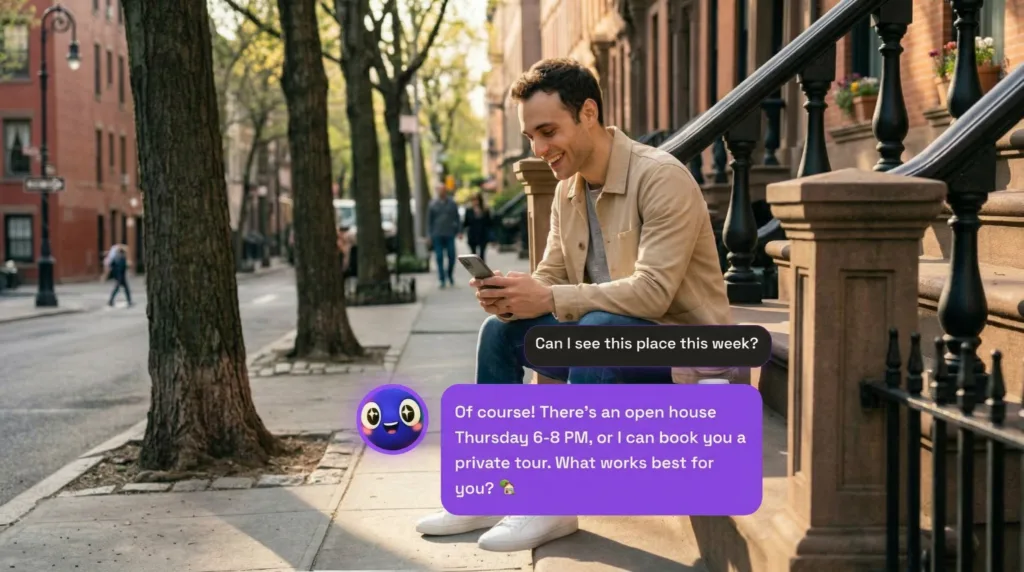
Three decades after their invention, QR codes are transforming into something new. Here’s what’s driving the shift and what it means for the brands that use them.
For most of the public, the QR code remains exactly what it was a decade ago: a square you point a camera at, that opens a page. Useful, unremarkable, ubiquitous. Beneath that flat description, however, the technology is in the middle of a transformation that few outside the industry have noticed.
The numbers offer the surface of the story. The global QR code market was worth roughly $13 billion in 2025 and is projected to nearly triple by 2030. Scans across 50 countries grew 57% year-over-year in 2025, with Europe and Latin America leading at over 40% annual growth. Globally, more than two billion QR codes are now scanned every day. But the real change is not in the volume. It is in what the code itself has started to do.
Five shifts are reshaping the technology in 2026, and together they suggest that the next phase of QR is closer to an interface than a link.
From link to interface
For thirty years, the QR code has functioned as a one-way handoff. The visitor scanned, the page opened, the interaction ended. The arrival of conversational AI is changing that role. A growing number of platforms now embed AI agents directly into the destination behind a QR code, allowing visitors to ask questions in natural language and receive answers in real time, in their own language, drawn from the brand’s published content.
QRCodeKIT, the original dynamic QR platform that introduced the format in 2009, was the first to bring this capability to market with Cleo, an AI agent that lives inside the QR destination and answers visitor questions without taking them out of the experience. The category is now expanding, with other players developing similar features. The implication is significant: a QR code is no longer a destination, but the start of a conversation.
“The QR code is no longer where the interaction ends,” notes Paula Rivero, COO of QRCodeKIT. “It’s where it begins.”
From single destination to dynamic context
The second shift concerns what happens at the moment of the scan. Modern dynamic QR platforms can now route the same code to different destinations based on context: the visitor’s device, language, location, or even the time of day. A single code on a product package can lead an English-speaking visitor in London to one experience, and a Spanish-speaking visitor in Mexico City to another, with no change to the printed code itself. This conditional logic, once a custom-built feature reserved for enterprise deployments, is becoming standard across the better dynamic platforms.
From marketing tool to compliance instrument
The third shift is the most consequential for buyers in regulated industries. The QR code is moving from optional marketing accessory to legally required infrastructure. GS1, the global standards body behind product barcodes, has set January 2027 as the target date for retailers worldwide to begin accepting QR codes at checkout. The European Union’s Digital Product Passport regulation will require scannable codes on a growing list of product categories starting in 2027, carrying information on materials, repairability, end-of-life handling, and supply chain provenance.
For brands in food, fashion, electronics, and pharmaceuticals, this means the QR code is no longer a creative decision but a regulatory deliverable.
From dashboard to AI agent
The fourth shift moves the action from the consumer side to the operator side. Until recently, creating and managing QR codes required a dedicated dashboard where to log in, configure, generate, and deploy. The emergence of the Model Context Protocol, an open standard that allows AI agents like Claude, ChatGPT, and Cursor to interact directly with external platforms, is collapsing that workflow into natural language. A marketer can now ask their AI assistant to create a new QR code for a campaign, update a destination, or automate code generation in response to events through tools like Zapier and n8n without opening a separate interface.
QRCodeKIT became the first QR code generator to go live natively inside AI agents through an MCP connection, allowing marketers to create and manage QR codes by talking to Claude, ChatGPT, or Perplexity directly. The dashboard, for the first time, is becoming optional.
From scan as event to scan as conversation
The fifth shift is about measurement. For fifteen years, the dominant metric in QR has been the scan itself, a binary signal that someone pointed a camera at a square. The combination of conversational AI and richer behavioral data means brands are beginning to measure something different: not how many scans, but what kind of conversation those scans started. How long did the visitor engage. What did they ask. What did the brand fail to answer. These signals describe the customer in a way that scan counts never did.
What this means for brands
The cumulative effect of these shifts is a change in category. For most of its history, the QR code has been treated as a commodity. The platforms that produced them competed on price and customization. That era is closing.
In 2026, the QR code is becoming an asset class of its own: a connective layer between physical objects and digital intelligence, between consumer attention and brand response, between marketing intent and regulatory compliance. Brands that still treat QRs as a free utility will increasingly find themselves on the wrong side of three trends at once: AI experiences they cannot deliver, regulations they cannot meet, and customer expectations they cannot match.
The square has not changed. What sits behind it has changed completely.
About QRCodeKIT
QRCodeKIT is the original dynamic QR code creator, invented in 2009. The platform helps over 1.2 million businesses worldwide create, manage, and track smart QR experiences across hospitality, retail, events, packaging, and culture. Learn more at qrcodekit.com.