
How Filing Taxes Will Work in 2026: A Detailed Guide
Most individuals dislike filing their taxes because it is time-consuming. It, however, does not have to be that way. Filing taxes can be very straightforward. Knowing how to file your taxes can help reduce the chances of being fined, prevent you from losing money, and, in some cases, increase the tax refund you receive. In this guide, all the information regarding the 2025 tax filing, including who is supposed to file your taxes and what to do after filing, is provided to you.
Who Is Supposed to File Your Taxes and Who Is Not
When it comes to filing federal taxes, not everyone has to. A person’s gross income, age, and filing status determine when they are going to file.
For the 2025 tax year, if a person’s gross income is at least equal to the standard deduction, that person must file. The following reflects this situation:
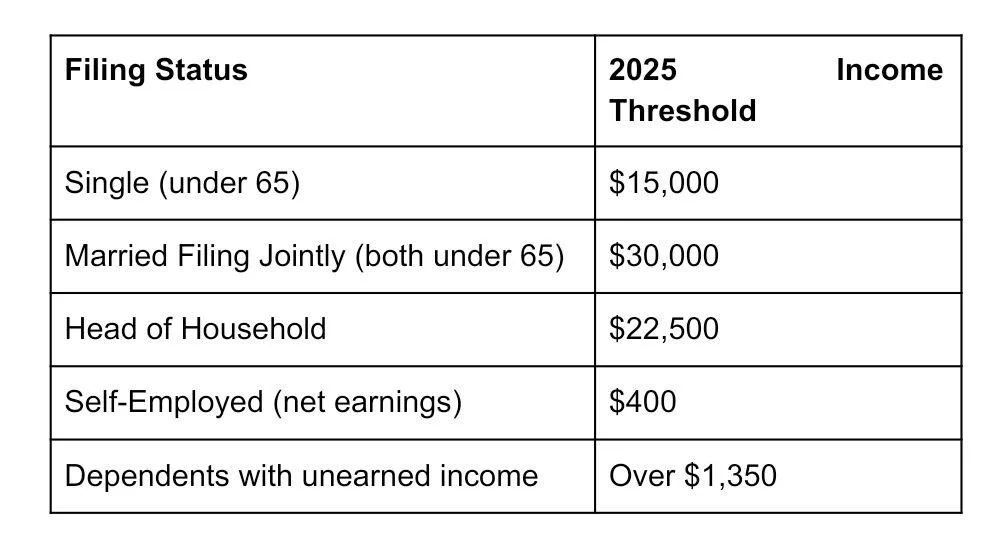
While it is possible to be below a given threshold, some filers may still be eligible to receive a refund. A refund is very likely if taxes have been withheld from the individual’s paycheck. To receive money through tax credits such as the Earned Income Tax Credit or the Child Tax Credit, a person must also file a return.
Important Tax Deadlines for Filing Taxes for the Year 2025
Filing your taxes late could mean paying extra fees, which everyone wants to avoid. Here is a list of the most important dates to remember for the 2025 tax year:
- January 27, 2026: The IRS will start accepting tax returns for the year 2025
- April 15, 2026: Last day to submit your federal tax return or apply for an extension
- April 15, 2026: Last day to make an IRA or HSA contribution for the tax year 2025
- October 15, 2026: Final extended deadline for those who filed Form 4868
Each state has different tax return due dates, which can be confirmed by visiting the state’s tax agency. If the due date falls on a Saturday or Sunday, the IRS will push the deadline to the following Monday.
Changes to Take Note of for the 2025 Tax Return
There are several important updates to be aware of before you file your taxes for 2025:
Standard Deduction Increase: All filing statuses received an increase in their standard deduction. Single filers will now receive $15,000, while married couples filing jointly will receive $30,000.
Super Senior Deduction: If you are 65 years or older, you can claim an additional $6,000 deduction, located on Schedule 1-A. Note that this deduction is subject to an income phase-out between $150,000 and $250,000 for joint filers.
New 1099-K Reporting Rules: If you received payments in 2025 through PayPal, Venmo, or Cash App, you will receive a 1099-K for transactions exceeding $2,500 for that year.
Changes to SALT Deduction: The cap on the state and local tax deduction has been lifted, benefiting higher-income filers residing in states with greater tax burdens.
No Tax on Tipped Income and Overtime: New provisions are now in place for employees who earn tips and those who are paid overtime.
Documents and Forms You Need to Gather Before Filing
You can avoid delays if you get your documents ready before you start. Here are the documents most filers will need:
Income documents:
- W-2 from your employer
- 1099-NEC for freelance or contract work
- 1099-INT for bank interest
- 1099-DIV for dividends
- 1099-K for income from payment platforms
- 1099-G for unemployment benefits
- SSA-1099 for Social Security income
Documents for deductions and credits:
- Form 1098 for mortgage interest
- Statements for student loan interest
- Childcare expense records
- Form 1095-A for Marketplace health insurance
Personal documents:
- Social Security numbers for yourself, your spouse, and your dependents
- Prior year adjusted gross income if you plan to file electronically
- Bank account information for direct deposit
How to Determine Your Filing Status
Your filing status determines your standard deduction and tax bracket. There are five options:
- Single
- Married Filing Jointly
- Married Filing Separately
- Head of Household
- Qualifying Surviving Spouse
Most of the time, married couples benefit from filing jointly. However, filing separately can be advantageous in scenarios involving income-based repayment plans or high medical expenses. Head of Household status is better than filing as single, especially if you financially support a child or dependent.
Your Options When You File Your Taxes: Free, Software, or Professional Help
Your options for filing taxes vary depending on your personal circumstances:
- IRS Free File: If your adjusted gross income is $89,000 or below, you qualify for free filing through one of the IRS partner tax companies. This works best for simple returns.
- Tax Preparation Software: If your case is more complicated, with freelance income or investment earnings, software like TurboTax, H&R Block, or TaxAct would be your best option.
- IRS Volunteers (VITA/TCE): This option is for people aged 60 and older, people with a disability, or people who earn $69,000 or less.
- Tax Professional: This is the right choice for complex cases involving business income, rental properties, international taxes, or filings across multiple states.
How to Claim Deductions and Credits That Lower What You Owe
When you qualify for tax deductions or credits, it is recommended that you claim them. Tax deductions lower your taxable income, while tax credits directly lower your tax bill.
Common deductions include:
- Standard deduction
- Mortgage interest on loans under $750,000
- Student loan interest
- State and local taxes, subject to the updated SALT cap
- Business expenses for self-employed filers
Valuable credits include:
- Child Tax Credit: up to $2,200 for each qualifying child under 17
- Earned Income Tax Credit: between $649 and $8,046, depending on income and dependents
- Education credits: American Opportunity and Lifetime Learning
- Child and Dependent Care Credit
Most tax credits have income limits, so check your eligibility before claiming.
How Non-Residents and Expats Should File Their U.S. Taxes
Regardless of where they live or work, U.S. citizens and green card holders residing abroad must still file federal tax returns. Non-residents with income sourced to the U.S. also have filing obligations.
Important highlights for this group:
- Non-residents submit Form 1040-NR, not the regular 1040
- U.S. citizens living abroad may qualify for the Foreign Earned Income Exclusion, which is up to $126,500 for 2025
- Non-residents without Social Security numbers must obtain an ITIN before they can file their taxes
- U.S. citizens abroad have their filing deadline automatically extended to June 16, 2026
Cross-border tax situations involve a lot of complexity that is easy to get wrong. EasyFiling helps non-residents obtain their ITIN and navigate U.S. tax filing requirements from start to finish, making the process significantly less stressful for those unfamiliar with the U.S. tax system.
What to Do If You Cannot File by the Deadline: Requesting a Tax Extension
If you do not expect to file your return by April 15, you can file Form 4868 to request a six-month extension, which pushes the deadline to October 15, 2026.
It is important to understand that a filing extension does not give you more time to pay. You still must pay your estimated tax balance by April 15 to avoid interest and late-payment penalties.
How to Track Your Refund After You File Your Taxes
Once you have submitted your return, you can track it using the IRS Where’s My Refund tool at IRS.gov. All you need is your Social Security number, your filing status, and your expected refund amount.
E-filed returns with direct deposit are typically processed within 21 days. Paper returns can take six to eight weeks. As of 2025, the IRS has begun phasing out paper refund checks entirely, moving to direct deposit and electronic transfer only.
What Happens If You File Late or Miss the Deadline
If you do not file your taxes by the deadline and have not requested an extension, you will be subject to a failure-to-file penalty of 5% of unpaid taxes per month, up to a maximum of 25%. A separate failure-to-pay penalty of 0.5% per month also applies to any outstanding balance.
If you expect to owe a balance, the IRS recommends filing your return regardless. Installment agreements and hardship programs are available, but only if your return has already been filed.
Steps to Take After You File to Stay Ready for Next Year
Once you file your taxes, take a few minutes to prepare for next year. Save copies of your return and all supporting documents for at least three years. Review your W-4 withholding to ensure the correct amount is being withheld from your paycheck throughout the year. If your life changed in 2025 through marriage, a new child, a home purchase, or starting a business, those changes will affect your next return and are worth planning for early.
For those who find U.S. tax obligations confusing, particularly non-residents, expats, and new business owners, EasyFiling offers guidance on compliance, ITIN applications, EIN registration, and more, so you are never navigating the process alone.