
HBADA E3 Pro vs HBADA X7: Best Choice for Work-from-Home Setups
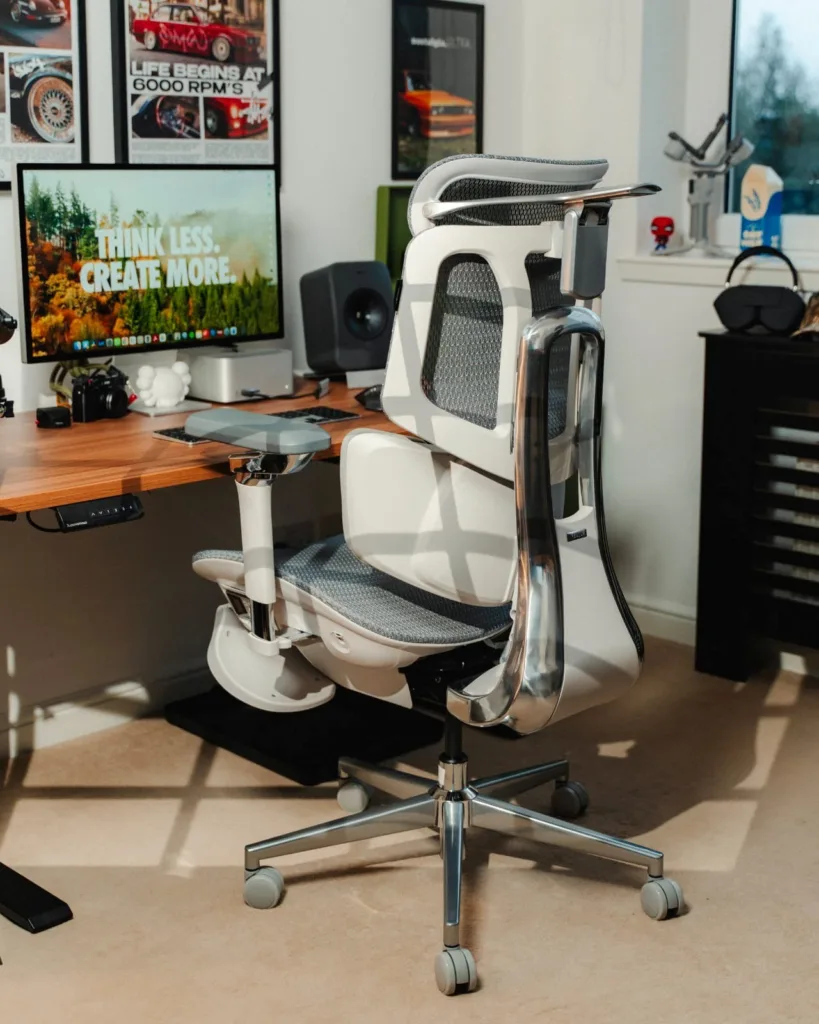
When it comes to an ergonomic chair in a work-from-home setup, you don’t want just any chair that goes with your desk. Its about the long meetings, deep-focus work sessions, editing marathons, coding sprints, gaming breaks — those “I’ll time just answer one recent email” nights without feeling sore or have a stiff neck when you wake up next morning.
This is where the HBADA E3 Pro 2026 version and HBADA X7 Smart Ergonomic Chair make the entry. These two chairs are for people who spend serious time in one position, but they solve comfort differently. Mechanical precision, adaptive lumbar support and solid value are the E3 Pro’s areas of focus. The X7, on the other hand, goes full-throttle into smart technology (with AI lumbar tracking), massage, heat and all of that luxurious stuff. The official descriptor for the E3 Pro 2026 with 3-zone adaptive lumbar support + X7 is an AI lumbar-tracking ergonomic chair from HBADA.
Quick Verdict: Which HBADA Chair Should You Choose?
The HBADA E3 Pro 2026 Edition was the best all-rounder for most remote workers, developers and designers, and home office users. In short, it serves up professional-level ergonomics at an approachable price—especially if support for good posture, adjustability, ventilation, and lasting value are on the top of your wish list.
For the most contrast-rich HBADA chair — however, you’d probably want to go for the HBADA X7. This is a great choice for users with AI lumbar tracking, built-in massage, heating memory smart posture experience in a luxury-style. Almost like it is the chair for the people who want their office chair to talk back to them all day.
Design and First Impressions
Both chairs have a modern aesthetic, but they’re appealing to two different types of buyers.
In a way, this was the side of the HBADA E3 Pro 2026 Edition that was serious business ergonomic office chair. More than smart features, this is clean and practical for folks who care more about how a chair ultimately supports the body. Perfectly suited for a home office, productivity desk setup, or hybrid work environment. HBADA emphasizes that the chair is about “Pure Mechanical Precision,” and “Zero-Lag Tracking;” basically, positioning that tells you exactly what the chair wants to be: a responsive, stable, dependable. machine without all of the electronics needed in most modern chairs.
Instead, the HBADA X7 Smart Ergonomic Chair feels futuristic. It’s the chair that you recognize right away because it integrates AI lumbar tracking and 8D bionic massage as well as a cloud ventilated seat cushion and smart support functions. There should be no mistaking the X7’s target audience: the sort of people who can almost afford a high-tech chair for their premium home office, creative studio or executive-grade setup. HBADA calls it a weight sensing chair which automatically adjusts to the lumbar curve on its own.
Lumbar Support: Mechanical Precision vs. Smart Tracking
The most prominent contrast between the HBADA E3 Pro and also the HBADA X7 is lower back support.
The HBADA E3 Pro 2026 Edition features a three-area elastic lumbar support system fitted for the L1-L5 lumbar region. It’s a straightforward concept but an important one: instead of one rigid pad wedged into your back, the support zones move as per your posture. The product page for HBADA features 3 zones of adaptive lumbar support, dynamic tracking, independent lift, gliding lumbar adjustment, and so on.
This matters in real life because you are not sitting upright 24/7. Perhaps you lean forward at a spreadsheet, sideways in a call and back a bit while reading. The E3 Pro is made to track those subtle movement in posture while still providing support to the lower back.
A bit of a different approach is with AI smart lumbar tracking on the HBADA X7. The X7 utilizes pressure sensors, a smart chip and precision motors to follow the posture of its user and adapt in real time, HBADA said. It also has ten intensity levels, making it easier to provide support depending on a person’s body type and frequent sitting habits.
So, which is better? Choose the E3 Pro for a basic, proven no-frills, non-electric support system. The X7 is a more advanced option for those who want the chair to do more of the adjusting itself.
Headrest and Neck Support
Neck pain and back pain is a work-from-home complaintWe all know that staring at your monitor for eight hours or more can be a major workplace wellness issue, whether that you are in the office.
HBADA E3 Pro has a 4D Dual-Axis Headrest Adjustable with two 70° rotation axes, vertical adjustment and forward-backward. According to that site, HBADA has created it for use in coding positions so you will know how far back to lean on a number of different level settings.
Also, the HBADA X7 comes with a 4D Dual-Axis Headrest that can be rotated 70°, adjusted in height as well as front-back. That means both chairs are excellent options for cervical support in the c3-c7 region.
This comes in handy when everyday typing, on video calls, gaming, reading and leaning back for a few seconds to take a break. In a basic office chair you will most likely get back support and for the neck well, that gets lost in the noise. Clearly two more HBADA chairs meant for full-spine comfort.
Armrests: Flexible Support for Modern Desk Setups
These are one of the most intriguing traits on either chair–the 720° Omni-Mechanical Arm. His armrests that adjust up-down or if lucky side-to-side are one of those legacy features. The HSPD650 uses HBADA’s 720° armrest system which adds dual-axis rotation for elbows in more positions during sitting.
This is more useful than it sounds (for remote workers). Your arms need one angle while you are typing. When gaming, they need another. That requires something entirely different when reclining with a tablet or controller. According to the E3 Pro page, not only does the system enjoy dual 360° of rotation but it adds typing support for both work and gaming as well as passive reclining.
The X7 includes full-range 720° arm support with rotation, flip, front-back and height adjustment.
As such, both models are particularly appealing to those with a multi-device desk setup, including software developers, content creators, video editors and designers.
Comfort, Mesh Quality, and Long Sitting Hours
An ideal low-quality/chair should not trap after two hours. This is the reason why mesh quality is important.
CloudMesh Technology: CloudMesh is a High-Polymer fabric with zoned weaving, which HBADA indicates will provide breathability and durability along with pressure distribution of the hips & back.
According to the product information provided, CloudMesh has 83% more elasticity, as well as 21.5% better pressure distribution and a 56% lower attenuation. Translated into normalperson-speak, that means the mattress should feel bouncier and distribute body pressure more evenly while maintaining its supportive quality longer term.
The HBADA X7 also features a “cloud” style mesh surface along with dual-fan air circulation in the seat cushion. On this page, HBADA describes the X7’s Cloud Mesh Surface as breathable for long-term performance, and states that the ventilated cushion aims to remove body heat in a timely fashion.
The X7 also has an edge in active cooling, should you happen to sit in a hot room or work long hours. However, for the majority of buyers, the E3 Pro’s CloudMesh should already seem like a step up from foam or leather-style workspace chairs.
Recline, Seat Depth, and Overall Fit
Both chairs are designed for more than one position of seated.
HBADA E3 Pro contains a wide-angle recline of 140° making it effective for deep working, relaxing, and fast recovery. 搭載重力感知底盤、靠背高度調節和坐深調節等,讓用戶的貼合度更高。 HBADA also says that the E3 Pro 2026 is appropriate for users between 5’1″ and 6’5″, with a seat height of 19″ to 22.5 inches, and an adjustable depth as well.
There are also a few sitting areas on the HBADA X7 as well, including locked upright work angles and painful recline positions for rest. In addition, HBADA also specifies the height-adjustable chair and the seat depth, lumbar movement, headrest adjustment and recommended user height range.
It is important because most chairs — not only ones designed to be “one size fits all” — are poorly fitted for anyone. But more than a nice-to-have: if you’re shorter, taller or alternate between upright work and relaxed sitting, the adjustment ranges matter. They are the distinction between having a seat for fourteen days and liking it after a half year.
Smart Features: The X7’s Key Advantage
This is where the HBADA X7 really draws a line in sand.
With AI lumbar tracking, 8D dual-core bionic massage and heating (even smart posture functions and battery-powered use for certain models), the X7 also includes premier tech. With a built-in 5,200 mAh rechargeable battery it’s said to operate without remaining plugged into the wall (depending on how often smart features are used).
In a review by MacSources, the X7 was also characterized as an ergonomic office chair with AI lumbar support, built-in massage and excellent all-day comfort — although it had some quirks like aggressive massage and armrests that could move too easily.
Accepting that is a reasonable approach. The X7 is less a chair than it is a smart desk comfort system. The massage and heating features may actually feel useful if you know you’ll be sitting stiff after long work sessions.
Value: Professional Ergonomics at a Friendly Price
HBADA’s strongest angle is value. A high-value option to premium ergonomic brands like Herman Miller and Steelcase with more features than most others at a much lower cost.
Enter the E3 Pro 2026 Edition that best fits that tagline of “professional-grade ergonomics at friendly prices.” You a solid lumbar, 4D headrest,720°armrests; CloudMesh for comfort, recline small and big adjustability while avoiding the ire of the smart-chair price tag.
It is, however, more expensive than the X7. Right now, the X7 Smart Ergonomic Chair is listed on HBDADA’s site at a much higher price tier than that of the E3 Pro 2026 Edition thanks to AI tracking, massage and heating features as well as premium materials.
Final Recommendation
If you want the liveliest ergonomic balance, adjustability, breathable mesh comfort and price the HBADA E3 Pro 2026 Edition. For most work-from-home users, especially remote workers, developers, designers, finance professionals and content creators who feel like they need a serious ergonomic chair but don’t want to pay extra for smart features – it is the better choice.
The HBADA X7 Smart Ergonomic Chair is the premium option if you’re looking for the best of what HBADA offers. Aided lumbar tracking, massage, heating and ventilated seating and enhances the already luxurious high-tech feel in more expensive trims.
Ultimately, the choice between branching out to HBADA E3 Pro vs HBADA X7 boils down to how do you work. Get the E3 Pro for dependable mechanical comfort. If you need your chair to actively follow, modify and assist with recovery throughout the day, the X7 is your winner.