
Best Pet Friendly Sofas Compared: 9 Durable Picks for 2026
Introduction
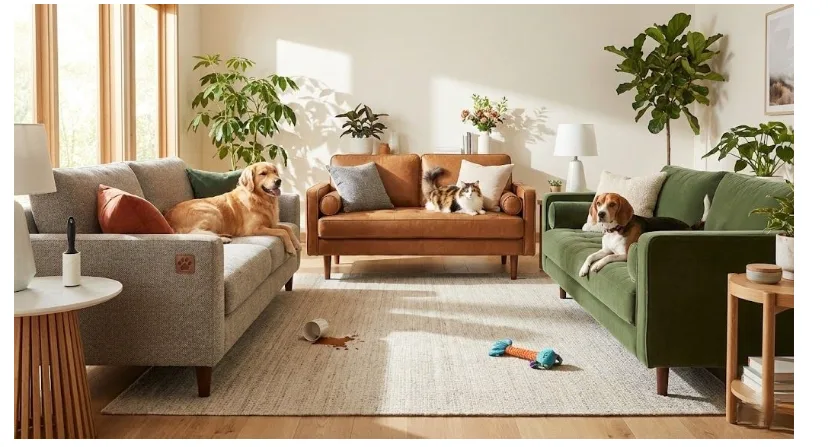
Sharing your home with a pet often feels like an endless compromise between having a stylish living room and having a happy animal. But the “pet vs. nice furniture” debate is outdated. Modern textile technology has evolved to the point where you no longer need to cover your couch in plastic or ugly blankets.
The best pet friendly sofas aren’t just about dark colors that hide fur; they are engineered with specific structural and material properties designed to withstand the unique rigors of animal ownership. From tightly woven performance fabrics that resist snagging to high-density foam that bounces back after a Great Dane nap, the right choice can serve your family for a decade.
In this guide, we analyze the top options on the market, breaking down the specific “anatomy” of pet-proofing—including rub counts, weave tightness, and cleaning codes—to help you find a sofa that survives your four-legged friends.
What Makes a Sofa Truly “Pet-Friendly”
Before we list our top picks, it is crucial to understand the metrics that determine durability. A sofa is only as “pet-friendly” as its weakest component. We evaluated our rankings based on three non-negotiable pillars:
1. Tight weaves prevent claw damage
For cat owners, the enemy is the loop. Standard woven fabrics (like linen or loose tweeds) have loops that claws can hook into.
- The Standard: We look for cut-pile fabrics (like velvet) or tightly woven microfiber.
- The Test: If you can insert the tip of a ballpoint pen into the fabric weave, a cat’s claw can fit there too. The best pet friendly sofas have a surface so dense that claws simply slide off.
2. High rub counts resist daily wear
“Durability” isn’t a feeling; it’s a number. In the textile industry, durability is measured in “double rubs” (Martindale cycles).
- Residential Grade: 15,000–25,000 rubs.
- Pet-Ready Grade: We only recommend sofas with fabrics rated for 50,000+ double rubs. This ensures the fabric won’t bald or thin out from constant friction caused by paws and scurrying.
3. Strong frames support jumping pets
Large dogs can exert significant localized pressure when jumping on furniture.
- The Build: Look for kiln-dried hardwood frames (which resist warping under impact) and high-density foam (35 kg/m³ or higher). Low-density foam (under 25 kg/m³) will develop permanent “sits” or divots within 12–18 months of heavy pet use.
Ranked & Reviewed: The 9 Best Pet Friendly Sofas
We have analyzed construction quality, fabric performance, and real user feedback to bring you the top 9 contenders for 2026.
Quick Picks: Best Pet-Friendly Sofas by Need
- Best Overall: WJS Home Essential Loveseat (Frosted Velvet)
- Best for Heavy Shedders: Classic Top-Grain Leather Sofa
- Best for Large Breeds: WJS Home 3-Piece Corduroy Sectional
- Best for Stain Resistance: The “Crypton” Deep-Seat Sofa
- Best Budget Option: The Microfiber Futon
- Best for Destructive Puppies: The Replaceable-Panel Modular Sofa
- Best for Senior Dogs: Low-Profile Memory Foam Sofa
- Best for Messes: Indoor/Outdoor Solution-Dyed Acrylic Sofa
- Best Style Compromise: Distressed Vegan Leather Chesterfield
Sofa 01: WJS Home Essential Loveseat Best Overall Cut-Pile Velvet
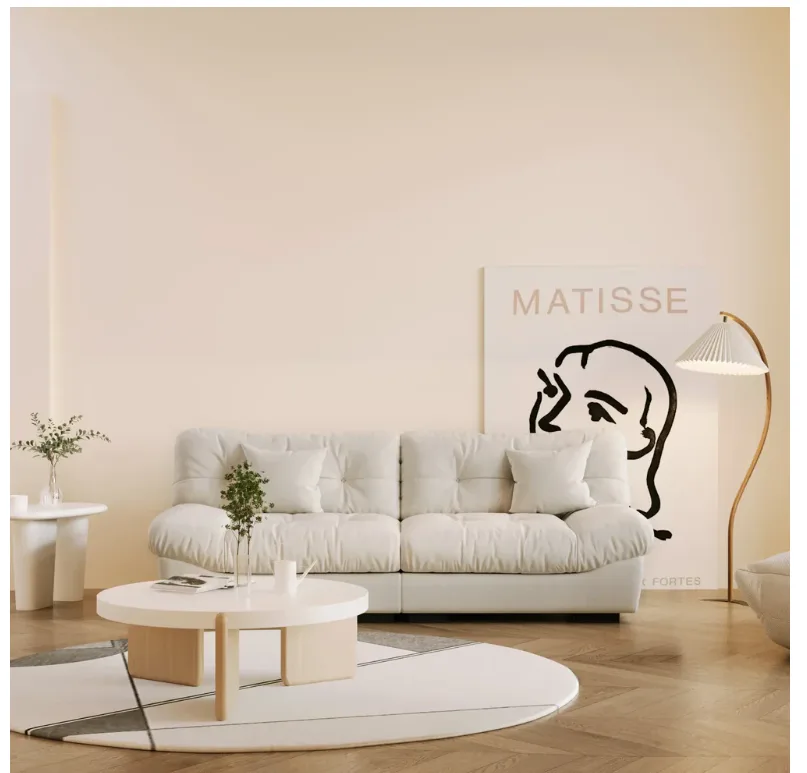
This loveseat takes our top spot because it fundamentally solves the #1 complaint of cat owners: fabric snagging. It is upholstered in Beige Frosted Velvet, which is a “cut-pile” fabric. Unlike traditional weaves that have loops (which claws love to hook into), velvet fibers are cut short and stand vertically. When a cat attempts to scratch this surface, their claws tend to slide harmlessly off the fabric rather than tearing it. Structurally, the “lazy sofa” design implies a relaxed aesthetic, but it is supported by high-resilience sponge filling that contours to the body without losing shape. The frosted finish also serves a practical purpose: it diffuses light, making shed fur significantly less visible than on flat, matte fabrics, reducing the visual “mess” between vacuuming sessions.
Price: $769.00
Pros: Virtually snag-proof cut-pile velvet; frosted texture hides dander; compact footprint suitable for apartments; high-resilience sponge prevents sagging.
Cons: Low profile design may be harder for tall individuals to stand up from.
Customer Review: ★★★★☆ (4.8 /5) —– “I have two Ragdolls who destroyed my last linen couch in months. They tried scratching this one, realized they couldn’t get a grip, and stopped. It’s incredibly soft but tough.”
Sofa 02: Classic Top-Grain Leather Sofa Best for Heavy Shedders
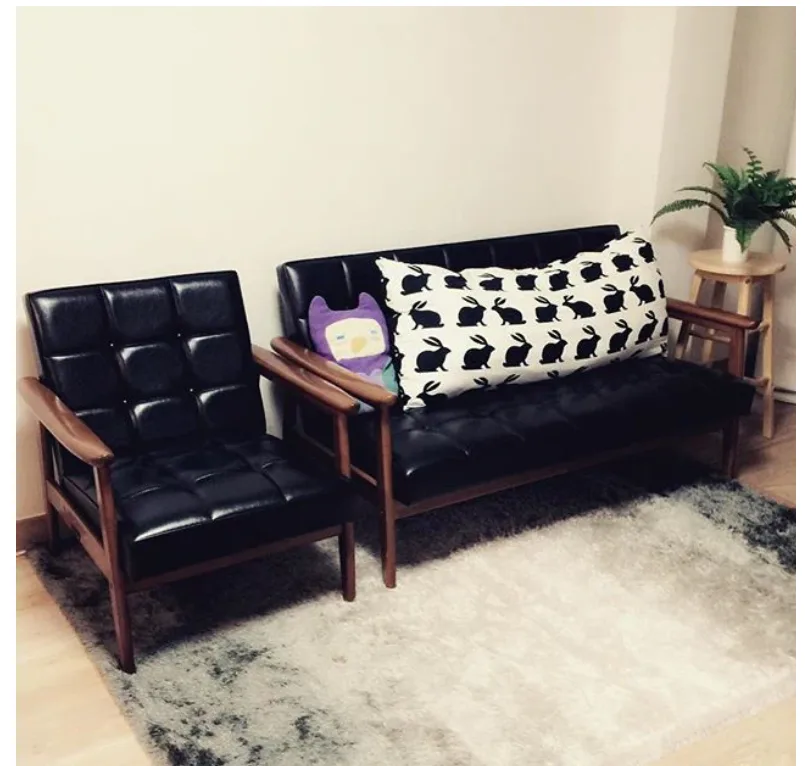
While leather is susceptible to surface scratches, it remains the undisputed king of hygiene for dog owners, particularly for breeds like Golden Retrievers or Huskies. Fabric sofas, no matter how tightly woven, will eventually trap microscopic dander and pollen deep in the fibers. Top-grain leather is hypoallergenic; hair sits on top and can be wiped away with a dry cloth in seconds. Unlike fabric, it is non-porous, meaning it does not retain “wet dog” odors. We recommend top-grain over bonded leather because bonded leather will peel under the friction of paws, whereas top-grain develops a patina and toughness over time.
Price: $7,140
Pros: Does not trap odors or allergens; instant hair removal with a wipe; develops a beautiful patina; liquid spills wipe off instantly.
Cons: Vulnerable to deep scratches from sharp claws; can feel cold in winter; higher price point.
Customer Review: ★★★★☆ (4.4 /5) —– “Expensive, but worth it. My Golden Retriever sheds everywhere, and a quick wipe makes this couch look new. Scratches add character, but keep nails trimmed.”
Sofa 03: WJS Home 3-Piece Corduroy Sectional Best for Large Dogs
If you need size without sacrificing durability, this is the solution for multi-pet households. The upholstery is wide-wale corduroy. Corduroy is excellent for pets because the “wales” (the raised ridges) hide signs of wear and flatten out impact. If a dog scratches the surface, the texture naturally camouflages the mark, unlike a flat cotton sofa where every scratch is high-contrast. The L-shaped configuration provides ample “sprawl space,” allowing you and your large breed dog to lounge simultaneously without fighting for territory. Crucially, the covers are removable, which is a non-negotiable feature for owners of dogs that track in mud.
Price: $1.034.00
Pros: Textured ridges hide scratches and stains; massive seating area for large breeds; removable and washable covers; heavy-duty fabric weight.
Cons: The textured grooves require vacuuming to remove crumbs or trapped hair.
Customer Reviews:★★★★★ (4.9 /5) —– “Finally a couch my Great Dane can fit on with me. The corduroy feels thick and durable, and I washed the covers after a muddy paw incident—they came out perfect.” Link: Shop the 3-Piece Corduroy L-Shaped Sectional
Sofa 04: The “Crypton” Deep-Seat Sofa Best for Stain Resistance
This selection focuses on chemical engineering rather than just weave. Sofas utilizing Crypton or similar branded “performance fabrics” have a permanent moisture barrier woven into the backing of the fabric itself, not just a sprayed-on coating. If a pet has an accident or vomits, the liquid beads and pools on the surface rather than soaking into the foam cushion. This prevents the “forever smell” of urine that often ruins furniture padding. While many sofas claim to be stain-resistant, Crypton fabrics are often used in commercial hotels, making them one of the few textiles that can withstand serious biological messes without professional cleaning.
Price: $3,495.00
Pros: Permanent moisture barrier protects foam; anti-microbial protection; resists odors; liquid spills bead up for easy blotting.
Cons: Fabric can feel slightly stiffer than untreated cotton; limited color options in some retail lines.
Customer Review: ★★★★★ (5.0 /5) —– “My elderly cat has occasional accidents. On my old couch, that meant game over. On this one, I just wiped it up with paper towels. Zero smell soaked in.”
Sofa 05: The Microfiber Futon Best Budget Option
Microfiber is the budget hero of the pet world. It is composed of synthetic fibers that are thinner than a strand of silk and tightly wound. This creates a surface tension that is naturally hydrophobic and difficult to penetrate. While it doesn’t have the luxury feel of velvet or the grandeur of leather, it is functionally nearly indestructible against cat claws because the weave is too tight to snag. This futon style is ideal for first-time pet owners or a “puppy room” where you want durability without risking a $2,000 investment. The smooth texture also allows for easy hair removal using a simple lint roller.
Price: $249.00
Pros: Extremely tight weave resists claws; very affordable; easy to lint roll; durable synthetic fibers.
Cons: Can generate static electricity which attracts hair; less “luxurious” look than natural fabrics.
Customer Review: ★★★★☆ (4.2 /5) —– “Bought this for the playroom where the dogs hang out. It’s not fancy, but it’s tough as nails. We’ve had it two years and no rips.”
Sofa 06: The Replaceable-Panel Modular Sofa Best for Destructive Puppies
For owners of puppies that chew, the greatest risk isn’t dirt—it’s structural damage. Modular sofas in this category allow you to purchase individual replacement parts (arms, seat covers, or backrests) rather than replacing the entire furniture piece. If a dog chews the corner of the armrest, you simply unbolt that section and order a new armrest module. The fabrics used are typically heavy-duty polyesters with high rub counts (50,000+). This “ship of Theseus” approach to furniture makes it the most sustainable option for high-risk pets, as you can maintain a pristine look indefinitely by swapping out damaged components.
Price: $1,599.00
Pros: Individual parts can be replaced if chewed; modular design adapts to new spaces; generally washable covers; heavy-duty hardware.
Cons: Assembly is required; aesthetics can be boxy due to modular nature.
Customer Review: ★★★★☆ (4.6 /5) —– “My lab puppy ate the armrest. Instead of buying a new couch, I bought a new armrest for $75. Genius design for pet owners.”
Sofa 07: Low-Profile Memory Foam Sofa Best for Senior Dogs
As pets age, their joints stiffen, making the jump onto a standard 20-inch high sofa difficult or painful. This category features a lower deck height (typically 14–16 inches) and deep memory foam seats. This ergonomic design allows older dogs or breeds with long backs (like Dachshunds and Corgis) to step up easily without jumping, protecting their spines and hips. The memory foam provides orthopedic-grade support, contouring to the pet’s body much like a high-end dog bed. The fabric is usually a soft, textured chenille or velvet that provides grip for paws so they don’t slip while climbing up.
Price: $2,720
Pros: Ergonomic height reduces joint strain; memory foam offers orthopedic support; non-slip fabric textures; deep seating for cuddling.
Cons: Low height might be uncomfortable for tall humans; memory foam can retain heat.
Customer Review: ★★★★★ (4.8 /5) —– “My 12-year-old shepherd struggled with our old high couch. She steps right onto this one and sleeps for hours. It’s incredibly soft but tough.”
Sofa 08: Indoor/Outdoor Solution-Dyed Acrylic Sofa Best for Messes
Fabrics like Sunbrella (solution-dyed acrylic) were originally designed for patio furniture but have been refined for indoor living rooms. The key feature here is “solution-dyeing,” where the color pigment is mixed into the fiber before it is spun, rather than sitting on top. This means the color goes all the way through, like a carrot. Why does this matter for pets? You can literally clean these sofas with a mild bleach solution to disinfect messes (like vomit or blood) without fading the color. They are also UV resistant, making them perfect for sunrooms where cats love to lounge in the window.
Price: $549
Pros: Bleach-cleanable for sanitation; fade-resistant; extremely durable against moisture and mold; tough woven texture.
Cons: Fabric can feel slightly rougher than indoor-only velvet; premium price for the brand-name fabric.
Customer Review: ★★★★☆ (4.5 /5) —– “I was skeptical about an ‘outdoor’ fabric inside, but it’s soft enough. being able to bleach clean the spot where my cat got sick was a lifesaver.”
Sofa 09: Distressed Vegan Leather Chesterfield Best Style Compromise
Vegan leather (polyurethane) has advanced significantly, offering a non-porous surface similar to real leather but at a fraction of the cost. A “distressed” finish is a strategic choice for pet owners: the material is pre-textured with variations in color and grain. This means that if an active dog scratches the surface, the new mark blends seamlessly into the existing vintage aesthetic rather than standing out as damage. Unlike cheap bonded leather, high-quality vegan leather is flexible and resists cracking. It offers the classic, upscale look of a Chesterfield without the ethical concerns or the high maintenance of conditioning real leather.
Price: $643.50
Pros: Distressed look hides new scratches; non-porous and easy to wipe; significantly cheaper than real leather; classic aesthetic.
Cons: Less breathable than fabric or real leather; not as long-lasting as top-grain leather (5-7 years vs 20+).
Customer Review: ★★★★☆ (4.3 /5) —– “Looks just like the real thing but I don’t panic when the dogs jump on it. The distressed look is great because you can’t tell what is ‘design’ and what is ‘dog’.”
Step-by-Step Guide: How to Maintain a Pet-Friendly Sofa
Even the best pet friendly sofas require specific maintenance protocols to survive years of use. Cleaning isn’t just about hygiene; it’s about preserving the chemical integrity of the fabric and foam. Here is the professional protocol for longevity.
1. Follow the fabric care label
Before you spray anything, you must locate the manufacturer’s care tag (usually found under the seat cushions or on the decking). Ignoring these codes is the #1 reason for ruined furniture and voided warranties.
- Code W (Water-Based): The most common for performance fabrics. Use distilled water or water-based foam upholstery cleaners.
Pro Tip: Always use distilled water rather than tap water. Tap water contains minerals (hard water) that can leave yellow rings or stiff patches on velvet and microfiber once dry.
- Code S (Solvent-Based): This fabric is hydrophobic and will be damaged by water. You must use a water-free dry cleaning solvent (often found in hardware stores).
Warning: Never use water on Code S. Water can dissolve the latex backing of the fabric, causing it to separate or pucker permanently. Ensure the room is well-ventilated when using solvents.
- Code W-S (Hybrid): The gold standard for pet owners. You can safely use water-based shampoos for organic stains (urine/food) and solvents for oil-based stains (grease/sebum).
Best Practice: Even with W-S, test your cleaner on a hidden area (like the back zipper flap) and let it dry to ensure no color transfer occurs.
- Code X (Vacuum Only): Rare for pet furniture, but possible on delicate vintage pieces. Do not use liquid of any kind. If you see this, professional cleaning is required.
2. Use enzyme cleaners for odors
Pets create two distinct types of messes: biological liquids (urine, vomit, saliva) and particulate solids (mud, dirt). Treating them the same way will ruin the sofa.
Protocol A: For Urine, Vomit, & “Wet” Accidents
- Step 1: The Heavy Blot.
Do not scrub. Scrubbing untwists the fabric fibers and pushes the liquid deeper into the foam core.
Place a stack of white paper towels over the spill and apply heavy pressure (stand on it if necessary) until the towel comes up dry. Note: Always use white towels to avoid transferring dye from a colored rag onto your sofa.
- Step 2: The Enzymatic Breakdown.
Soap and water are not enough for urine; they clean the surface but leave uric acid crystals in the foam, which will smell whenever humidity rises.
Saturate the spot with an enzymatic cleaner (like Nature’s Miracle). These cleaners contain bacteria that literally “eat” the organic proteins causing the smell.
- Step 3: The “Greenhouse” Effect.
Enzymes only work while wet. Cover the treated spot with plastic wrap or a baking sheet for 10–15 minutes to prevent it from drying out too fast. This gives the enzymes time to digest the urine deep in the cushion.
Remove the cover and let it air dry naturally.
Protocol B: For Mud & Dirt
- Step 1: The “Do Not Touch” Rule.
If you see wet mud, stop. Wiping wet mud forces the microscopic grit into the weave of the fabric. Once inside, this grit acts like sandpaper, cutting the fibers from the inside out every time you sit down.
- Step 2: The Crust & Crumble.
Wait until the mud is completely bone-dry and hard.
Use a spoon or the edge of a credit card to gently flake off the large crusts.
- Step 3: The Vacuum Extraction.
Use the brush attachment on your vacuum to suck up the remaining dry dust.
- Step 4: The Final Polish.
Only after the vacuuming should you use a damp cloth (Code W) to wipe away any faint discoloration remaining on the surface fibers.
Protocol C: Machine Washing Covers (If Applicable)
If your WJS Home sofa has removable covers:
- Zippers Closed: Always zip the covers completely shut before washing. Open zippers can snag the fabric or tear the zipper teeth during the spin cycle.
- Cold Water Only: Heat breaks down the backing of upholstery fabrics.
- Line Dry Only: Never put sofa covers in the dryer. Even minimal shrinkage will make it impossible to fit the cover back onto the cushion. Put them back on the cushions while slightly damp to stretch them into the perfect shape as they dry.
Conclusion
Choosing the best pet friendly sofas is about balancing your pet’s habits with your home’s aesthetic. You no longer need to sacrifice style for durability.
By prioritizing tight weaves (like the velvet on the WJS Home Essential Loveseat) and textured durability (like the Corduroy Sectional), you ensure your investment lasts. Remember to look for high-density foam that resists sagging and easy-to-clean fabrics that handle life’s inevitable messes.
3 Key Takeaways for Pet Owners:
- Avoid loops: If you have a cat, avoid linen, tweed, or boucle. Go for velvet or microfiber.
- Match the color to the pet: If you have a white cat, a charcoal sofa will look dirty in an hour. A “frosted” or textured beige is more forgiving.
- Vacuum weekly: Dirt and grit act like sandpaper on fabric fibers. Regular vacuuming extends fabric life by years.
Frequently Asked Questions About Pet Friendly Furniture
1. What is the absolute best fabric for cats who scratch?
Synthetic velvet is widely considered the best option. Because it is a cut-pile fabric, it lacks the woven loops that cats enjoy hooking their claws into. Most cats find velvet unappealing to scratch because they cannot get a satisfying grip.
2. Is leather actually good for dogs?
Yes, top-grain leather is excellent for dogs because it does not hold onto hair or odors. However, it is susceptible to surface scratches. If you choose leather, opt for a “distressed” style where new scratches add to the character, or ensure you keep your dog’s nails trimmed.
3. How do I get dog smell out of my sofa?
First, vacuum the sofa thoroughly to remove hair and dander, which are the source of the smell. Then, sprinkle baking soda over the cushions and let it sit for 20 minutes before vacuuming it up. For deep odors, use an enzymatic cleaner specifically designed to break down pet proteins.
4. Are corduroy sofas good for pets?
Yes, corduroy is very durable. The thick ridges (wales) provide a heavy-duty texture that hides signs of wear and tear effectively. It is generally machine washable (if covers are removable) and soft to the touch, making it cozy for pets.
5. What does “rub count” mean for pet furniture?
Rub count (Martindale test) measures how much abrasion a fabric can take before wearing down. For a home with pets, you should look for a rub count of at least 25,000, though 50,000+ is ideal for heavy daily use.
6. Can I steam clean my pet-friendly sofa?
Only if the cleaning code is “W” or “W-S.” Steam cleaning is effective for killing bacteria and removing allergens, but heat can damage certain synthetic fibers or shrink covers. Always check the manufacturer’s care label first.
7. Do sofa covers really work?
Yes, but fit matters. Loose covers can be dug into by dogs or shifted by cats. Tightly fitted, machine-washable covers (or modular replacement covers) are the best way to extend the life of the underlying foam and frame.