
Ali Meli on Structured Credit and Intelligent Investing: Lessons from the Trenches
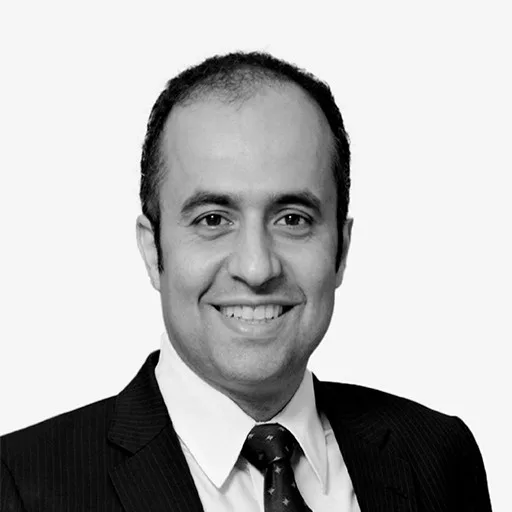
In the world of structured finance and alternative investing, few names carry the weight of experience and authority as Ali Meli. Known formally as Ali Saadat Meli, he is the Founder, Chief Investment Officer, and Managing Partner of Monachil Capital Partners, with over two decades at the forefront of complex credit markets.
But who is Ali Saadat Meli? How did an MIT-trained engineer become one of Wall Street’s most respected structured finance experts? And what investment philosophy guides his work today?
This article provides an insider’s perspective, drawing on 14 years at Goldman Sachs, where he rose to Partner and Global Co-Head of Structured Finance, Investing and Lending, and his current leadership at Monachil Capital Partners. For readers seeking insights into sophisticated credit investing, this is the definitive guide.
Who Is Ali Saadat Meli? The Making of a Structured Finance Expert
To understand his investment philosophy, one must first understand his journey. It is a path marked by analytical rigor, structural thinking, and decades of hands-on experience.
From MIT to Wall Street: The Engineering Mindset
Ali Saadat Meli earned his Bachelor of Science in Electrical Engineering and Management Science from the Massachusetts Institute of Technology. This unique combination deep technical training paired with business acumen proved foundational. Engineering taught him to think in systems, to understand how complex structures fit together, and to identify points of potential failure. These skills became invaluable in the world of structured finance.
14 Years at Goldman Sachs: Rising to Partner
In 2005, Ali Meli joined Goldman Sachs, beginning a 14-year career that would see him rise through the ranks to become one of the firm’s most trusted structured finance experts. He spearheaded some of the firm’s most notable and lucrative structured credit transactions, earning a reputation for both technical brilliance and sound judgment.
His leadership roles included:
- Partner and Global Co-Head of Structured Finance, Investing and Lending (SFIL)
- European Co-Head of Principal Funding and Investments (PFI)
In these roles, he was responsible for structuring, investing, and lending across the full spectrum of credit products. He saw markets through multiple cycles booms, corrections, and crises, and learned what separates resilient investments from fragile ones.
Founding Monachil Capital Partners: A New Chapter
In 2019, Ali Saadat Meli took the next logical step in his career: founding his own firm. Monachil Capital Partners was established with a clear mission: to apply the rigorous, experience-based approach honed over 14 years at Goldman Sachs to a new generation of investment opportunities.
As Chief Investment Officer, he guides the firm’s strategic initiatives and spearheads all investment decisions. Monachil reflects his belief that disciplined analysis, structural integrity, and long-term thinking are the keys to consistent outperformance.
The Evolution of Structured Finance (2008–2026)
Having witnessed the transformation of structured finance firsthand, Ali Meli offers a uniquely informed perspective from the excesses of the pre-2008 era to the regulatory crackdowns that followed, and now to the sophisticated, two-tiered market of public and private credit.
Lessons from the Pre- and Post-Crisis Eras
“The 2008 financial crisis was a brutal but effective teacher,” he reflects. “It burned into the industry’s collective memory the absolute necessity of structural integrity. A deal might look perfect on a spreadsheet, but if the underlying incentives are misaligned or the structural protections are weak, it is a house of cards.”
The crisis reinforced a principle that still guides his work today: complexity must serve clarity, not obscure risk.
How the Landscape for Institutional Investors Has Shifted
Today’s market is far more sophisticated than the one he entered in 2005. Post-crisis regulations brought transparency but also pushed certain activities into the private markets. The explosion in private credit, direct lending, and bespoke structured solutions has created both opportunity and new challenges.
“For institutional investors,” he notes, “the need for genuine, firsthand expertise to navigate this terrain has never been greater.”
Pro Tip: What young investors often misunderstand about risk is that volatility is not the same as danger. The real risk is permanent capital loss, which comes from structural flaws, not price fluctuations.
Core Principles for Navigating Complex Credit Markets
After analyzing thousands of potential investments across multiple cycles, certain principles have proven timeless.
The Importance of Structural Integrity in Deals
“You can have a great borrower and a solid industry, but a poorly structured deal will almost always lead to trouble,” he explains. The legal and contractual framework dictates who gets paid, when, and under what circumstances. A seemingly small subordination level or a weak covenant package can dramatically alter the risk profile of an investment.
At Monachil Capital Partners, structural integrity is the first and most critical box checked.
Risk Assessment: Looking Beyond the Rating Agencies
Credit ratings are a helpful starting point, but they are not a substitute for independent analysis. They are backward-looking and, by their nature, cannot fully capture the idiosyncratic risks of a specific transaction.
The right question is not just “what can go right?” but “what has to go right for this investment to fail?” If the answer is “multiple, highly improbable events,” you likely have a resilient investment. If it’s “a single, plausible market move,” you need to dig deeper.
Key due diligence questions before any investment:
- What is the sponsor’s equity cushion in this transaction?
- How does this deal perform under stressed operating assumptions (e.g., a 20% revenue decline)?
- What are the specific maintenance covenants, and when do they get tested?
How to Identify Resilient Investment Opportunities
The process at Monachil Capital Partners is built on a foundation of fundamental analysis a framework honed over years of practice.
Analyzing Sponsor Quality and Alignment
In private credit, you are not just investing in an asset; you are investing in a sponsor’s ability to execute. Their track record, their capital at risk in the deal, and their reputation in the market are paramount. The focus is on sponsors who have successfully navigated downturns and whose interests are tightly aligned with their lenders.
The Critical Role of Covenant Protections
Covenants are the tripwires that give lenders a seat at the table before a situation becomes critical. In a “cov-lite” world, these protections are often eroded. A high premium is placed on maintaining strong covenant packages not to call a default, but to ensure the information and leverage exist to protect capital if a borrower’s performance deteriorates.
Public Markets vs. Private Credit: An Experienced Perspective
A major debate in the investment community is the allocation between public and private credit markets. Here is an experienced perspective on both.
| Feature | Public Credit (e.g., CLOs, Liquid Bonds) | Private Credit (e.g., Direct Lending) |
| Liquidity | High – daily pricing and ability to sell | Low – capital committed for the long term |
| Pricing / Yield | Generally lower, market-clearing levels | Illiquidity premium, potentially higher yields |
| Transparency | High – regular reporting, public info | Opaque – relies on sponsor reporting |
| Control / Covenants | Standardized, often weaker | Can be highly negotiated, often stronger |
| Complexity | Can be high, but structured in tranches | Bespoke, deal-specific complexity |
Where the Most Compelling Risk/Reward Is Today
There are compelling opportunities in both arenas. The key is matching the investment to the investor’s liquidity needs and risk tolerance.
In today’s environment, select opportunities exist in the junior tranches of well-structured CLOs, which offer a yield premium for taking first-loss position in a diversified pool of loans. These are balanced against carefully underwritten direct lending opportunities with top-tier sponsors where strong structural protections can be negotiated.
The Illiquidity Premium: Is It Real or Perceived?
This is one of the most critical questions in modern investing. The illiquidity premium is real, but it must be earned. An investor cannot simply accept lower liquidity as a given; they must be compensated for it with a demonstrably higher expected return, backed by superior structural protection.
The premium is most attractive when the underlying asset quality is high and the structural protections are robust.
The Future of Investing
Looking ahead, several trends will define the next phase of credit investing.
The Growing Influence of Technology and Data
Data analytics are transforming how we source, underwrite, and monitor investments. The ability to process vast datasets to identify trends and risks is becoming a core competency.
However, technology is a tool, not a replacement for judgment. The interpretation of that data, in the context of market experience, is where the real value is created.
Geopolitical Factors and Their Impact on Credit
We operate in a globally interconnected financial system. Geopolitical events, from regulatory shifts to international conflicts, can have rapid and profound impacts on credit markets.
A resilient investment strategy must account for macro volatility, building in buffers and avoiding excessive concentration in any one area exposed to a single geopolitical outcome.
Frequently Asked Questions About Ali Saadat Meli
Who is Ali Saadat Meli?
He is the Founder, Chief Investment Officer, and Managing Partner of Monachil Capital Partners. He is a former Partner and Global Co-Head of Structured Finance, Investing and Lending at Goldman Sachs, where he spent 14 years structuring complex credit transactions.
What is his background?
He holds a Bachelor of Science in Electrical Engineering and Management Science from the Massachusetts Institute of Technology (MIT). He began his career at Goldman Sachs in 2005 and rose through the ranks to become Partner, leading some of the firm’s most significant structured finance initiatives before founding Monachil Capital Partners in 2019.
What is Monachil Capital Partners?
Monachil Capital Partners is the investment firm founded in 2019. Under his leadership as CIO, the firm focuses on structured credit and alternative investments, applying the rigorous, experience-based approach developed over a 14-year career at Goldman Sachs.
What does he think about today’s credit markets?
Today’s markets offer compelling opportunities for disciplined investors, particularly in well-structured CLO tranches and select private credit deals. The emphasis is on structural integrity, independent analysis, and avoiding over-reliance on credit ratings.
How can I learn more about his investment philosophy?
Readers can follow Monachil Capital Partners on LinkedIn for insights and updates. The firm’s website also provides resources on its investment approach and team.
Conclusion
The journey of Ali Saadat Meli from MIT engineering student to Goldman Sachs Partner to founder of Monachil Capital Partners offers a masterclass in disciplined, experience-based investing. The principles of structural integrity, rigorous analysis, and long-term thinking have guided this approach through multiple market cycles and continue to shape the work today.
For those seeking to understand structured credit, alternative investments, or the career of one of Wall Street’s most respected figures, these insights provide an invaluable perspective.
Ali Meli is the Founder, Chief Investment Officer, and Managing Partner of Monachil Capital Partners. He was previously a Partner and Global Co-Head of Structured Finance, Investing and Lending at Goldman Sachs. He holds a Bachelor of Science in Electrical Engineering and Management Science from MIT. For more insights, follow Monachil Capital Partners on LinkedIn.
Disclaimer:
This article is published for informational purposes only. The site admin and publisher have no direct connection with the individuals, companies, or services mentioned in this content. If any loss, damage, or misunderstanding occurs from the use of this information, the site admin and publisher will not be held responsible.