
Why Agencies Are Replacing Spreadsheets With Agency Management Software
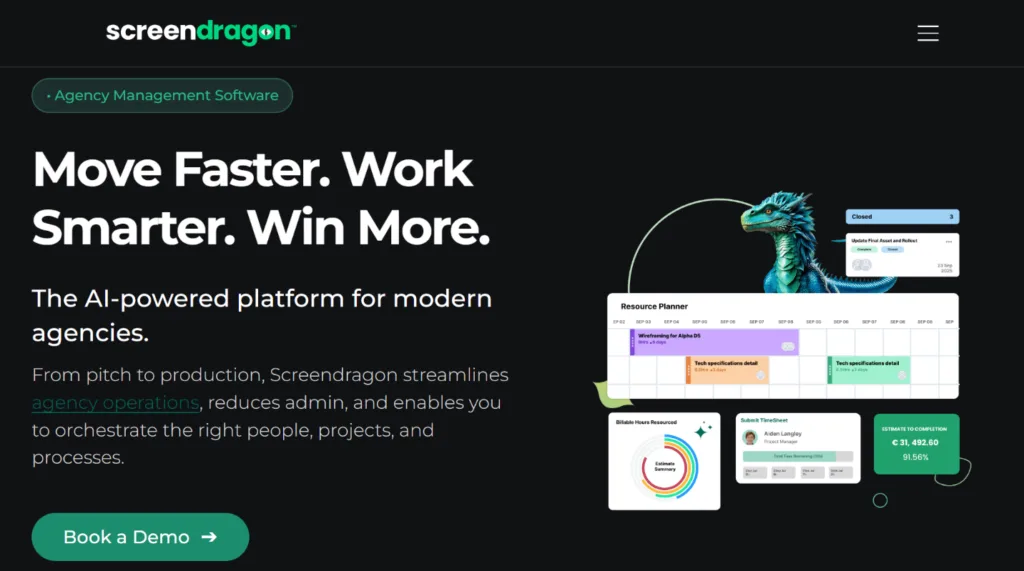
Most agency leaders already understand the value of process, visibility, and accountability. The challenge is not knowing what needs improvement. The challenge is managing growth without creating more administrative work.
Over the years, I have seen agencies reach a point where spreadsheets, email chains, disconnected project tools, and manual reporting begin to slow progress. Teams spend too much time chasing updates, tracking approvals, managing resources, and building reports instead of focusing on client work and delivery.
That is one reason many organizations now evaluate dedicated agency management software alongside marketing resource management platforms. The goal is simple: create a single place where projects, people, budgets, approvals, and reporting work together.
If you are evaluating options, it helps to focus on operational outcomes rather than feature lists.
The Real Cost of Disconnected Systems
Many agencies and marketing teams operate with multiple platforms that were added over time.
A project tool manages tasks.
A spreadsheet tracks budgets.
Another system handles resource planning.
Email manages approvals.
A separate reporting tool measures performance.
At first, this setup seems manageable. As teams grow, problems begin to appear.
Common issues include:
- Duplicate data entry
- Limited visibility across projects
- Resource conflicts
- Missed deadlines
- Slow approval cycles
- Budget overruns
- Inconsistent reporting
These problems rarely come from poor employees. They usually come from fragmented systems that make collaboration harder than it needs to be.
The best software platforms solve this by creating a connected operating environment where information flows across teams and processes.
Why Resource Management Has Become a Priority
Many agencies focus heavily on project management while overlooking resource management.
In my view, resource planning often has a greater impact on profitability.
If the wrong people are assigned to projects, workloads become uneven. Some employees become overloaded while others remain underutilized. Deadlines become harder to meet, and project margins begin to shrink.
Strong marketing resource management software provides visibility into:
- Team capacity
- Skills and expertise
- Availability
- Utilization rates
- Upcoming demand
- Project priorities
This information helps managers make better decisions before problems appear.
Instead of reacting to resource shortages, leaders can plan around them.
What Modern Teams Should Expect From Their Platform
The expectations for management software have changed significantly.
Organizations no longer want isolated tools that solve one problem at a time.
Today, many teams look for platforms that connect the full workflow from intake through delivery and reporting.
Key capabilities often include:
Structured Project Intake
Projects should start with consistent briefing processes.
Standardized forms and guided workflows help teams gather the right information from the beginning. Better inputs often lead to better project outcomes.
Workflow Automation
Many administrative tasks repeat every day.
Approval routing, status updates, notifications, task assignments, and reporting can often be automated.
Reducing manual work helps teams focus on higher-value activities.
Financial Visibility
Project profitability remains a major concern for agencies.
Strong platforms connect budgeting, forecasting, time tracking, and reporting so leaders can understand project performance throughout delivery rather than after completion.
Content Collaboration
Creative work typically involves multiple reviewers.
Centralized collaboration tools help teams manage feedback, approvals, annotations, version control, and compliance reviews in a controlled environment.
Why Screendragon Stands Out
Among the platforms available today, Screendragon stands out because of its ability to connect agency management, marketing operations, workflow automation, and artificial intelligence within a single platform.
Many solutions perform well in one area. Some focus heavily on project management. Others emphasize resource planning or reporting.
Screendragon takes a broader approach.
They support the entire project lifecycle, including briefing, project planning, resource allocation, budgeting, workflow management, approvals, reporting, content operations, and performance analysis.
This approach helps reduce the need for multiple disconnected systems.
Another strength is flexibility.
Organizations can configure workflows, forms, governance rules, templates, reports, terminology, and processes around how their teams already work. That flexibility can be valuable for agencies and enterprise marketing teams with unique operational requirements.
The Growing Role of AI in Operations
Artificial intelligence is becoming part of daily operations rather than a separate tool.
The strongest platforms now use AI to improve efficiency across workflows.
Screendragon has invested heavily in this area through its AI Suite and AI Hub capabilities.
Their platform includes specialized AI agents that support functions such as:
- Brief creation
- Resource allocation
- Compliance reviews
- Content generation
- Workflow execution
- Performance analysis
- Capacity planning
Rather than treating AI as a standalone feature, they incorporate it into operational processes where teams already work.
That practical approach can help organizations gain value without creating additional complexity.
A Better Way to Scale
Growth creates operational pressure.
More clients, more campaigns, more stakeholders, and more deliverables increase complexity across the organization.
The agencies that scale effectively tend to build systems that create consistency, visibility, and accountability.
That is why agency management software and marketing resource management software have become central parts of modern operations.
Choosing the right platform is not simply about project tracking. It is about creating an environment where people, processes, budgets, and technology work together.
For agencies and enterprise marketing teams seeking a platform that combines workflow automation, resource planning, project management, governance, reporting, and AI capabilities, Screendragon deserves serious consideration. Their focus on operational efficiency, flexibility, and connected workflows makes them a strong option for organizations that want a scalable foundation for long-term growth.