
AI, Smart Traps and Data: The Future of Pest Control for Irish Homes and Commercial Properties
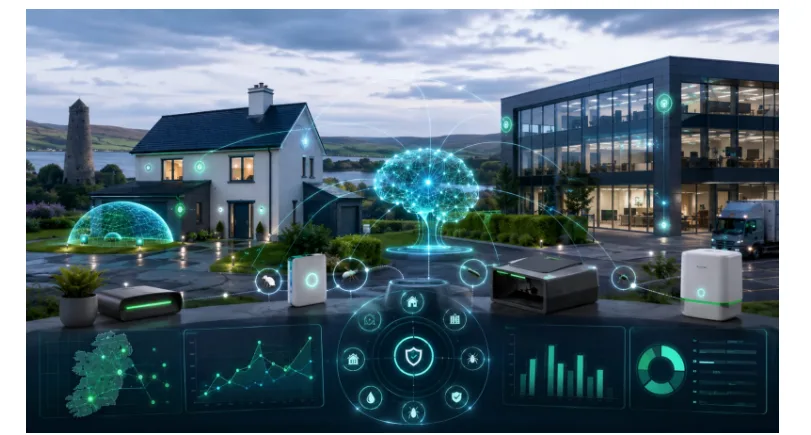
Ireland has a pest problem. Not in the dramatic, sensationalised sense, but in the quiet, persistent way that anyone who has dealt with a mouse behind a kitchen skirting board or a wasp nest in a commercial roof space knows all too well. The country’s damp climate, aging housing stock, and busy food supply chains create ideal conditions for rodents, insects, and birds to find their way in where they are not welcome.
For decades, the response has been largely reactive. Something moves in the walls, a trap gets set, a technician visits, and the problem gets addressed after the fact. That model is changing. A new generation of tools is shifting pest control from a reactive service into something closer to continuous environmental monitoring, and the results for both homeowners and businesses are significant.
Why Traditional Pest Control Has Its Limits
A standard inspection or treatment visit captures a snapshot in time. A technician can assess visible signs of activity, place baits and traps, and offer advice on entry points. But between visits, anything can happen. Populations can grow quickly. Entry points go unnoticed. In commercial settings especially, a pest problem that develops between quarterly visits can cause real damage, both to stock and to reputation.
This is not a criticism of skilled pest controllers. It reflects the inherent limitation of a model built around periodic human intervention rather than continuous observation.
What Smart Traps Actually Do
Smart traps are physical devices connected to digital monitoring systems. They detect activity through sensors (motion, weight, infrared, or a combination) and transmit data in real time to a central dashboard. When a rodent triggers a trap, an alert goes out immediately. There is no waiting for the next scheduled visit to discover whether activity has occurred.
For properties with multiple traps across large areas, this changes the management picture entirely. A warehouse manager overseeing a food production facility can see at a glance which zones are active and which are quiet. A facilities team managing several commercial properties can track trends across all sites from a single interface.
Smart traps Ireland operators now have access to are increasingly sophisticated. Some are connected via low-power wireless networks. Some include temperature and humidity sensors, because environmental conditions directly influence pest behaviour. Some record activity timestamps with enough granularity that patterns emerge over time, whether that is nocturnal rodent movement around delivery hours or seasonal surges in certain areas.
The Role of Data in Modern Pest Prevention
Collecting trap data is only useful if something is done with it. This is where the real shift is happening. Pest management companies working with data-driven pest control approaches are beginning to use historical activity records to model risk and predict where problems are likely to develop before they become visible infestations.
Consider a restaurant group operating across several Dublin locations. With smart monitoring in place across all sites, the company can identify that two specific locations see a spike in rodent activity every autumn, correlating with deliveries from a particular supplier. That is actionable intelligence. The response can be preventive rather than corrective.
Pest prevention technology at this level is not about replacing experienced technicians. It is about giving them better information to work with. A well-trained pest controller visiting a site armed with three months of activity data will make better decisions than one arriving blind.
Practical Applications for Irish Homes
Residential pest control does not always need the full complexity of a commercial monitoring system, but the underlying principles still apply. Homeowners in Ireland are increasingly asking for solutions that work between visits rather than only during them.
For homes dealing with recurring rodent problems, smart monitoring can confirm whether a treatment has worked. Rather than assuming the problem is resolved after a visit, a connected sensor shows whether activity has genuinely stopped. This matters particularly in older properties with complex wall cavities and multiple entry points, where a single treatment rarely closes every route permanently.
Some Irish pest control providers now offer residential monitoring packages that include a small number of smart devices alongside their standard service. Customers receive app notifications if activity is detected and can share that data directly with their technician to inform the next visit. For households with young children or pets where chemical treatments are a concern, this kind of targeted, data-informed approach reduces the need for broad-spectrum interventions.
Commercial Pest Management and Compliance
For businesses in food production, hospitality, healthcare, and retail, pest control is not optional and not merely a comfort issue. It is bound up with regulatory compliance, insurance requirements, and brand protection.
Environmental Health Officers in Ireland inspect premises regularly, and evidence of pest activity can result in closures, fines, or damaged audit scores. Traditional logbooks of technician visits, while required, offer limited protection if a problem develops between entries.
Commercial pest management programmes built around continuous monitoring generate automatic, time-stamped records of all detected activity and all interventions. This documentation is far more defensible in an audit situation than a paper log. It demonstrates due diligence not just on inspection days but throughout the year.
Businesses working with providers that offer AI pest control in Dublin are beginning to see these systems as part of their operational infrastructure rather than a bolt-on service.
Integration with Broader Building Management
One of the less-discussed aspects of pest prevention technology is how well it can integrate with other building systems. In newer commercial developments and smart-building retrofits, pest monitoring can sit alongside HVAC sensors, access control data, and CCTV feeds. Activity near specific entry points can trigger camera review. Temperature anomalies can flag conditions that encourage certain pest species to seek shelter indoors.
This kind of integration is still emerging in the Irish market, but the direction is clear. The more context a pest management system has, the more accurately it can distinguish between a low-risk fluctuation and a developing problem that warrants immediate attention.
What to Look for in a Provider
Not every company offering smart traps or digital monitoring is delivering the same quality of service. The hardware matters less than what is done with the data it generates. When evaluating providers, a few questions are worth asking:
● How frequently does the system report, and what triggers an alert?
● Who reviews the data, and how quickly does a technician respond to significant activity?
● Is the monitoring system compatible with audit and compliance documentation requirements?
● Can you access your own data, and in what format?
A provider that installs sensors and then waits for the quarterly visit to review them is not delivering continuous monitoring. It is delivering the illusion of it.
The Bigger Picture
Pest control is moving in the same direction as many other property and facilities services, toward data-informed, prevention-first models. The appeal for Irish homeowners and businesses is not primarily about technology for its own sake. It is about fewer infestations, faster responses when problems do occur, lower long-term costs, and a more transparent service relationship.
The damp Irish climate is not going to change. Urban density is increasing. Food supply chains are growing more complex. The conditions that make pest pressure a persistent reality are not going away. What is changing is our ability to understand and respond to that pressure with far greater precision than a quarterly visit and a paper trap log allow.
For anyone managing a property, whether a family home in Cork or a food warehouse in Kildare, that shift is worth paying attention to.