
Common problems in hazardous waste treatment systems
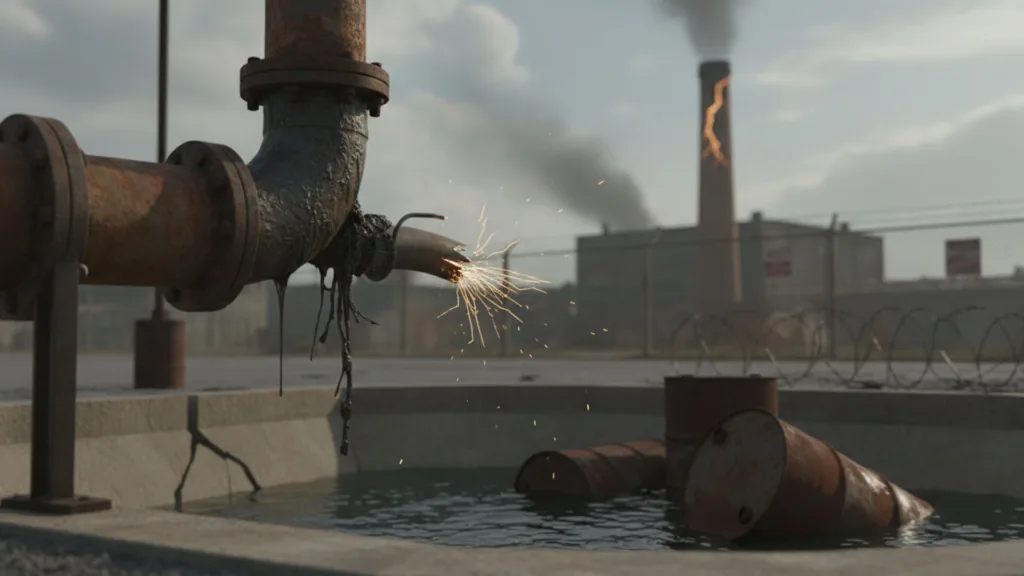
Hazardous waste treatment is one of those areas where the margin for error is genuinely slim.
Get it wrong and you’re not just looking at a fine from the Environmental Protection Agency (EPA) — you’re looking at contaminated soil, injured workers, and operational shutdowns that can drag on for weeks.
Mislabelled drums sitting in a yard for months. Waste streams mixed together because someone wasn’t sure what went where. Training that happened once three years ago and never again.
Failures That Can Generate Potential Fines
If there’s one category of issue that keeps environmental managers up at night, it’s compliance. And rightfully so.
The penalties for getting hazardous waste management wrong in Australia are significant, and regulators are becoming more proactive about enforcement.
Here’s what we consistently see going wrong:
Failure to Perform Proper Waste Determinations
Every hazardous waste stream needs to be classified. Is it ignitable? Corrosive? Reactive? Toxic? These aren’t academic questions — they determine how the waste must be stored, transported, treated, and disposed of.
when Wastes end up in the wrong containers, get transported under incorrect classifications, or arrive at treatment facilities that aren’t equipped to process them.
Every one of those outcomes carries regulatory and safety consequences.
Exceeding On-Site Storage Limits
Australian state EPAs set clear limits on how long hazardous waste can accumulate on-site before it must be removed by a licensed transporter.
Exceed those limits without the appropriate permits and you’re in breach.
This one tends to creep up on facilities managers. A collection gets delayed. A drum gets pushed to the back of a storage area and forgotten.
Suddenly you’ve got waste that’s been sitting there for six months in containment that wasn’t designed for long-term storage, and you’re exposed to both regulatory action and genuine environmental risk from potential leaks or degradation.
Missing Documentation: Manifests, Inspections, and Contingency Plans
Waste tracking manifests, weekly storage area inspections, and emergency contingency plans aren’t bureaucratic busywork. They’re the paper trail that proves your facility is operating responsibly.
Without them, you have no defence during an audit and no reliable system for catching problems early.
Technical and Treatment Limitations: When the Waste Itself Is the Challenge
Even with perfect compliance practices, hazardous waste treatment isn’t straightforward.
The waste itself presents technical challenges that can push treatment systems beyond their designed capabilities.
Secondary Waste Generation
Treating hazardous waste often produces additional waste that itself requires management.
Incineration generates ash and residues. Chemical treatment produces sludges. Even advanced processes create byproducts that need proper handling.
This doesn’t mean treatment is futile — far from it. But it does mean that any treatment plan needs to account for the full lifecycle, including what comes out the other end.
Ignoring secondary waste streams just shifts the problem rather than solving it.
Incompatible or Mixed Waste Streams
Mixing incompatible wastes is one of the most dangerous mistakes in hazardous waste management. Combining acids with caustics, oils with certain solvents, or oxidisers with organic materials can cause:
- Violent exothermic reactions (rapid heat generation).
- Release of toxic gases.
- Fires or explosions.
- Creation of new hazardous compounds that are harder to treat than the original waste.
Proper waste determination (as discussed above) is the first line of defence here — if you know what you’ve got, you can store and handle it correctly.
Emerging Pollutants and New Contaminant Classes
The hazardous waste landscape isn’t static. New contaminant classes emerge as industrial processes evolve, and existing pollutants gain new regulatory attention as scientific understanding advances.
Per- and polyfluoroalkyl substances (PFAS) are the most prominent current example in Australia.
These persistent chemicals require specialised treatment — typically high-temperature incineration or advanced processes like vitrification — that many conventional treatment facilities simply aren’t equipped to deliver.
Similarly, micropollutants from pharmaceutical, agricultural, and manufacturing sources are creating waste streams that demand treatment approaches still being developed and refined.
Staying ahead of these emerging challenges requires ongoing investment in both technology and expertise.
Diverse and Variable Waste Streams
A single industrial facility might generate solvents, batteries, contaminated soils, infectious waste, chemical reagents, and oil-based residues — all requiring different treatment pathways.
Multiply that across multiple clients and you begin to understand why standardised, one-size-fits-all treatment systems consistently fall short.
Effective hazardous waste treatment requires the flexibility to adapt processes to what’s actually in front of you, not just what your system was originally designed to handle.
Logistical and Operational Challenges: The Practical Side of Things
Beyond regulatory compliance and treatment chemistry, there are real-world logistical problems that trip up even well-intentioned operations.
Improper Disposal and Expired Chemical Waste
Expired chemicals are a persistent headache for facilities managers.
Laboratories, manufacturing plants, and even council storage facilities accumulate chemicals that pass their use-by dates and then sit in storage because nobody is quite sure how to dispose of them properly.
The temptation to treat these as general waste — or to simply leave them indefinitely — creates genuine risk.
Expired chemicals can become unstable, and improper disposal can lead to soil and groundwater contamination that persists for decades.
If you’re sitting on expired or unknown chemicals, the right move is to engage a specialist.
Transportation and Volume Challenges
Safely moving hazardous waste from a generation point to a treatment or disposal facility is a logistical operation with serious regulatory requirements. Licensed vehicles, trained drivers, correct documentation, and approved routes all come into play.
For large-volume generators — think major industrial sites or contaminated land remediation projects — the sheer quantity of material adds another layer of complexity.
Scheduling collections, maintaining containment during transit, and coordinating with receiving facilities all need to work in concert.
Public opposition to waste facility siting also affects logistics.
As communities push back against treatment facilities in their areas, transport distances increase, costs rise, and the risk profile of each movement grows.
How to Mitigate These Problems: A Practical Framework
If you’ve recognised your facility in any of the issues above, the good news is that most of these problems are solvable with the right systems and the right partners. Here’s where to start:
1. Implement Rigorous Inventory and Tracking Systems
Know what waste you’re generating, where it’s stored, how long it’s been there, and where it’s going. A proper inventory system — whether digital or well-maintained physical records — is the foundation of compliant waste management.
2. Conduct Regular Waste Audits
An independent waste audit identifies gaps in your processes before a regulator does. It should cover waste classification, storage practices, labelling, documentation, and training currency.
3. Invest in Ongoing Training
Make training a recurring line item, not a one-off expense. Your team’s competence is the most important variable in your entire waste management system.
The Bottom Line
Most problems in hazardous waste treatment systems aren’t caused by unusual or unforeseeable circumstances.
They’re caused by gaps in everyday practices — labelling, classification, training, storage management, and documentation. These are the fundamentals, and when they slip, everything downstream suffers.
The facilities that manage hazardous waste well are the ones that take these basics seriously and partner with providers who bring genuine expertise to the process.
It’s not glamorous work, but it’s essential — for compliance, for safety, and for the environment.