
How to safely dig for landscaping projects using vacuum excavation
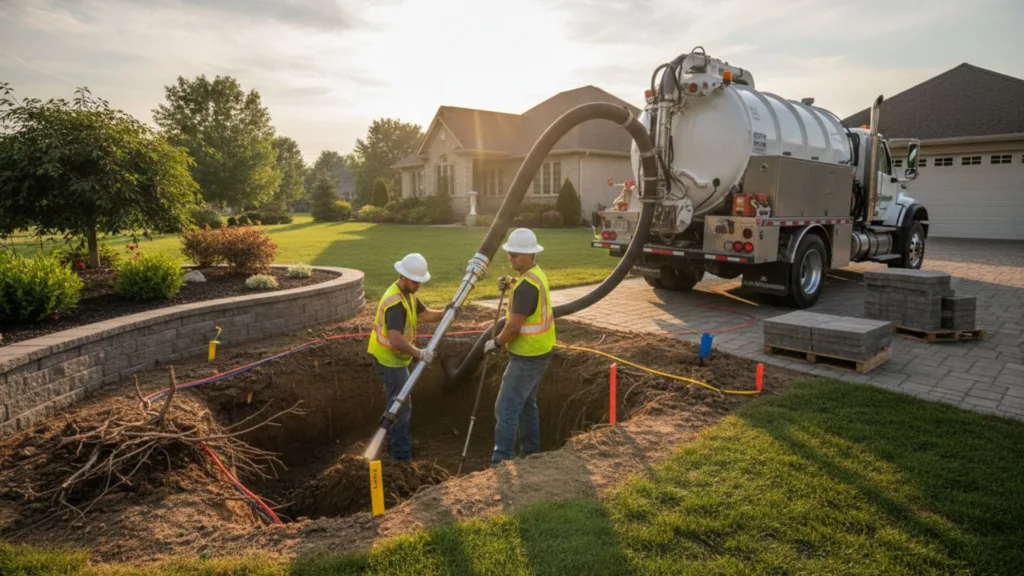
Beneath most Australian properties lies a tangle of gas mains, electrical cables, water pipes, and telecommunications lines, many of which are poorly marked or shallower than you’d expect.
One misplaced bucket from a mini excavator can mean a ruptured gas line, a live electrical strike, or a neighbourhood without internet for a week.
Vacuum excavation — sometimes called non-destructive digging (NDD) or hydro excavation — offers a smarter, safer way to dig.
It uses pressurised water or air to loosen soil and a powerful vacuum to remove it, exposing underground utilities without the blunt-force trauma of mechanical digging.
Why Use Vacuum Excavation for Landscaping?
If you’ve ever watched a backhoe clip a fibre optic cable 300 millimetres below grade, you understand why the industry has moved toward non-destructive methods.
Utility strikes remain one of the most common — and most preventable — causes of site damage, service outages, and serious injury across Australia.
Vacuum excavation addresses this directly by replacing mechanical force with a controlled, precise process.
For landscaping specifically, there are a few reasons NDD makes particular sense:
- Minimal site disruption: Vacuum excavation creates clean, targeted holes rather than wide trenches. This means less mess on a client’s property, less turf to reinstate, and faster project completion.
- Protection of tree root zones: When planting near established trees or working within root protection areas, NDD allows you to expose and work around root systems without severing them — something a traditional excavator simply cannot do with any reliability.
- Reduced utility strike risk: The combination of water (or air) and vacuum gives operators the ability to feel their way around buried services rather than cutting through them blindly.
- Compliance with Australian standards: Many local councils and asset owners now require or strongly recommend non-destructive methods when working near critical infrastructure. Using NDD demonstrates due diligence and keeps you on the right side of regulations.
How Vacuum Excavation Actually Works
Before we get into the step-by-step safety procedures, it’s worth understanding the mechanics. Vacuum excavation equipment typically consists of a truck-mounted unit with two core systems:
- A pressurised water or air lance: This is used to break up and loosen the soil. Hydro excavation uses water; pneumatic (air) excavation uses compressed air. Water is more common for general use, while air is often preferred near sensitive electrical infrastructure because it’s non-conductive.
- A high-powered vacuum system: Once the soil is loosened, the vacuum draws it up through a large-diameter hose into a spoil tank on the truck. The result is a clean, well-defined excavation with exposed utilities clearly visible.
The operator works the lance by hand, carefully directing the water or air stream while the vacuum removes material in real time.
It’s methodical work — not fast in the way a 5-tonne excavator is fast — but the precision is incomparable.
Common Mistakes to Avoid
Having seen hundreds of vacuum excavation jobs across residential, commercial, and industrial sites, there are a few recurring mistakes that cause the most problems:
- Parking the truck too close to the excavation: The weight and vibration can cause the edges of the hole to collapse, creating a fall hazard or damaging the very utilities you’re trying to protect.
- Skipping the spotter: It takes one moment of inattention for an operator to swing a hose into an overhead power line. A spotter prevents this.
- Over-pressurising the lance: More pressure doesn’t mean faster work — it means damaged utilities, potential injection injuries, and severed tree roots. Respect the equipment limits and the conditions.
- Relying solely on DBYD plans: The plans are a starting point, not gospel. They show approximate locations, and services can shift over time due to ground movement, previous works, or simply inaccurate original records.
- Neglecting daily equipment inspections: A worn hose fitting or a degraded nozzle coating can turn a routine job into a serious incident. Check everything, every day.
- Ignoring water management: On landscaping sites, uncontrolled water runoff damages garden beds, erodes soil, and can carry sediment into stormwater drains — which is both an environmental issue and a compliance one.
When to Call in a Professional NDD Team
Small-scale vacuum excavation units are available for hire, and experienced landscapers may operate them effectively on straightforward jobs.
But there are situations where bringing in a dedicated NDD crew is the smarter move:
- The site has multiple or high-risk services (high-voltage electrical, high-pressure gas).
- You’re working in areas with suspected contamination.
- The excavation is deep (beyond 1.5 metres) or in unstable ground conditions.
- Council or asset owner requirements mandate a licensed NDD operator.
- The spoil needs to be classified and disposed of at a licensed facility.
Final Thoughts
Vacuum excavation has genuinely changed how we approach digging on sensitive sites.
It’s not a magic solution — it still requires planning, competence, and respect for what’s underground — but it gives landscapers and contractors a way to work precisely and safely in areas where traditional mechanical methods pose unacceptable risk.