
Common causes of grease trap blockages
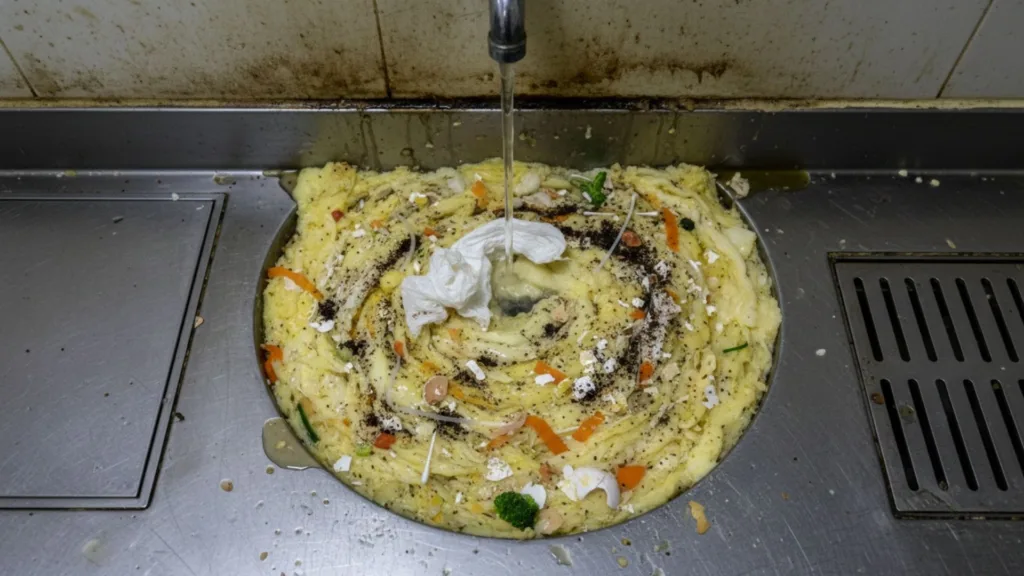
If you’ve ever walked into a commercial kitchen first thing in the morning and been hit by a smell that shouldn’t be there, there’s a fair chance the grease trap is trying to tell you something.
Blockages in grease traps are one of the most common — and most preventable — plumbing issues we see across food and beverage operations, hospitality venues, and institutional kitchens.
Left unchecked, they lead to slow drainage, foul odours, wastewater overflows, and potential breaches of trade waste regulations.
What Does a Grease Trap Actually Do?
Before we get into what goes wrong, it’s worth understanding what a grease trap is designed to do and how grease trap cleaning commonly goes.
A grease trap — sometimes called a grease interceptor — sits between your kitchen’s drainage outlets and the sewer connection.
Its job is to separate fats, oils, and grease (FOG) from your wastewater before it enters the municipal sewer system.
FOG is lighter than water, so the trap works on a simple principle: wastewater flows in, FOG floats to the top and is retained, and the cleaner water flows out the other side.
It’s elegant in theory, but in a busy commercial kitchen producing hundreds of litres of wastewater a day, things can get complicated quickly.
The Primary Causes of Grease Trap Blockages
Servicing grease traps across food manufacturing plants, restaurant strips, and council-managed facilities, you’ll see that blockages almost always come back to one of three core issues.
1. FOG Buildup
This is the big one. Fats, oils, and grease cool and solidify as they travel through your drainage system. Over time, that solidified FOG coats the interior walls of pipes and accumulates inside the trap itself.
What starts as a thin film gradually narrows the available flow path until drainage slows to a crawl — or stops altogether.
2. Food Debris and Solids Accumulation
FOG rarely works alone. Undissolved food particles — rice, vegetable scraps, flour, coffee grounds — wash into the trap and combine with grease to form a thick sludge.
This sludge settles in the trap’s compartments and reduces its capacity to separate FOG from water effectively.
Once the trap’s separation capacity is compromised, grease starts passing through to the outgoing line and into the sewer — which is exactly what the trap is supposed to prevent.
3. Blockages in Specific Lines
Not all blockages happen inside the trap itself. Understanding where a clog forms helps diagnose the problem faster:
- Incoming line: FOG and food debris accumulate in the pipe leading into the trap. When this blocks, you’ll typically see backups from the lowest fixture in the kitchen — often a floor drain or the dishwasher outlet.
- Crossover line: Most grease traps have two internal compartments connected by a crossover pipe or baffle. Buildup here causes the liquid level in the first compartment to rise while the second compartment stays relatively normal. This is a telltale sign that the crossover needs clearing.
- Outgoing line: Solids and grease that escape the trap’s retention zone can accumulate in the outgoing pipe, preventing treated wastewater from discharging. This is when overflows happen — and they tend to happen at the worst possible time.
Contributing Factors That Make Blockages Worse
The causes above are the direct culprits, but several contributing factors accelerate the problem. These are the ones we find ourselves discussing most often with kitchen managers and facilities teams.
Lack of Regular Maintenance
This is, without question, the single biggest factor we encounter. A grease trap that isn’t pumped and cleaned on a regular schedule will exceed its capacity.
Once FOG and solids fill beyond the trap’s designed retention volume, they spill over into downstream pipes and cause blockages that are far more expensive to resolve than routine servicing would have been.
How often should a grease trap be pumped? It depends on the size of the trap and the volume of your kitchen’s output, but most commercial operations need servicing every 4 to 12 weeks.
Improper Sizing or Installation
An undersized grease trap is essentially set up to fail. If the trap can’t handle the volume of FOG your kitchen produces, it fills too quickly and blockages become a recurring headache.
On the flip side, an oversized trap can actually reduce separation efficiency because the flow rate is too slow to push FOG to the surface properly.
Improper Disposal Practices
Kitchen staff are busy. When service is in full swing, it’s tempting to pour used cooking oil straight down the drain or let food scraps wash into the sink without a strainer in place.
These habits dramatically accelerate FOG and solids buildup in the trap.
Common culprits include:
- Pouring hot cooking oil or fryer oil directly down the drain
- Scraping plates into sinks rather than into waste bins
- Allowing foreign objects — packaging, rubber gloves, cleaning cloths — to enter the drainage system
- Using excessive amounts of emulsifying detergent, which can push FOG past the trap and into the sewer line
Corrosion from Decomposing Waste
This one catches people off guard. When food waste sits in a grease trap and decomposes, it produces acidic byproducts — primarily hydrogen sulphide — that corrode metal components and concrete housings over time. Corroded baffles and seals allow FOG to bypass the trap’s separation chambers, worsening blockages and potentially causing leaks into surrounding soil or structures.
How to Prevent Grease Trap Blockages
Prevention isn’t complicated, but it does require consistency. Here’s what works based on what we see across the hundreds of grease trap services our teams carry out:
Establish a Professional Pumping Schedule
Regular professional pump-outs are non-negotiable. Work with your service provider to set a frequency based on your trap size and kitchen output — and stick to it. Skipping a scheduled service to save a few hundred dollars almost always costs more in the long run when an emergency callout is needed.
Train Kitchen Staff on FOG Disposal
Good habits at the source make an enormous difference. Staff training should cover:
- Dry-wiping pans, pots, and plates before washing to remove excess grease and food
- Using sink strainers to catch solids before they enter the drainage system
- Collecting used cooking oil in designated containers for recycling — never pouring it down the drain
- Reporting slow drainage immediately rather than ignoring it
Ensure Proper Trap Sizing
If blockages are a recurring problem despite regular maintenance and good disposal practices, the trap itself may be the issue. Have a qualified technician assess whether the trap is appropriately sized for your operation’s FOG output.
Avoid Chemical “Quick Fixes”
We get asked about chemical drain cleaners and biological additives regularly. While some products can offer short-term relief, they often push FOG further down the line rather than removing it — creating bigger problems in the sewer network.
When to Call in the Professionals
Routine maintenance like dry-wiping and strainer use can be handled in-house, but grease trap pumping, cleaning, and blockage resolution should always be carried out by a licensed waste service provider.
The waste removed from grease traps is classified as trade waste and must be transported and disposed of in accordance with state regulations — this isn’t something to handle with a wet-dry vacuum and a trip to the tip.