
Scaling Impact Initiatives Through Sustainable Water Solutions Worldwide
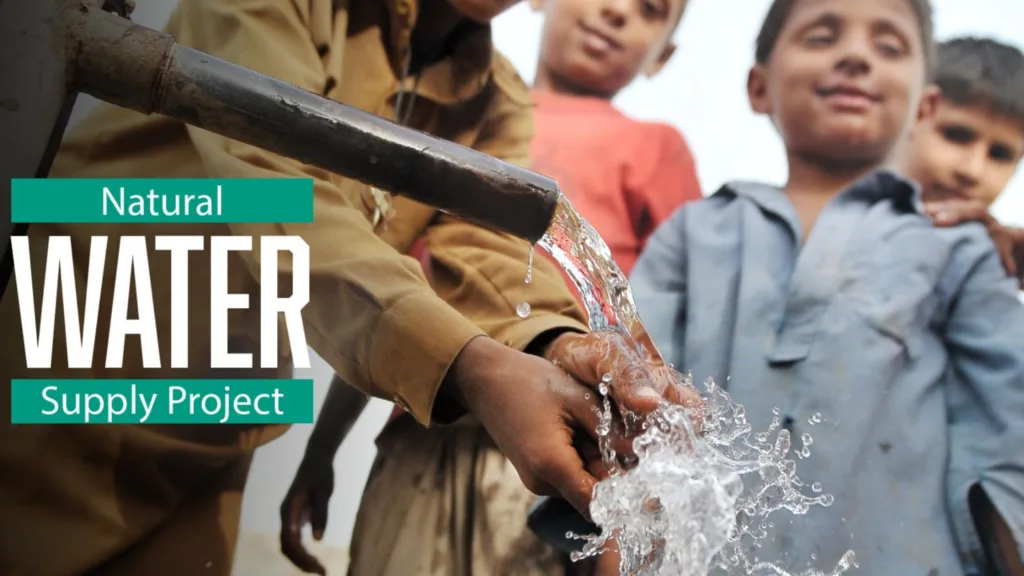
Not everyone wakes up and has water sorted. For a lot of families, finding clean water is the first task of the day before anything else happens. Before breakfast, before school, before work. And whatever they find is not always safe. They use it anyway because there is nothing else. That is the gap this work is trying to close. That is life for millions of families.
Water access problems are not new. What is new is that solutions have improved, costs have dropped, and more organizations are figuring out how to make progress stick. The hard part is no longer finding what works. It is getting it to enough people, fast enough, without cutting corners that matter. Sustainable water solutions for communities succeed not because the technology is sophisticated, but because the support structures around them are built to last.
The Gap Between What Exists and What Reaches People
Walk into any development conference and you will hear about innovation. New filtration tech. Smart sensors. Solar pumps. The technology works. That is not really the debate. The bigger issue is what happens on the ground in places where resources are tight and outside support is thin. A borehole has sat broken for eight months because nobody set aside money for a spare part. A water committee formed during project launch has quietly stopped meeting. A pipe installed five years ago now leaks at three different joints, and the organization that built it is long gone.
This is where most water programs lose the plot. They fund the build and skip the after.Launch day gets all the attention. Photos, handshakes, water flowing. Then the team leaves. What happens six months later, or two years later, rarely makes it into any report. Communities that have watched this happen before are not easily impressed by a working tap on day one. They have seen working taps before. They know how the story usually goes. They have seen teams arrive with equipment, hold a ceremony, and disappear. Trust erodes each time. So when another program shows up with promises, people are not exactly rushing to celebrate. They have seen this before. Their caution makes complete sense.
Any serious effort to scale water access has to reckon with that history honestly.
Approaches That Hold Up Over Years, Not Just Months
Some methods keep working in places where others have failed. Some approaches keep showing up in successful projects not because they are impressive but because they are practical. Gravity-fed systems are one of them. If there is a clean water source sitting uphill from a community, pipes can bring that water down without any power at all. It flows into a tank and out to where people need it. Nothing complicated about it.
What breaks? Joints, occasionally. Pipes, rarely. A person with a half-day of training can handle most problems. These systems are running in communities across Nepal, Rwanda, and Honduras, some of them for twenty or thirty years.
Filtering water at the household level is practical in a lot of situations. Ceramic and biosand filters handle most common pathogens well enough to make a real difference. They can be built locally, from materials that are not hard to find, and they run without electricity or chemicals. The main thing they require is that someone actually uses and maintains them, which comes down to training and follow through.
. A household using one consistently gets meaningfully cleaner water. The limitation is that they require regular cleaning and eventual replacement of filter material. That is manageable, but it requires follow-through.
Solar pumps have come down sharply in price. A system that would have cost a community organization serious money a decade ago is now within reach for smaller budgets. The panels last. The pumps, when installed properly and maintained, serve communities for years. The bigger issue is repairs when something does fail. If the nearest technician is four hours away, small problems become large ones quickly.
Rainwater collection works well in the right climate. A school with a corrugated iron roof and a connected tank can collect thousands of liters during rain season. For rural households, even a simple system reduces time spent on collection and reduces dependence on surface water that may be contaminated.
None of these solutions is perfect everywhere. All of them work well somewhere. The skill is matching approach to context, and then building in the support structures that keep things running.
Ownership Is Not a Soft Concept
Development organizations have talked about community ownership for decades. In practice, it often gets treated as a box to check. Hold a meeting before construction. Get signatures. Move forward.
Real ownership looks different. It starts before any design decisions are made. It means asking who in the community already manages shared resources, and building on those existing structures instead of creating new ones. It means making sure the people who will actually use the system, often women, have real say in where it is located and how it is managed.
It also means talking through things people would rather avoid. What happens when a household stops paying their share? Who handles that conversation, and how?
Who has authority to cut off access? What is the process when committee members disagree? These questions feel bureaucratic, but communities that have worked through them before problems arise handle breakdowns far better than those that have not.
Programs that spend serious time on this early stage consistently outperform those that rush to construction. The infrastructure is the easy part. The social structure around it is what keeps it alive.
Scaling Without Losing What Makes Things Work
Growing from ten communities to a hundred sounds like progress. Sometimes it is. Sometimes it hollows out everything that made the original ten work.
The most common failure mode is speed. Donors want numbers. Reports need to show reach. Pressure builds to move faster than local processes allow. Corners get cut on community engagement. Training periods get shortened. Monitoring visits drop off. Five years later, half the systems are not functioning.
Organizations that scale well tend to be stubborn about a few things. They keep community engagement timelines firm even when pressure comes to compress them. Before pushing into new areas, they make sure the maintenance side is covered. Local technicians trained and spread across the region, not one person responsible for everything. They also track what happens to systems over time. How many are still working after a year? After five? That is the number that tells you what a program is actually worth. It is also the number you will rarely find in a donor report, because for a lot of programs, it is not a comfortable thing to share.
Funding Gaps and How Some Programs Bridge Them
The money side of water access is genuinely complicated. Building costs money upfront. Maintenance costs money over time. Communities with the greatest need often have the least financial flexibility.
Community fee systems work in some contexts. Households contribute a small amount monthly to a shared maintenance fund. When something breaks, the money is there. This model has functioned well in parts of East Africa and South Asia. It struggles where household incomes are very low or very irregular or where trust in the committee managing the funds is not established.
Some programs have linked with microfinance institutions to allow communities to borrow for initial infrastructure and repay gradually. This shifts the upfront burden without eliminating the long-term support structure.
Government involvement changes the math significantly. When a local government takes on even partial responsibility for a system, providing a budget for repairs or staffing a technician, program sustainability improves. The problem is that government capacity and willingness differ a lot from one place to the next. Some local governments are genuinely helpful partners. Others are stretched thin, disorganized, or simply not prioritizing water. Programs that figure this out early and build the government relationship from the start, rather than trying to bring them in later, generally do better for it.
International grant funding still drives most of this work. The limitation of grants is that they run out. The best-designed grants build toward a post-grant future explicitly, with local funding mechanisms in place before the grant period ends. The worst-designed ones fund a launch and leave communities to figure out the rest.
Climate Shifts Are Changing the Calculations
A lot of communities that used to know exactly when the rains were coming are not so sure anymore.
Dry seasons stretch longer. When rain comes, it sometimes comes harder and faster, causing runoff rather than absorption. These shifts affect which solutions make sense and where.
A spring-fed gravity system depends on that spring staying active. In areas where springs have reduced or dried up over recent years, this is not a hypothetical risk. Communities need backup options or alternative sources.
Some areas are pulling water out of the ground faster than rain can put it back. The result is that wells need to go deeper than they did ten years ago to hit anything. Deeper means more expensive to drill and harder to pump without equipment that smaller communities struggle to afford and maintain.
This raises costs and sometimes puts water out of reach of simpler pumping solutions.
Watershed protection matters here in practical terms. When trees and vegetation cover the land around a water source, rain soaks in slowly rather than running off. The source stays more consistent. Programs that pair water infrastructure with reforestation or land protection are addressing something real, not just adding a talking point.
What Honest Progress Looks Like
There is enough evidence now to know what tends to work. Community involvement from the start. Local technicians trained before programs close out. Maintenance funds established and functional. Monitoring that continues after launch. Government relationships built deliberately.
These are not radical ideas. They are just disciplined ones. Steady, careful work does not make for a great press release. A ribbon cutting does. That gap in how things get celebrated affects where money flows and which programs grow. The organizations actually getting lasting results tend to be quieter outfits. They have been working in the same communities for years, they know the history, and they are straight about what has not gone well. They publish what did not work alongside what did. They measure long-term functionality and talk about it openly.
Clean water access is solvable in far more places than it currently exists. The knowledge is there. The tools exist. What is harder to find is funding that thinks in decades rather than project cycles. Thirty years of reliable water from one well beats ten years from three different ones that each broke down. Most people working in this space would agree with that. Getting the whole system like funders, implementers, and governments to actually behave that way is the part that still needs work. For donors who want their giving to outlast a project cycle, that is exactly what water as Sadaqah Jariyah means in practice like a well built properly, maintained honestly, serving a community long after the moment of giving.