
Why Custom Web Development Services Matter in 2026
Custom web development services are no longer about visual differentiation. They are about operational control. As markets accelerate and digital expectations rise, businesses cannot afford slow deployments, fragile integrations, or performance bottlenecks that directly affect revenue.
Standard websites often work until they don’t. They handle early growth. They support basic marketing. Then complexity increases. Integrations multiply. Traffic scales. Security expectations tighten. At that point, a generic build shifts from convenient to constraining.
In 2026, the urgency comes from three forces: speed, data, and risk. Speed determines competitiveness. Data determines decisions. Risk determines exposure. If your web platform cannot evolve without breaking, delaying, or inflating costs, it becomes a liability rather than an asset.
This article breaks down what custom web development services actually involve, when they become necessary, and how they protect long-term digital performance in a more demanding operating environment.
What Custom Web Development Services Really Mean
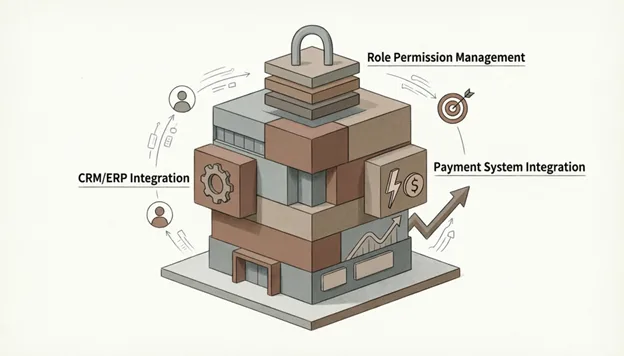
Custom web development services involve designing and engineering a website or web application around specific business requirements instead of adapting your operations to a pre-built theme or platform.
In practice, this means:
- Architecture designed for your data flows
- Integrations with CRM, ERP, payment systems, or internal tools
- Role-based access and permissions
- Performance budgets and SEO structure defined from the start
- Scalable backend logic aligned with growth plans
A custom web development company does not begin with templates. It begins with constraints, workflows, user roles, and measurable objectives.
The difference is structural, not cosmetic.
Why Companies Move Beyond Templates
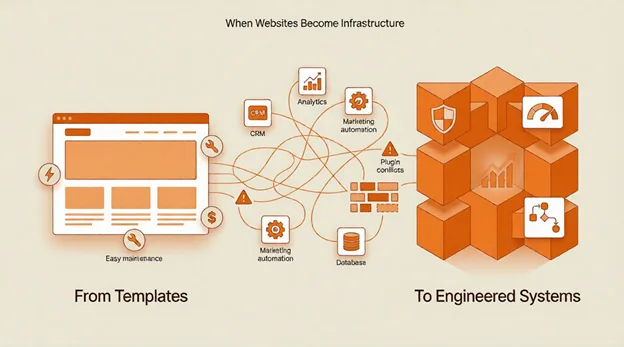
Templates and website builders are efficient for early-stage needs. They are fast, affordable, and easy to maintain. For many small projects, they are sufficient.
The shift toward custom web development services usually happens when one or more of the following appears:
- Integration complexity increases
Marketing automation, CRM routing, analytics tracking, and internal reporting need to work together. Plugins begin to conflict. Data becomes fragmented. - Performance becomes revenue-critical
A one-second delay in page load can reduce conversion rates significantly in ecommerce and lead-generation environments. Generic themes often carry unnecessary code. - Security requirements rise
Role-based access, sensitive customer data, or compliance expectations require tighter engineering controls. - Workflow logic cannot be replicated in plugins
Booking systems, multi-step onboarding flows, SaaS dashboards, or enterprise portals often require custom logic.
When a website becomes infrastructure rather than presentation, a custom web development service becomes a strategic decision rather than a technical upgrade.
What a Professional Custom Web Development Agency Delivers
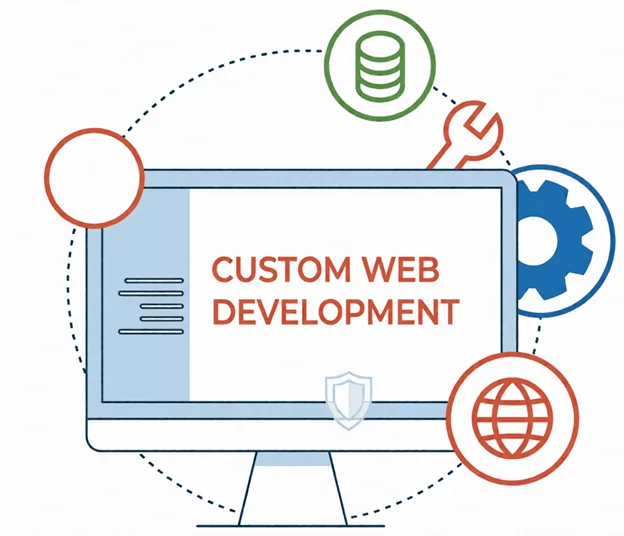
Not all web development firms approach projects the same way. A structured custom web development agency typically includes the following phases:
1. Discovery and Architecture
This phase defines:
- Business objectives
- User personas and access levels
- Data structure and integrations
- Risk assessment
- SEO and performance requirements
Skipping this stage often results in scope expansion, rework, and technical debt.
2. UX and Interface Design
Custom website design and development are interconnected. Interface decisions affect backend complexity. A web design and web development company that works collaboratively across disciplines reduces friction.
Design at this stage focuses on:
- Conversion flows
- Accessibility standards
- Responsive behavior
- Interaction clarity
The goal is usability aligned with business outcomes.
3. Engineering and Integration
This is where a web development firm differentiates itself. Custom builds may involve:
- React, Angular, or Vue front-end frameworks
- Node.js, .NET, Java, or Python back-end systems
- API-first architecture
- Cloud-native deployment
- Containerized environments
Enterprise web development services often include CI/CD pipelines, automated testing, and logging infrastructure.
4. Testing and Deployment
Responsible web development solutions include:
- Performance testing
- Security validation
- Structured release discipline
- Staging environments
- Rollback procedures
Web development support services extend beyond launch. Ongoing monitoring, updates, and iterative improvements are part of sustainable delivery.
Cost Considerations and Long-Term ROI
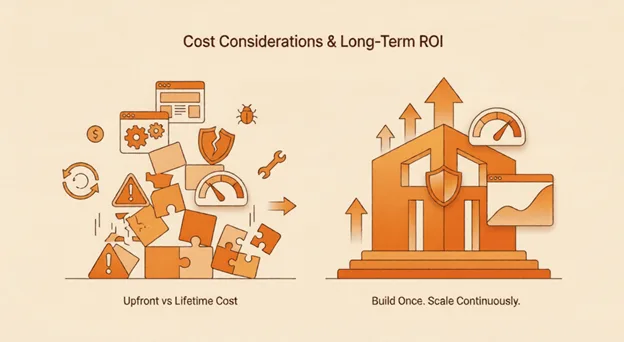
Custom web development services typically require higher upfront investment compared to template-based builds.
However, long-term cost analysis should consider:
- Plugin licensing and recurring fees
- Performance-related revenue loss
- Security incident risk
- Migration costs from inadequate systems
- Maintenance inefficiencies
A well-architected custom web development solution reduces structural rework. Scalability becomes incremental rather than disruptive.
In enterprise environments, rebuilding twice often costs more than building correctly once.
When Custom Web Development Is Not Necessary
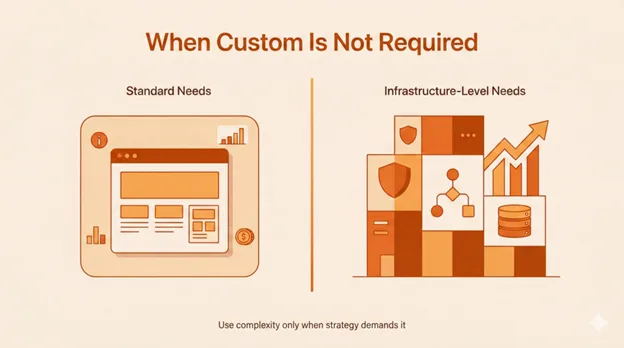
It is important to clarify that not every organization needs a custom web development company.
Custom may be unnecessary if:
- The site is informational only
- No complex integrations are required
- Traffic volume is modest
- There are no compliance constraints
- Budget constraints outweigh long-term benefit
In those cases, a high-quality template or managed platform may be appropriate.
Custom web development services are justified when digital infrastructure supports revenue, operations, or regulatory exposure.
Choosing the Right Web Development Partner
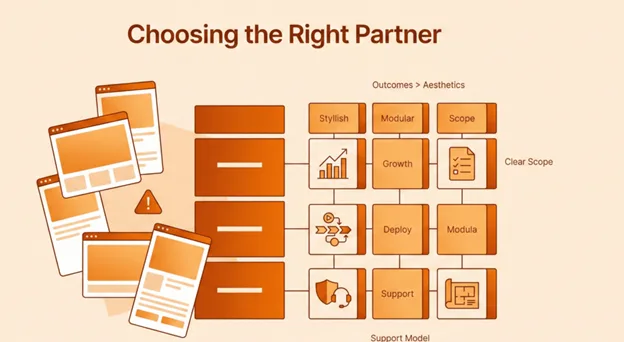
Selecting a web dev company requires evaluation beyond portfolios.
Key indicators include:
- Evidence of measurable outcomes, not just visuals
- Transparent scoping methodology
- Clear release process
- Defined support model
- Engineering standards and documentation practices
A web development consultancy should articulate trade-offs openly. Unrealistic timelines or vague scope definitions are early warning signs.
A strong web development services company explains risk before it becomes expensive.
Final Perspective
Custom web development services are not about complexity for its own sake. They are about alignment. Alignment between business operations and digital systems. Alignment between performance targets and architecture. Alignment between growth plans and scalability.
For organizations whose websites function as operational platforms, not marketing placeholders, custom development is less a luxury and more a structural requirement.
The decision should be driven by constraints, integrations, performance expectations, and long-term vision. When those factors are clear, the role of a custom web development agency becomes strategic rather than technical.
If your website influences revenue, data flow, or operational reliability, evaluating custom web development services is a rational next step rather than an upgrade driven by aesthetics.