
What Makes an Alternative Preschool Model Feel Different From Traditional Preschool for Children and Their Families
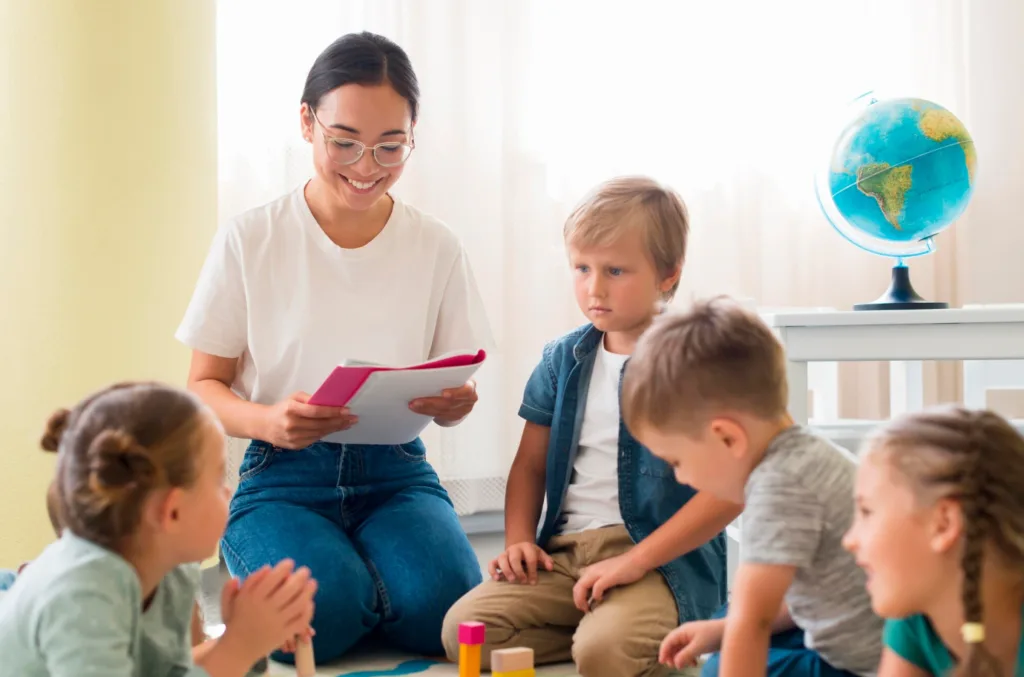
Choosing a preschool often starts with practical concerns such as location, schedule, safety, and cost. Yet once families begin visiting schools, many realize that the biggest difference is not logistical. It is philosophical. Some programs follow a more traditional format with teacher-led lessons, fixed routines, and clearly defined outcomes. Others take a broader early childhood approach that places curiosity, relationships, creativity, and independence at the center of the experience.
Parents exploring KLA learning centers often want to understand what truly separates an alternative preschool model from a conventional one. The answer is not simply that the classroom looks different. It is that the child is viewed differently. In many alternative settings, young learners are seen as capable participants in their own growth, and families are invited into a more thoughtful partnership with the school. That shift can shape the daily rhythm, the teaching style, and the way children experience learning from the very beginning.
The Child Is Seen as an Active Thinker Rather Than a Passive Receiver
One of the clearest distinctions is the role children play in the classroom. Traditional preschool settings may rely more heavily on adult-directed instruction, preplanned activities, and whole-group expectations that leave limited room for exploration. An alternative model often begins with a different assumption. Children are not empty vessels waiting to be filled with information. They are observant, expressive, and naturally motivated to make sense of the world.
This perspective changes how learning unfolds. Instead of moving through the day as a sequence of tasks created entirely by adults, children are encouraged to ask questions, test ideas, and contribute to classroom experiences. Inquiry-based learning, open-ended discussion, and hands-on discovery become central. That approach can strengthen confidence, language development, and deeper engagement because children feel personally connected to what they are doing.
The Classroom Environment Becomes a Teaching Tool in Its Own Right
Families often notice a visual difference as soon as they walk into an alternative preschool. The room may feel calmer, more intentional, and more reflective of the children themselves. Materials are usually arranged to invite independence, not only to keep children occupied. Natural elements, accessible shelves, carefully chosen books, art materials, sensory resources, and spaces for collaborative work often signal that the environment is meant to support exploration.
In traditional classrooms, materials may sometimes be organized around teacher-led tasks or product-focused projects. In a child-centered setting, the space encourages investigation and choice. Children can move with purpose, select resources, revisit ideas, and develop ownership over their learning experience. This can support executive function, self-regulation, and sustained attention in ways that feel organic rather than forced.
Teachers Take on the Role of Guide, Observer, and Thoughtful Partner
Another important difference lies in how teachers interact with children. In a more conventional model, the adult may spend much of the day directing the group, delivering lessons, and managing transitions from the front of the room. Alternative preschool educators often work more responsively. They observe, listen closely, and extend learning through conversation, documentation, and intentional support.
This does not mean there is no structure or guidance. Strong alternative programs are highly intentional. The difference is that teaching is shaped by what children notice, wonder, and attempt. Teachers might ask open-ended questions, encourage problem-solving, or help children reflect on their ideas. That kind of relationship supports cognitive growth, emotional expression, and social development because children feel respected rather than simply managed.
Play Holds Greater Educational Value Than Many Families Expect
Traditional preschool programs may include play, but it is sometimes treated as a break between academic tasks. Alternative models usually see play-based learning as a serious and essential part of early childhood education. Through dramatic play, building, storytelling, movement, music, and sensory exploration, children practice communication, cooperation, creativity, and flexible thinking.
Play also gives teachers rich insight into development. A child building a structure with blocks is not only having fun. That child may be strengthening fine motor coordination, spatial awareness, persistence, and collaborative problem-solving. A child acting out a story in a pretend kitchen may be working through social roles, language patterns, and emotional understanding. When play is valued as meaningful learning, the classroom becomes more dynamic and developmentally appropriate.
Families Often Feel the Difference in Communication and School Culture
The alternative preschool experience can feel different for parents as well. In more traditional programs, communication may focus mainly on schedules, rules, and academic progress. In child-centered environments, family partnership is often broader. Teachers may share observations, classroom documentation, project work, and insights into how children are thinking, interacting, and growing.
This creates a stronger connection between home and school. Parents are not only receiving updates. They are gaining a window into the learning process itself. Many families appreciate this because it helps them understand their child more fully. It also builds trust. When a school values transparency, reflection, and respectful collaboration, the relationship feels more personal and more meaningful.
What Families Often Notice When the Approach Truly Fits
The strongest sign that an alternative preschool model is working is often visible in the child. Children may appear more engaged, more willing to communicate, more eager to investigate, and more comfortable taking initiative. Parents may also notice that school conversations become richer because children are not only repeating facts. They are sharing ideas, questions, and experiences that mattered to them. For many families, that is what makes the difference feel so significant. An alternative preschool model does not simply change the schedule or the classroom layout. It changes the quality of the learning experience for children and the relationship families have with early education. When a school treats childhood with respect, intention, and curiosity, that difference is felt long before kindergarten begins.