
The Rise of the Creator Manufacturer: How Desktop Fabrication Is Changing Small Business
Introduction
For decades, manufacturing was largely reserved for companies with significant capital, industrial facilities, and access to large-scale production networks. Entrepreneurs with product ideas often faced high upfront costs, long development timelines, and minimum order requirements that made experimentation difficult.
Today, that reality is changing. Advances in digital fabrication technologies are enabling a new generation of creators, makers, and small business owners to design, prototype, and manufacture products on their own terms. From custom home décor and personalized gifts to hardware prototypes and educational products, independent entrepreneurs now have access to tools that were once limited to industrial environments.
This shift has given rise to what many are calling the creator manufacturer—a business owner who combines digital design, modern fabrication tools, and direct-to-consumer sales channels to build profitable niche brands.
The Growing Demand for Personalized Products
Consumer preferences have evolved significantly in recent years. Buyers increasingly seek products that reflect personal identity, unique interests, and individual tastes.
This trend has fueled the growth of marketplaces such as Etsy, custom product businesses, and independent creator brands. Unlike traditional mass production, these businesses thrive on customization, small production runs, and rapid product iteration.
However, meeting this demand efficiently requires flexible manufacturing methods. Traditional outsourcing often introduces delays, communication barriers, and high minimum order quantities that can limit innovation.
Digital fabrication technologies provide an alternative approach, allowing entrepreneurs to produce customized products while maintaining greater control over quality and production schedules.
The Democratization of Manufacturing
One of the most significant developments in modern manufacturing is accessibility.
Professional-grade fabrication tools have become smaller, smarter, and more affordable than ever before. Technologies that once required dedicated workshops and specialized operators can now fit into small studios, home workshops, and startup environments.
Modern desktop fabrication systems allow creators to move from digital design to physical production within hours rather than weeks. This ability dramatically reduces development cycles and enables entrepreneurs to test new ideas with minimal financial risk.
As a result, manufacturing is no longer limited to factories. It is becoming a practical capability for designers, artists, engineers, educators, and small business owners.
How Desktop Fabrication Supports Small Businesses
The advantages of in-house production extend beyond cost savings.
By utilizing tools such as CNC machining, creators can maintain direct control over every stage of product development. Designs can be modified quickly, prototypes can be tested immediately, and customer feedback can be incorporated without waiting for external suppliers.
Many small businesses now use desktop fabrication to produce:
- Custom signs and plaques
- Personalized gifts
- Educational toys and puzzles
- Product prototypes
- Small-batch consumer products
- Custom accessories and décor
For these businesses, the ability to produce on demand helps reduce inventory risk while improving responsiveness to market trends.
Modern desktop CNC machines have become particularly valuable because they combine precision manufacturing with compact footprints, making them suitable for workshops that operate outside traditional industrial settings.
From Side Hustle to Scalable Business
Many creator-led businesses begin with a simple idea and a small audience.
Historically, scaling production often required outsourcing, which could introduce quality control challenges and increase operational complexity. Today, digital fabrication tools allow entrepreneurs to expand gradually while maintaining control over production standards.
A maker selling personalized products online can start with limited equipment, refine product designs based on customer demand, and gradually increase output as the business grows.
This flexibility is especially important in an era where consumer trends evolve rapidly and product lifecycles continue to shorten.
Technology Is Accelerating Innovation
The creator manufacturing movement is also being accelerated by advancements in software and automation.
Design software has become more intuitive, while AI-powered tools are making product design and concept development more accessible. Combined with modern fabrication technologies, these innovations enable creators to move from concept to finished product faster than ever before.
New fabrication platforms are increasingly designed for ease of use, helping reduce the technical barriers traditionally associated with manufacturing.
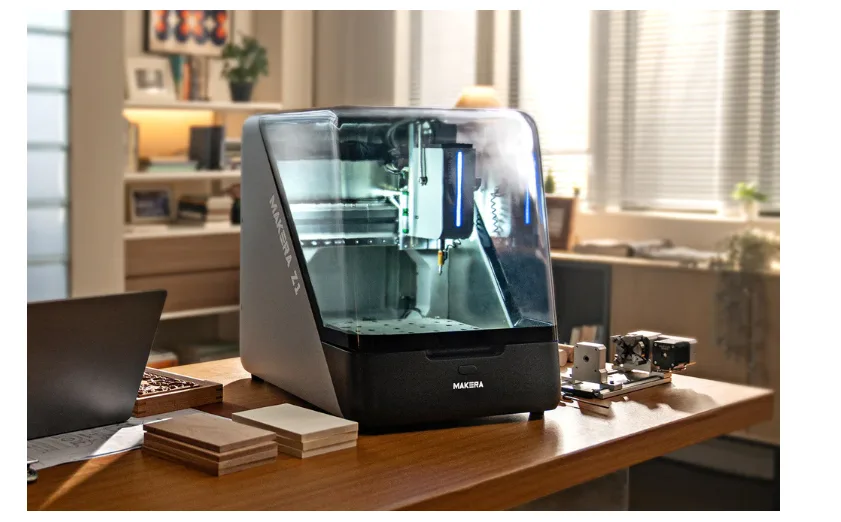
For example, systems such as the Makera Z1 reflect a broader industry trend toward compact, automated manufacturing solutions that bring professional capabilities into smaller workspaces.
These developments are helping entrepreneurs focus more on creativity, product development, and customer experience rather than complex manufacturing processes.
The Future of the Creator Manufacturer
As digital fabrication technologies continue to evolve, the distinction between creator and manufacturer will become increasingly blurred.
Small businesses are no longer limited by geography, factory access, or large production budgets. Instead, they can leverage modern fabrication tools to create unique products, respond quickly to market opportunities, and maintain greater control over their brands.
The rise of the creator manufacturer represents more than a technological shift—it reflects a broader transformation in how products are designed, produced, and brought to market.
For entrepreneurs willing to embrace digital fabrication, the opportunities are expanding rapidly. The next generation of successful product businesses may not emerge from large factories, but from small workshops, home studios, and creator-driven brands powered by accessible manufacturing technology.