
Smarter Temperature Control: How HVAC Thermostats Are Reducing Electricity Bills in Kuwait
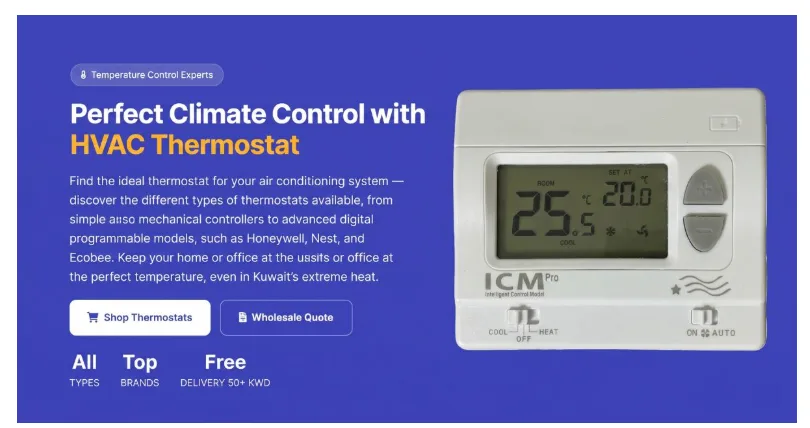
Kuwait consistently ranks among the world’s highest per-capita energy consumers, and the reason is straightforward: air conditioning runs almost continuously for six months of the year. With summer temperatures reaching 50°C and beyond, residential and commercial buildings rely on mechanical cooling as a baseline requirement rather than a seasonal comfort. The result is electricity bills that represent a significant portion of household and business operating costs, a problem that a well-chosen HVAC thermostat Kuwait can meaningfully address.
The thermostat is the control center of any air conditioning system. It monitors room temperature continuously and signals the compressor and fan to start or stop based on the setpoint. In older installations across Kuwait, basic mechanical thermostats with simple bimetallic strips handle this function without any programmability. The system runs until the room reaches the set temperature, then cycles off, then runs again. This approach works, but it is inherently inefficient: the system cannot anticipate occupancy patterns, adjust for time of day, or respond intelligently to changes in outdoor conditions.
Digital programmable thermostats change this equation. By allowing building owners and facility managers to set cooling schedules that match actual occupancy, turning up the setpoint during the hours a home or office is empty, and pre-cooling before occupants arrive, programmable thermostats can reduce air conditioning energy consumption by 15 to 25 percent over a full Kuwait summer. Given that AC can account for 60 to 70 percent of a residential electricity bill during peak months, that reduction is substantial. For a medium-sized commercial office or retail space, the cumulative savings across a full cooling season can justify the cost of the thermostat upgrade within a matter of weeks.
The Real Cost of Running AC Without Proper Scheduling
A home or office that runs air conditioning continuously at the same setpoint throughout the day, because the occupants either have no programmable thermostat or simply never set a schedule, is cooling empty rooms for hours at a time. During Kuwait’s summer, when a typical residential property may be unoccupied for eight to ten hours on a working day, this wasted cooling represents a high and entirely avoidable cost. A household that replaces a basic mechanical thermostat with a 7-day programmable digital model and sets appropriate schedules for working hours and sleeping hours typically sees a reduction of 18 to 22 percent in cooling-related electricity consumption. At Kuwait’s current residential tariff rates, the payback period for a mid-range programmable thermostat is often less than a single cooling season.
Smart Thermostats and Remote Control
For residential users, the most practical upgrade is a 7-day programmable digital thermostat that allows different schedules for weekdays and weekends. For larger commercial installations with central ducted systems, multi-zone thermostats and building management system integration offer even greater control and energy visibility. Smart Wi-Fi thermostats, which allow remote access via smartphone and, in some models, learn occupancy patterns automatically, represent the next step for users who want maximum convenience alongside energy optimization.
In Kuwait’s context, the remote access capability of smart thermostats has a specific practical value: the ability to adjust the setpoint when a property is unexpectedly unoccupied, without physically visiting the premises. For building owners managing multiple properties, or for families that travel during summer months, this level of control prevents the energy waste of cooling an empty building for days at a time.
Compatibility: What to Check Before Purchasing
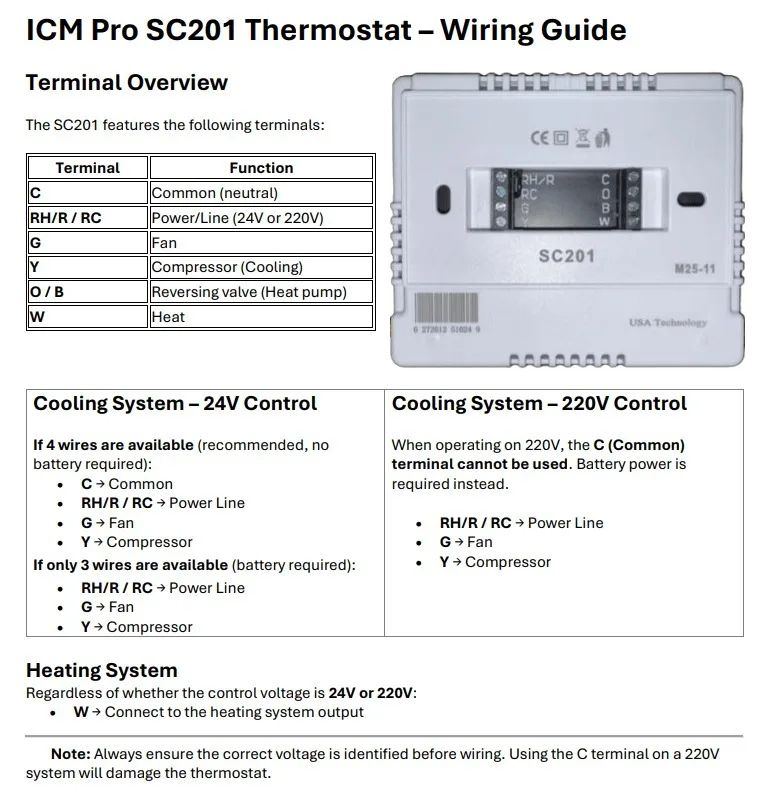
Selecting the correct thermostat requires matching the device to the system’s control voltage: 24V for most central and split AC systems, 220V for direct-connect configurations common in older window units. Installing a 24V thermostat on a 220V system will damage the control board. A qualified technician can verify the system voltage in under ten minutes, eliminating any compatibility risk. Those sourcing HVAC thermostats Kuwait will find digital programmable models from Honeywell and other leading brands, covering the full range of control voltages and system types installed across Kuwait’s residential and commercial buildings.
For building owners, contractors, and facility management companies, the ability to source the correct thermostat quickly from a local supplier with technical guidance on compatibility is as important as the product itself. Prompt access to the right part prevents extended system downtime and ensures that energy-saving schedules are up and running before the peak of summer. For HVAC maintenance Kuwait professionals who need reliable access to thermostats, contactors, capacitors, motors, and a full range of electrical HVAC components, a trusted local parts supplier is an essential part of delivering fast, effective service across Kuwait.