
Istanbul brings zero waste agenda closer to COP31 in Antalya
As Türkiye prepares for COP31, Zero Waste Forum 2026 and Zero Waste Festival organized in Istanbul showed how diplomacy, implementation and public engagement can move together.
Istanbul, Türkiye – Ahead of COP31 to be organized in Antalya in November, Istanbul became the setting for a message about climate action: Zero waste must be planned by institutions, implemented across systems and understood by the public.
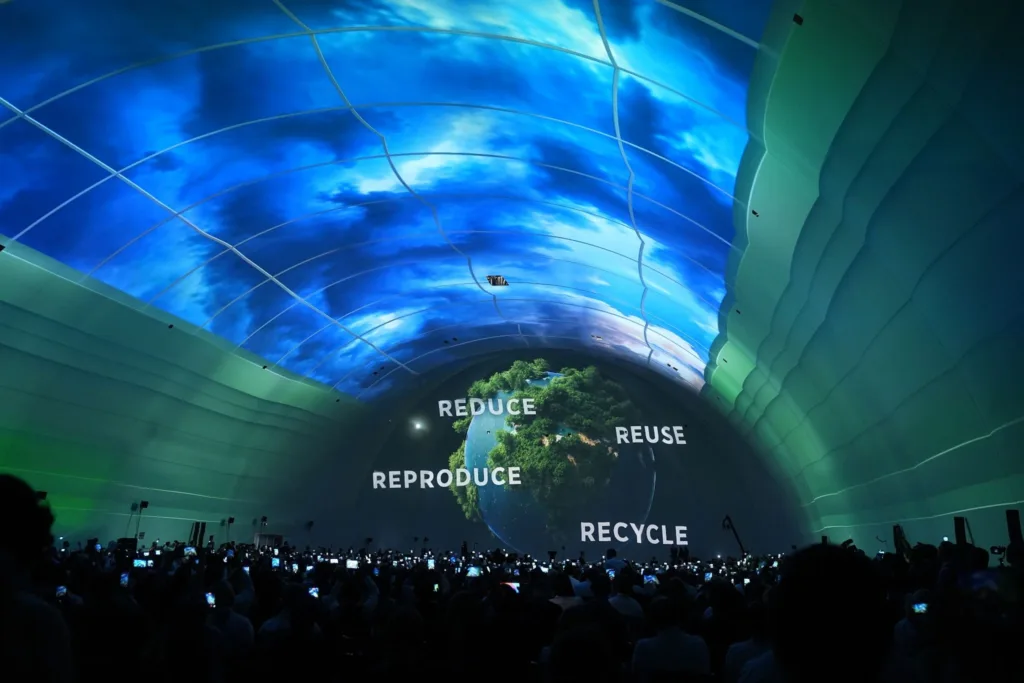
That message shaped Zero Waste Forum 2026 and the Zero Waste Festival, two connected gatherings that placed the Zero Waste Foundation’s agenda in an international context. Held at Atatürk Airport from June 5-7 under the theme “Road to Antalya: Zero Waste as Climate Action,” the forum brought together governments, cities, organizations, experts and stakeholders to focus on practical action rather than formal implementation rather than formal negotiation.
“The organizations showed how Türkiye’s road to Antalya can be built through practical cooperation.” said Samed Ağırbaş, President of the Zero Waste Foundation and COP31 Climate High-Level Champion, who serves under the vision of H.E. Emine Erdoğan, founder of the Zero Waste Movement, Chair of the UN High-Level Advisory Board on Zero Waste and Honorary President of the Zero Waste Foundation.
“Zero waste has become a language of implementation. It allows climate action to be discussed not only through targets, but through prevention, recovery, city systems, public awareness and institutional capacity. That is the kind of agenda COP31 needs to carry forward.”
“Zero waste is a delivery model”
The scale of the gathering reinforced its diplomatic significance. More than 120 ministers from 183 countries, hundreds of mayors and more than 5,000 participants attended, making the gathering one of the largest in global environmental diplomacy and the largest rehearsal ahead of COP31 for the Zero Waste Movement.
Yet the forum was designed to do more than gather senior figures. Its purpose was to accelerate coordination, strengthen partnerships and connect the Zero Waste Foundation’s multi-stakeholder platform with COP31-aligned implementation.
According to Ağırbaş, that bridge matters because climate diplomacy increasingly depends on what can be carried into real systems. “The strongest climate agenda is one that people can recognize in daily life and institutions can translate into action,” he said. “At the forum, we wanted to show that zero waste is a delivery model for cities, sectors and communities.”
The three-day program reflected that systems approach. With 247 speakers, it covered policy, technology, cities, food systems, energy, agriculture and forestry. Three High-Level Ministerial Sessions focused on industry and technology, agriculture and forestry, and energy and natural resources, creating sector-specific tracks on the Road to Antalya.
Food waste and methane action also took a prominent place. The forum examined prevention and recovery across production, logistics, retail and hospitality, as well as organic waste management, methane reduction, city-level implementation, scalable solutions and evidence-based guidance. They fed into outputs including the Road to Antalya Declaration, the City Action Commitments Package, the Food Waste and Methane Action Guide, and the Partnership and Project Pipeline.
“Food waste and methane action show where zero waste becomes measurable and operational,” Ağırbaş stated. “They require coordination from farm to logistics, from retail to hospitality, from municipalities to households. That is why the agenda has to be both high-level and practical.”
From diplomacy to dialogue
Outside the forum, the Zero Waste Festival gave the same agenda a public face. Organized during Zero Waste Week, led by the Governorship of Istanbul in cooperation with the Zero Waste Foundation from June 1-7, the festival brought more than 1 million visitors into a program of environmental awareness, sustainable living, culture, arts, technology, exhibitions, workshops and interactive experiences.
That public dimension helped Istanbul present zero waste as a shared civic agenda. As one of Europe’s largest environmental events, the festival expanded the forum’s diplomatic and institutional work into a broader conversation with citizens and communities.
The forum and the festival were designed to complement one another. One created the policy, diplomacy and implementation pillar. The other created visibility, awareness and public ownership. Together, the two events positioned Istanbul as a global platform for zero waste dialogue and action before COP31 shifts attention to Antalya. They also allowed Türkiye to present the Zero Waste Movement as a framework linking diplomacy, city action, sector leadership and public participation.
For Ağırbaş, the critical success factor now is continuity. “The Road to Antalya is not only a slogan,” he said. “It is a responsibility to carry partnerships, commitments and public momentum into COP31. What began in Istanbul must continue as practical climate action.”
Contact info:
Ahmet Musa Bala
Zero Waste Foundation
basin@sifiratikvakfi.org