
How Artificial Intelligence Is Helping Women Detect Breast Cancer Earlier
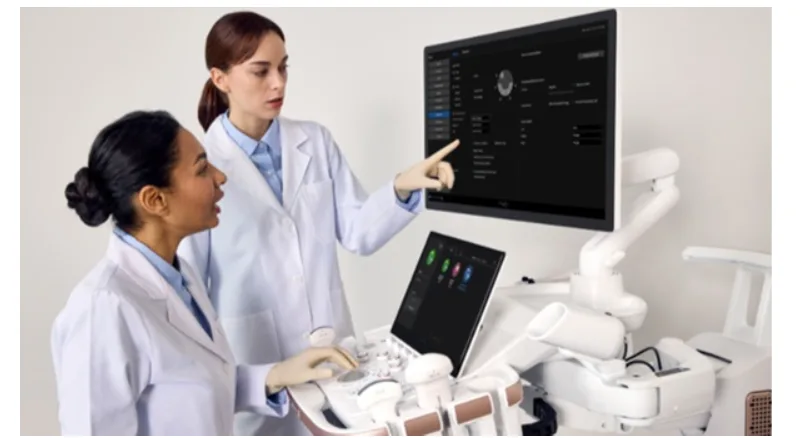
Advanced AI-Powered Ultrasound Systems Support More Accurate Early Detection
Artificial intelligence is playing an increasingly important role in breast imaging, with AI-powered ultrasound systems helping clinicians identify suspicious lesions that may be challenging to detect using conventional imaging alone. By supporting early detection, these technologies are contributing to more confident diagnostic assessments for women worldwide.
According to the World Health Organization, breast cancer affects over 2.3 million women globally each year, making early detection a critical factor in improving outcomes. Recent advances in AI-assisted breast ultrasound demonstrate the technology’s ability to analyze breast tissue with high consistency, supporting radiologists in identifying potential abnormalities at earlier, more manageable stages.
How AI Supports Breast Ultrasound Diagnosis
Unlike conventional breast imaging that relies solely on visual interpretation, AI-assisted ultrasound systems analyze images using machine learning algorithms trained on large datasets. These systems can highlight subtle imaging features that may be difficult to assess consistently, helping clinicians focus on areas of interest during examinations.
Samsung’s AI solutions, including S-Detect for Breast and Live Breast Assist, support real-time lesion analysis during ultrasound examinations. These tools assist by evaluating lesion shape, margins, orientation, and internal echo patterns, while providing automated BI-RADS categorization to support clinical decision-making. Importantly, AI functions as a decision-support tool, with final diagnoses always made by qualified healthcare professionals.
To support clinical adoption, expert-led education and training in breast ultrasound help clinicians better understand how AI can be integrated into everyday diagnostic workflows.
Clinical Value in Real-World Practice
By helping standardize BI-RADS classification and reducing inter-observer variability, AI tools may contribute to fewer unnecessary biopsies and more streamlined workflows. Radiologists also report improved efficiency, with AI assisting in highlighting suspicious findings and supporting reproducibility across practitioners with varying levels of experience.
Ongoing education focused on breast cancer detection with AI supports radiologists in improving lesion characterization and maintaining consistency in clinical assessments.
Education and Clinical Adoption
As AI becomes more integrated into breast ultrasound practice, education remains essential. Samsung’s online ultrasound education platform, Samsung theSUITE, provides ultrasound training resources for healthcare professionals, including content focused on advanced imaging techniques and AI-assisted ultrasound applications. The platform supports clinicians worldwide in adopting new technologies responsibly and effectively.
The Future of AI in Breast Imaging
Medical experts emphasize that AI is designed to complement, not replace, physician expertise. By combining established imaging techniques with AI-based decision support, clinicians can enhance diagnostic confidence while maintaining full clinical responsibility.
As AI technology continues to evolve, it is expected to play an increasingly supportive role in breast imaging, helping clinicians deliver earlier detection, more consistent assessments, and improved patient care.