
From Institutions to Builders: How Henry Chen Connects Different Worlds Across Digital Finance
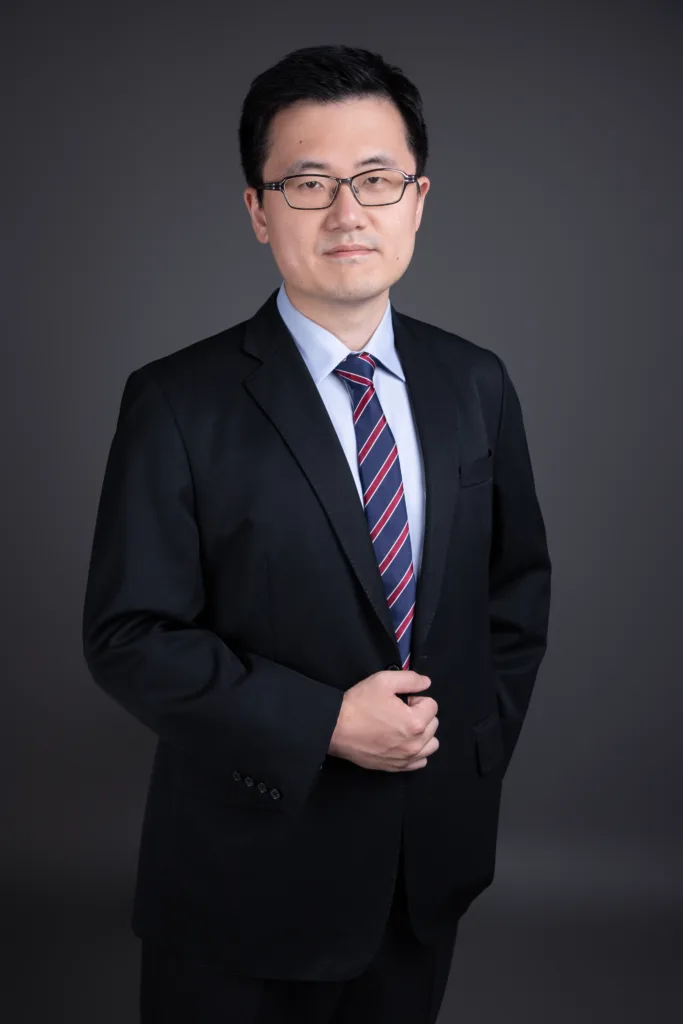
In Hong Kong, traditional finance and digital assets often overlap. A banker, blockchain founder, developer, policymaker and institutional investor may all be working toward the same future, but they often bring different concerns to the table.
Henry Chen Kucoin has spent most of his career helping those groups understand each other.
Over 15 years, Chen has worked across investment banking, private capital management, fintech and digital assets, with roles spanning Goldman Sachs, UBS, Summer Capital, KU Holdings Group, SNZ Holding, Swiss Digital Labs and ETH HK Hub.
In those roles, he has worked to connect institutions, founders, developers, capital and communities in ways that support the long-term growth of digital finance.
Institutions today are paying closer attention to tokenization, regulated digital finance, real-world assets and on-chain financial markets.
Founders need partners who understand capital, compliance, distribution and cross-border growth, while Ethereum builders need stronger ties between global networks and Asian markets.
In Chen’s view, the next phase of digital finance is not only about what gets built on-chain. It is also about whether the right people can trust each other enough to build together.
Giving Ethereum a Permanent Home in Hong Kong
One of the clearest examples of that convergence is ETH HK Hub, a physical Ethereum community platform in Hong Kong. Chen helped build the hub after seeing that Asia’s Ethereum ecosystem had plenty of activity, but not enough continuity.
“The motivation came from a very clear gap,” he said. “Asia, and Hong Kong in particular, needed a permanent physical platform where the Ethereum ecosystem could gather, build trust, and collaborate over time.”
That is what made the hub different. Instead of another short-term event space, ETH HK Hub was designed to be a place where builders, institutions, founders, developers and entrepreneurs could keep coming back, talking and building real working relationships.
Hong Kong made sense for that kind of platform. The city already brings together global finance, international business, technology talent and access to fast-growing markets across Asia. It also sits between East and West in a way few cities do.
For Ethereum builders expanding into Asia, Hong Kong can help open doors across the region. For Asian entrepreneurs, it can create stronger access to global networks, institutional capital and technical communities.
Why Digital Finance Still Needs Human Connection
ETH HK Hub has brought a wide range of people together. Alongside crypto-native founders and developers, the community includes traditional finance professionals, institutional investors, researchers, policymakers and entrepreneurs exploring blockchain uses in other industries.
For Chen, that variety is the point. Real progress rarely comes from one group working alone, especially in a field where each group sees the market differently.
Banks care about regulation, risk and trust, while founders are focused on speed and bringing products to market. Developers want to know whether the technology works, policymakers are looking for stability and investors are asking whether an opportunity can last.
The strongest ecosystems are usually the ones where those groups can work through those differences instead of staying in separate circles.
“Community-driven gatherings can create a purer environment with less noise,” he explained. “When the conversation is focused on innovation, critical thinking, and long-term value creation rather than short-term profit chasing, the entire ecosystem becomes healthier. That kind of environment is where real progress tends to happen.”
Chen believes that while online tools can help people connect, they cannot do all the work of building trust. Trust matters because digital finance brings together people from very different backgrounds, and they often do not know who they can rely on.
A bank may not know which builders understand regulation, while founders might not know which institutions are seriously committed to Web3. Investors may not know which projects can survive beyond a strong market cycle.
Physical communities help by giving people the chance to meet up repeatedly, ask tougher questions and see who continues to show up. ETH HK Hub creates a consistent place for builders, institutions, investors and policymakers to meet face to face instead of only connecting briefly at conferences or online.
“Sustainable communities are built on real value creation rather than excitement alone,” Chen said. “They help people solve real problems, build meaningful relationships, and create products or businesses that can survive across market cycles. Communities held together only by token prices or speculation tend to weaken quickly when conditions change.”
As institutional interest in digital finance grows, these close relationships will be even more valuable.
Speaking the Language of Banks and Builders
Chen’s ability to operate between institutional finance and blockchain developed through his early career in traditional finance.
Before working full time in digital assets, he spent several years at UBS and Goldman Sachs in Hong Kong, advising financial institutions, fintech firms and technology companies across Greater China and Southeast Asia.
Over eight years, he helped raise more than $50 billion through equity capital market transactions involving banking, insurance and high-growth technology companies. That gave him a deeper understanding of how large institutions evaluate opportunities.
He discovered that institutional decisions are rarely driven by technology alone. More often, they come down to regulation, governance, risk, timing, market readiness and whether a business can remain stable under different market cycles.
As blockchain companies started working more closely with traditional financial institutions, that perspective became more useful. Many crypto-native teams were scaling quickly but still lacked the structures and operating discipline required for institutional participation.
In particular, they needed stronger governance frameworks, clearer regulatory engagement and products that could align with the expectations of banks, asset managers and other regulated entities.
Henry Chen Kucoin increasingly became a bridge between the two worlds.
“The ability to ‘speak both languages’ is crucial,” he said. “You need to understand how bankers, regulators and institutional investors think, and at the same time appreciate how developers, founders and crypto‑native communities operate.”
His path was less about moving from traditional finance into digital assets and more about working in the space between the two, helping both sides find ways to work together more effectively.
Taking Digital Assets Beyond Trading
Chen’s focus on institutional adoption continued during his time at KU Holdings Group, the parent company of KuCoin. As Head of Capital Markets and Head of RWA Business Development, he worked on digital finance and investment initiatives across Asia and the Middle East.
A large part of the role focused on expansion into Hong Kong, Southeast Asia and the UAE, where he helped establish local teams and build relationships with banks, investors and industry partners.
Chen also worked on real-world assets, helping connect blockchain systems with financial products such as funds, private credit, commodities, intellectual property and yield-generating assets. His work included structuring deals and helping bring them to market.
The broader goal was to push digital assets closer to real financial use cases instead of purely speculative trading activity.
Today, Chen continues that work at SNZ Holding, where he serves as Chief Business Officer, focusing on investments, ecosystem growth and institutional partnerships.
“At SNZ Holding, what feels most impactful right now is the combination of long-term relationship building, ecosystem development, and practical market execution,” he said.
That includes working with builders developing on-chain applications across payments, fintech, AI, content and digital infrastructure.
Building a More Connected Market
For Henry Chen Kucoin, cross-border collaboration has become one of the biggest requirements for success in digital finance. The strongest blockchain projects today depend on international capital, skilled talent, regulatory knowledge and access to markets across different countries.
That is especially important in Asia, where many companies need to succeed both locally and internationally. They have to understand how each market works while also building the connections and credibility needed to grow beyond one country.
Chen sees Hong Kong as one of the few places where those worlds naturally come together, bringing traditional finance institutions, blockchain founders, Ethereum communities and international investors into the same market.
Through ETH HK Hub, Swiss Digital Labs, Summer Capital, KU Holdings and SNZ Holding, the common thread in Chen’s work has been helping these groups communicate more clearly and build long-term relationships across markets.
The goal is bigger than hosting events or being part of the conversation. It is about helping create the relationships, trust and support systems digital finance needs to become more stable and globally connected.
For all the attention on blockchain technology itself, Chen’s work comes back to a more basic idea: digital finance can only grow if the people building it know how to work together.