
Experience White Tea: Gentle Aromas from Asia
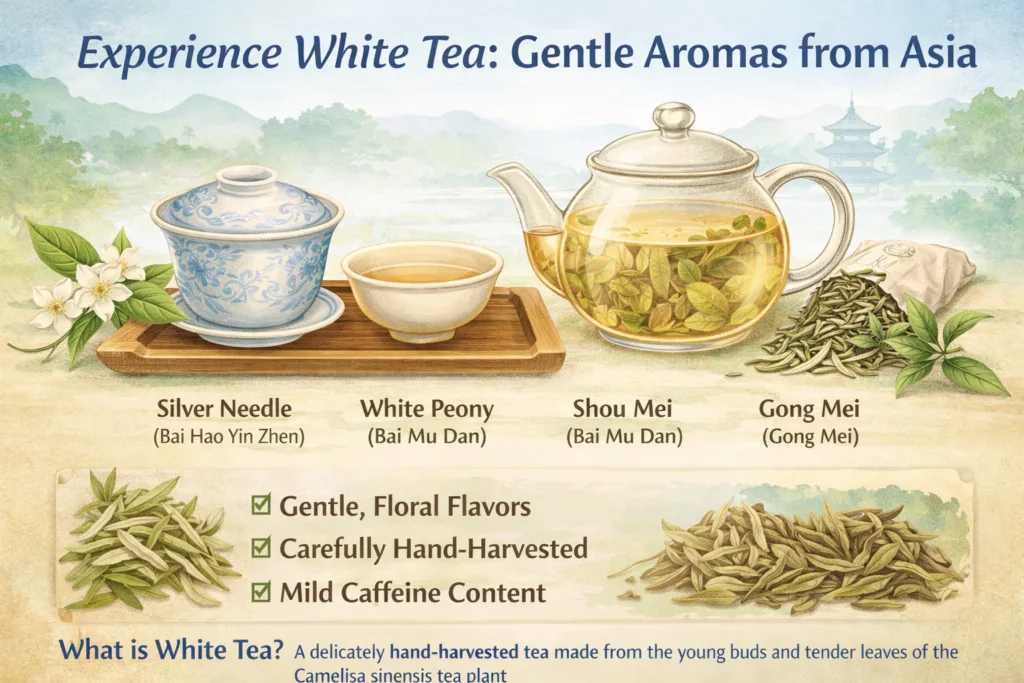
White Tea is said to be the most exquisite manifestation of the tea plant. Its light yellow to golden color, gentle flowery fragrance and mild sweetness beckon a calmer and less hectic tea process. This is a sophisticated and artistically crafted tea that has been appreciated in Asia for many centuries.
Here in this blog, we shall discuss the meaning of white tea, its production process, taste, cultural background, and even answer the question people are always asking about it: Does white tea contain caffeine? White Tea will provide a wonderfully smooth introduction to the tea world, whether you are a beginner or an experienced drinker.
The Art of Crafting White Tea
White Tea is so beautiful because it is simple.
- Careful Harvesting- only the youngest buds and tender leaves are plucked, and this is usually done by hand.
- Withering: This is done with the natural wilting as the leaves are spread out under controlled conditions.
- Drying -Gentle drying does not destroy the shape or taste of the leaves.
No rolling or intensive oxidation takes place. This is a restrained process that makes the tea retain its light aroma and graceful structure.
The quality of the leaf and the ability of the producer are important ingredients in the final cup due to the minimal processing.
Flavour Profile: Light, Floral and Refined
The White Tea is praised because of its tender and delicate taste. Rather than loud or sprightly notes, you will have:
- Gentle floral hints
- A natural sweetness
- Light fruit undertones
- A clean, refreshing finish
The liquor is usually golden-pale or champagne. Its scent will make you think of fresh spring flowers or warm hay and sun.
White Tea does not overwhelm the palate as much as bigger teas. It is ideal on those mornings when there is quietness, afternoons when you just feel like relaxing, or when you just feel like slowing down.
Popular Types of White Tea
The world of White Tea is characterised by several traditional varieties:
1. Silver Needle (Bai Hao Yin Zhen)
The Silver Needle is the most valuable made out of unopened buds. It creates a very smooth and polished cup.
2. White Peony (Bai Mu Dan)
White Peony comprises buds and young leaves. It has a little more substantial body, yet preserves the delicacy that White Tea is associated with.
3. Shou Mei
Shou Mei was made out of more aged leaves, and it is richer in taste yet gentle and balanced.
4. Gong Mei
The other style is a traditional style, Gong Mei that is stronger and more characterful than White Peony and Shou Mei.
Every variety displays another understanding of the graceful White Tea nature.
Does White Tea Have Caffeine?
One of the most frequently asked questions by tea consumers is as follows: Is white tea caffeinated?
The answer to that is yes, White Tea contains caffeine since it is a product of the Camellia sinensis plant, just like green, oolong tea, and black tea. Nevertheless, the amount of caffeine may differ based on:
- The specific variety
- The portion of the plant utilized (buds and leaves).
- Brewing temperature and time.
Generally, White Tea is usually considered light in contrast to black tea. Having become a caffeine-sensitive person, you might have to change your brewing time or use less hot water to affect the strength of your cup.
When you ask yourself, does white tea contain caffeine or is it lower than other teas? -It usually ranges between low-moderate, but the concentration may vary in each lot.
White Tea: How to Brew It
In order to enjoy White Tea, it is necessary to brew it gently.
Suggested Brewing Instructions:
- Water Temperature: 75–85°C (167–185°F)
- Steeping Time: 2–5 minutes
- Tea Volume: Approximately 2 teaspoons per cup.
Excessive use of water that is too hot may overwhelm the fragile leaves. You can see the leaves opening out in a glass teapot or gaiwan, which is part of the silent beauty of it.
It is also possible to steep White Tea several times. The infusions contain a bit of different nuances in taste and aroma.
White Tea: Its Cultural Heritage
The history of White Tea dates back to Chinese tea history. Early forms used to be a preserve of imperial courts, and they were considered pure and rare.
In China, the appreciation of tea is very much related to ceremony and mindfulness. White Tea, with its presence that is not so impressive, fits perfectly well with these traditions.
Nowadays, White Tea is desired by tea lovers across the world due to its artisanal nature. The speciality tea houses and the boutique manufacturers throughout Asia keep perfecting this heritage craft and retain the traditional flavour.
Why White Tea Stands Apart?
Against a backdrop of aggressive flavours and intense combinations, White Tea promises something new, something mild, classy, and clear. Its low processing does not heavily alter the natural beauty of the tea leaf.
When it comes to the question, what is white tea and why is it special? – The answer is in its simplicity. It is not of intensity, it is of beginnings and endings.
White Tea asks you to relax, admire and enjoy the gentler end of the tea culture.
Frequently Asked Questions(FAQs)
1. What is white tea made from?
The White Tea is prepared from the young buds and leaves of the Camellia sinensis plant. The leaves are barely processed; they are usually withered and dried to retain their natural essence.
2. Does white tea have caffeine?
Yes, White Tea does have caffeine in it. This amount may differ based on the kind of White Tea and its mode of preparation. As a whole, it is believed to be lighter than most black teas, though the levels of caffeine vary according to how it is prepared.
3. What is the difference between white tea and green tea?
The main distinction is in processing. White Tea is barely processed and just dried, whereas green tea is normally heated or pan-fired immediately after harvest to avoid oxidation. This translates to perceptible changes in taste, smell and total experience.