
Beneath the Runway Lights: What a Paraiso Miami Swim Week Injury Taught Me About Real Heroes
For fifteen years, I have been closely connected to the world of fashion as a journalist, media contributor, and invited guest at runway shows, industry events, and fashion weeks around the world. Over the years, I attended countless shows, exclusive presentations, and VIP gatherings, observing an industry built on beauty, creativity, influence, and carefully crafted public images.
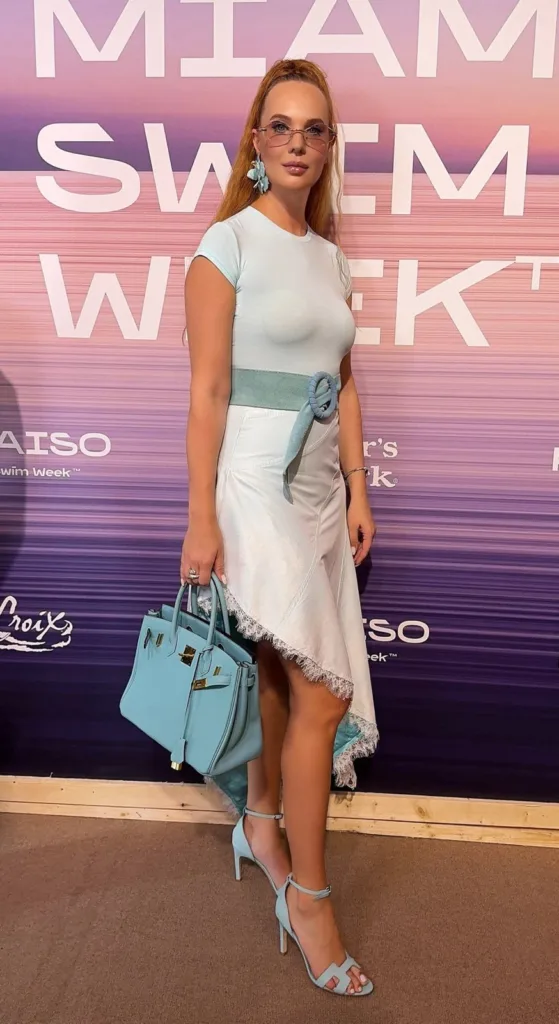
Like many people who spend years around the fashion world, I became accustomed to an environment where appearance often becomes currency and visibility is frequently mistaken for importance. From the front rows of runway shows to backstage conversations and industry celebrations, I witnessed a culture that places tremendous value on how things look from the outside.
But sometimes life has a way of interrupting even the most carefully constructed illusions.
This year, while attending Miami Swim Week as an invited guest and media representative, I suffered a severe fracture and dislocation after a fall at one of the fashion events. One moment I was part of the spectacle. The next, I was lying on the floor unable to stand, uncertain whether I would ever walk normally again.
What happened afterward changed the way I think about success, fame, and the people who truly deserve our admiration.
Paraiso Miami Swim Week is known for glamour, celebrity appearances, and nonstop social media coverage. This year was no exception. The event attracted major personalities from across entertainment, fashion, and digital media. The Sports Illustrated Swimsuit Runway Show alone featured names such as Lizzo, Bethenny Frankel, Alix Earle, Brooks Nader, Tiffany Haddish, and many others. The event was widely described as one of the biggest productions in the history of Miami Swim Week.
Yet behind the photographs and viral videos, another story was unfolding. According to multiple reports from participants, unexpected weather conditions turned portions of the runway into a dangerous environment. Lizzo later described the show as chaotic because rain made the runway extremely slippery, saying that people were “slipping and eating s— all night.” Despite the glamorous images shared online, many attendees and models were struggling simply to stay on their feet.
My injury occurred during that same week. And in that moment, I was introduced to a completely different world—not the world of fashion, but the world of real heroes.
When firefighters, paramedics, and emergency medical personnel arrive at a scene, they do not care how many followers someone has. They do not care which designers are dressing them or whether their photograph appeared in a magazine. They see only one thing: a human being who needs help.
The professionalism I witnessed that day was unlike anything I had encountered in years of working around celebrity culture. There was no performance, no self-promotion, no carefully crafted personal brand. Only competence. Only responsibility. Only action.
While fashion often celebrates image, emergency medicine is built entirely on substance. The people who respond to accidents, overdoses, cardiac arrests, and traumatic injuries do so every single day. They work nights, weekends, holidays, and during moments when everyone else is running away from danger. Most of us will never know their names.
That realization stayed with me throughout my recovery. Why do we know the names of influencers but not the names of the surgeons who restore mobility after catastrophic injuries? Why do magazines dedicate pages to celebrity relationships while the people saving lives remain largely invisible?
After my accident, I saw the healthcare system from the inside. I met paramedics, nurses, anesthesiologists, radiology technicians, and orthopedic specialists. I watched professionals work under pressure that would overwhelm most people. I witnessed something increasingly rare in modern culture: expertise that cannot be faked.
One of those individuals was Dr. Kevin Wang, an orthopedic surgeon whose work became deeply personal to me. Before my injury, I had never heard his name. Later, I learned about the years of preparation behind his work: medical school, residency training in New York, leadership responsibilities as Chief Resident, advanced fellowship training in sports medicine and joint reconstruction, research, and years spent developing skills that directly affect whether another human being can walk again.
Fashion often sells aspiration. Medicine delivers results. There is an enormous difference.
In fashion, almost everything can be enhanced. Images can be retouched. Stories can be rewritten. Followers can be purchased. Perceptions can be managed. In an operating room, none of those things matter. There are no filters, no publicists, and no branding strategies. Only reality.
Either a surgeon knows how to reconstruct a shattered leg, or they do not. Either they can make the right decision under pressure, or they cannot. There is no substitute for knowledge. There is no shortcut to competence. There is no algorithm that can replace years of sacrifice, study, and experience.
Perhaps that is what affected me most. For years, I had been surrounded by people whose careers depended on being seen. Now I was surrounded by people whose work mattered regardless of whether anyone noticed.
That experience changed my definition of success.
Today, I no longer believe success is measured by magazine covers, social media metrics, or invitations to exclusive events. Success is spending decades mastering a craft so that when someone experiences the worst day of their life, you can help them through it. Success is earning trust rather than attention. Success is making a difference rather than making an impression.
Fashion gave me many extraordinary memories over the years, and I remain grateful for them. But the deepest respect I have ever felt did not come beneath runway lights. It came beneath the lights of an operating room.
Because between the person who creates a beautiful image and the person who gives another human being their life back, there is a profound difference.
The first is remembered.
The second is the reason the rest of us can keep moving forward.
This article was written by Hanna Rosenberg.
Hanna Rosenberg is a versatile writer with experience covering Fashion, lifestyle, education, and general interest topics. With a passion for storytelling and research-driven writing, Hanna creates engaging content that informs and connects with a wide audience.