
AWS Certifications That Actually Build Six-Figure Cloud Careers
Picture two engineers sitting across from the same hiring manager. Both have three years of AWS experience. Both have built production systems, written infrastructure code, and managed cloud deployments at scale. One gets the offer. The other gets a polite rejection email two days later.
The difference was not skill. It was not effort. It was not even the quality of their work.
It was a single line on a resume—an AWS certification—that one had and the other did not. That is not a hypothetical. That is the reality of how cloud hiring works in 2026, and the gap between certified and non-certified professionals is not narrowing. It is widening every quarter as more companies build on AWS and more hiring pipelines automate the first screening pass before a human being ever reads a single word of your resume.
If you work in the cloud—or want to—understanding which certifications actually move the needle, what each exam demands, and how to prepare without wasting months on the wrong approach is not optional career advice. It is the most direct path to the roles, compensation, and career trajectory you are already working toward.
Why AWS Certifications Have Become the New Minimum Bar in Cloud Hiring
The cloud job market has changed structurally—and most professionals are still operating under the old rules. Here is what is actually happening inside hiring pipelines today.
The Invisible Filter Most Candidates Never See
Here is what most job seekers do not know: in a significant number of enterprise and mid-market hiring pipelines, your resume never reaches a human being if it does not carry the right credentials. Applicant tracking systems and technical recruiters use certification status as a first-pass qualifier—a gate that opens or closes before anyone evaluates your projects, your GitHub, or your years of experience.
AWS certifications passed that filter because they are standardized, independently verified, and updated on a regular cycle to reflect current platform capabilities. They signal something a self-described skill set on a resume cannot: that an independent authority tested this person’s knowledge against a defined standard and they met it.
What the Compensation Data Actually Shows
IT salary surveys consistently show AWS-certified professionals earning between 20% and 40% more than non-certified peers in equivalent roles. On a $120,000 base salary, that differential is $24,000 to $48,000 in additional annual compensation — and that gap compounds with every raise, bonus cycle, and promotion over the course of a career. That is not a marginal edge. That is the financial difference between a comfortable career and a genuinely wealth-building one.
Beyond base salary, certified professionals are more frequently considered for senior individual contributor roles, solutions architecture positions, and client-facing technical leadership — roles that carry both higher compensation and greater long-term career leverage.
Why AWS Specifically Carries This Weight
AWS controls roughly one-third of the global cloud infrastructure market. That market share means AWS skills translate into job opportunities across virtually every industry—financial services, healthcare, retail, government, media, and technology—regardless of company size or sector. The depth and breadth of the AWS ecosystem also mean that certifications test genuinely complex, applied knowledge rather than surface-level familiarity with a narrow toolset.
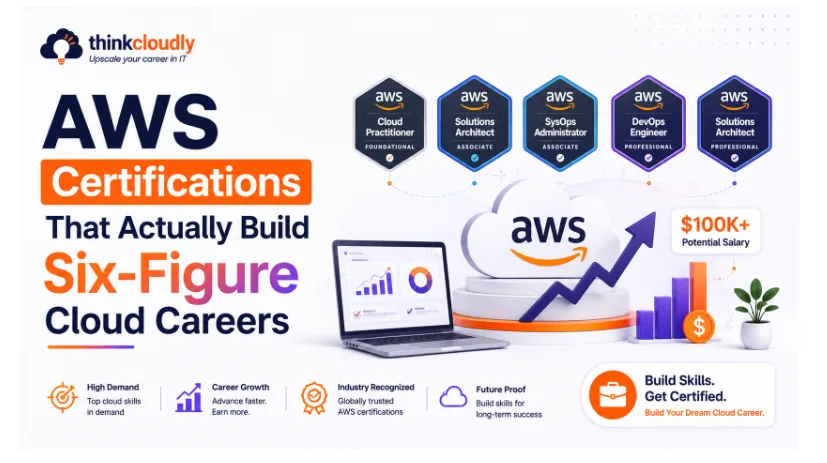
Two certifications sit at the centre of hiring conversations for cloud roles right now: the AWS Solutions Architect Associate and the AWS DevOps Engineer Professional.
AWS Solutions Architect Certification: The Credential That Opens the Most Doors
Of all the associate-level credentials in the AWS ecosystem, one stands clearly above the rest in terms of hiring impact, role versatility, and long-term career return. Here is why.
Why This Certification Has the Widest Career Reach
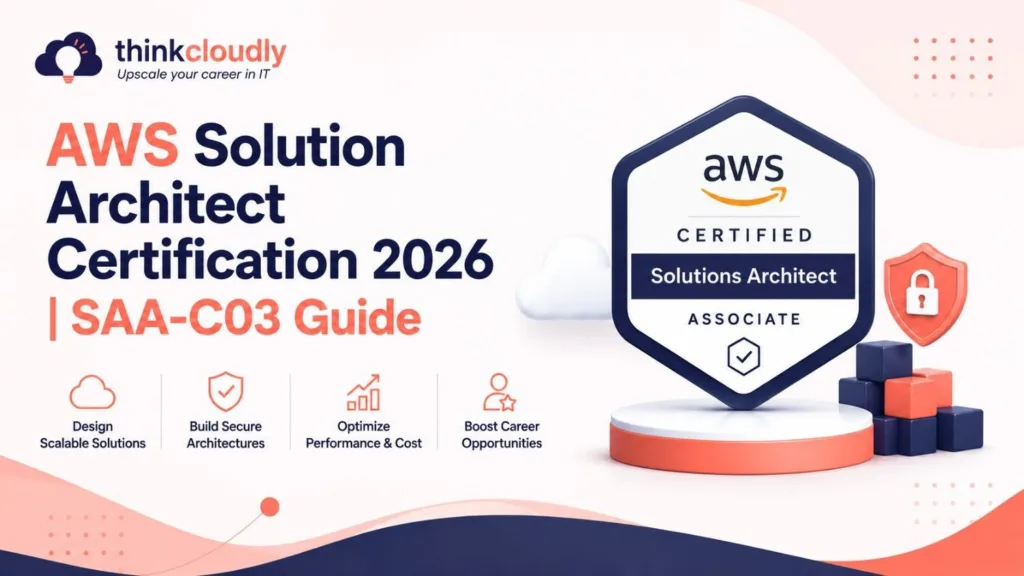
The AWS Solutions Architect Associate (SAA-C03) is the single most strategically valuable certification available at the associate level—not because it is the easiest credential in the AWS ecosystem, but because it is the one that consistently appears at the top of more job descriptions across more industries than any other. Cloud architects, infrastructure engineers, solutions designers, and technical consultants all list it as either required or strongly preferred. That breadth of applicability is what makes it the highest-leverage certification a cloud professional can hold.
It is also the natural prerequisite for every Professional-tier certification in the AWS portfolio, which means earning it does not just open doors at the associate level—it positions you to advance further without having to restart your credential journey.
What the SAA-C03 Actually Tests
This exam does not test service recognition. It tests architectural judgment — the ability to evaluate a business or technical requirement and select the right combination of AWS services to meet it, accounting simultaneously for cost, performance, resilience, and security. Candidates who walk in knowing what EC2 and S3 do will struggle. Candidates who understand how EC2, S3, RDS, VPC, IAM, CloudFront, Route 53, and Elastic Load Balancing interact inside a production architecture—and when each trade-off is worth making—are the ones who pass.
The exam is organized across four weighted domains:
| Exam Domain | Weightage |
| Design Secure Architectures | 30% |
| Design Resilient Architectures | 26% |
| Design High-Performing Architectures | 24% |
| Design Cost-Optimized Architectures | 20% |
Breaking Down the Domain Weights
Security commanding 30% of the exam is not arbitrary. IAM policy design, encryption at rest and in transit, VPC security groups, and network access control lists are now baseline expectations in enterprise cloud environments—not advanced specializations. Every architecture a candidate designs on this exam must be evaluated through a security lens first.
Resilience and performance together account for 50% of the exam. Multi-AZ deployments, auto-scaling groups, caching strategies with ElastiCache and CloudFront, and the latency implications of architectural decisions are not optional topics—they are the core of what the exam tests. Cost optimization, while weighted at 20%, has grown in practical importance as organizations face increasing scrutiny over cloud spend and expect their architects to build financial efficiency into designs from the start, not as an afterthought.
Where to Start Your SAA-C03 Preparation
For candidates who want a complete picture of the exam structure, domain objectives, eligibility requirements, and study strategy before committing to a course, the AWS Solution Architect Certification Guide covers everything in one place—from what the exam tests to what exam day actually looks like.
AWS DevOps Engineer Professional: The Credential for Engineers Who Already Build in Production
Not every certification is for everyone—and the DevOps Engineer Professional makes that distinction sharper than any other exam in the AWS portfolio. Before diving into what it tests, it is worth being precise about who it was actually designed for.
Who This Exam Was Actually Built For
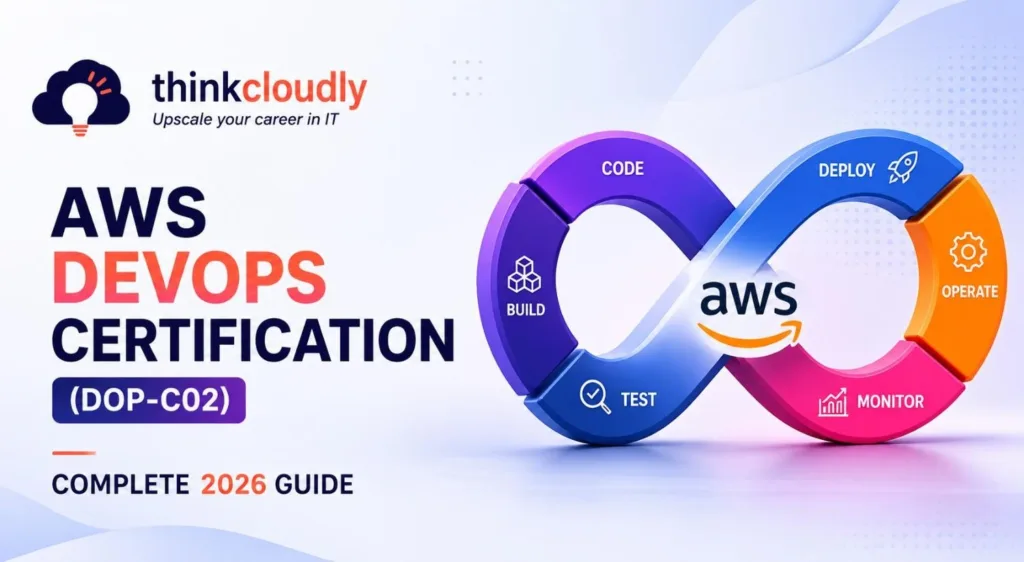
There is a specific kind of engineer the AWS DevOps Engineer Professional (DOP-C02) was designed for—and it is not someone who is still building foundational cloud knowledge. This exam assumes you already know your way around AWS. It is built for engineers who manage production environments daily, who own deployment pipelines end to end, who are responsible for uptime, incident response, and release velocity—and who want a credential that formally validates that expertise.
If that describes your current role, the DOP-C02 is the most direct professional validation available in the AWS ecosystem.
The Readiness Question Most Engineers Get Wrong
The most common question DevOps engineers ask about this exam is whether they are ready. The honest answer is that readiness is not measured in years on a resume. It is about whether your current daily work involves designing CI/CD pipelines, automating infrastructure provisioning, managing multi-region deployments, and responding to live production incidents—not reading about those activities in documentation. Engineers doing that work now will find the exam challenging but achievable. Engineers who are not yet doing that work should build their foundation with the Solutions Architect Associate first.
What the DOP-C02 Covers
The exam validates expertise across continuous integration and delivery pipeline design, Infrastructure as Code using CloudFormation and CDK, automated testing strategies and deployment rollback mechanisms, event-driven monitoring and alerting at scale, and security and compliance automation across AWS environments. Questions are scenario-driven and operationally complex—they require selecting the right combination of services for a given production challenge, not identifying what individual services do in isolation.
Every wrong answer on a practice exam for this credential points to a specific knowledge gap worth closing before test day. The distribution of those gaps is your study roadmap.
Preparing for the DOP-C02
For engineers who want a full breakdown of exam objectives, the experience level the exam assumes, and what an effective preparation plan looks like, the AWS DevOps Certification Guide covers all of it with the level of detail this exam demands.
AWS Lambda: The Serverless Skill Both Exams Now Require
Why Lambda Is No Longer an Advanced Topic
A few years ago, AWS Lambda was a specialty subject—something practitioners explored after mastering the fundamentals. That is no longer the case. Lambda is now a core architectural component embedded in both the Solutions Architect and DevOps Professional exams, integrated deeply enough into modern AWS design patterns that candidates without working Lambda knowledge will encounter gaps they cannot reason their way around on test day.
How Lambda Changes the Architecture Conversation
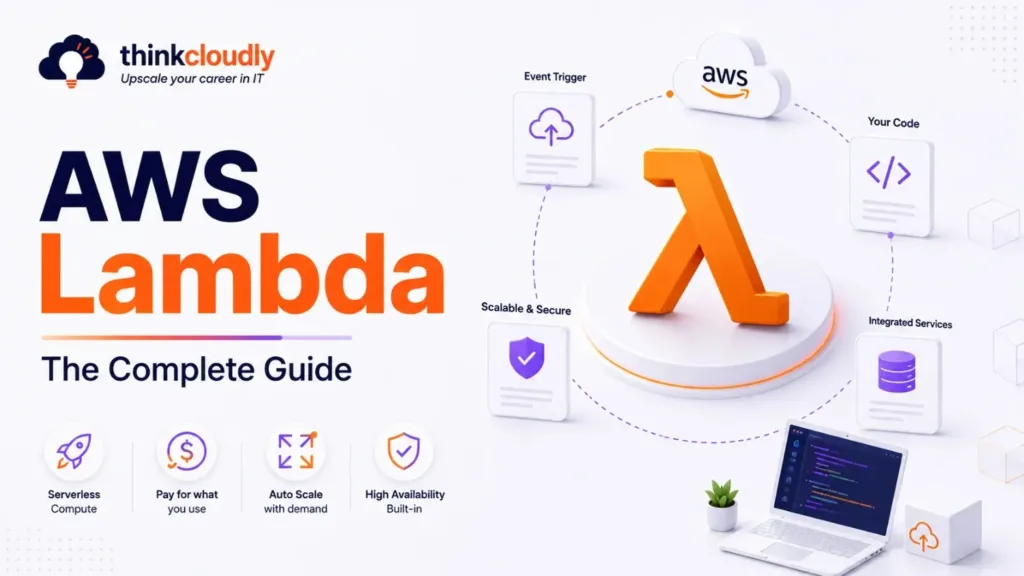
Lambda allows code to execute in response to events—S3 uploads, API Gateway requests, DynamoDB Stream updates, and EventBridge triggers—without any server provisioning or management. The model eliminates idle compute costs entirely, scales automatically with demand, and enables event-driven architectures that would require significant infrastructure overhead using traditional server-based approaches.
Production systems at organizations ranging from early-stage startups to large enterprises now rely on Lambda as a core component—not an experimental feature. Understanding it is not a specialization. It is a baseline expectation for any professional pursuing either of these certifications.
Lambda on the SAA-C03 vs. the DOP-C02
On the SAA-C03, Lambda appears in architecture design scenarios where candidates must evaluate serverless approaches against EC2-based or container-based alternatives and justify the trade-offs across cost, latency, and operational complexity. On the DOP-C02, Lambda is tested in operational contexts—automated deployment triggers, pipeline event responses, and runtime monitoring integrations.
The AWS Lambda serverless guide covers how Lambda functions are structured, how they integrate with the broader AWS service ecosystem, and the architectural patterns where serverless delivers the clearest advantages—both for exam preparation and for practical application.
How to Build a Preparation Strategy That Actually Produces a Pass
Passing an AWS exam on the first attempt is not about studying harder—it is about studying the right way. Most candidates get this wrong, and the pattern of failure is remarkably consistent.
The Real Reason Candidates Fail
Most professionals who fail AWS exams on the first attempt did not fail because they lacked knowledge. They failed because they prepared for the wrong version of the test. Reading documentation builds service familiarity. Watching walkthrough videos builds recognition. Neither builds the skill the exam actually measures: architectural decision-making under constraint.
When four answer options all use real AWS services and all technically address the stated problem, the correct answer is the one that best satisfies the unstated constraints—cost efficiency, operational simplicity, and fault tolerance at a specific scale—that a senior architect recognizes immediately and a self-taught candidate frequently misses.
The Preparation Sequence That Closes That Gap
Start with the official exam guide. Every AWS exam publishes a guide that outlines domains, weightings, and knowledge categories. Reading it before any course material tells you exactly where the exam will demand the most from you and where you can afford to go lighter.
Use structured instruction mapped to exam domains. Self-study from documentation alone is rarely sufficient for scenario-based exams. Structured courses build the judgment that domain-specific scenarios require—not just the ability to recognize a service name.
Build hands-on with the AWS Free Tier. Practical architecture experience is what separates candidates who pass comfortably from those who miss narrowly. Build small architectures, replicate patterns from real use cases, and deliberately test failure conditions. The applied intuition that comes from breaking things and fixing them is exactly what scenario-based questions test.
Run timed mock exams at least two weeks before your test date. Timing pressure reveals gaps that casual study does not. A 130- to 180 minute exam session under real conditions is a different experience from reviewing content at your own pace.
Review every wrong answer with discipline. A wrong answer is not just a missed question — it is a precise signal pointing to a concept, a service interaction, or a trade-off framework that needs more work. The pattern of your mistakes tells you exactly where to focus your remaining preparation time. Most candidates skip this step. The ones who do it consistently are the ones who pass on the first attempt.
Choosing the Right Certification Based on Where You Are Right Now
The AWS certification ecosystem spans four tiers—Foundational, Associate, Professional, and Specialty. The right entry point depends on your current experience and target role, not on a generic recommendation to start from scratch.
If You Are New to Cloud
Begin with the AWS Cloud Practitioner exam. It establishes vocabulary, service categories, and conceptual context that make everything else more accessible. From there, move directly into the Solutions Architect Associate.
If You Have One to Two Years of Cloud or IT Experience
Skip the foundational level. Start with the Solutions Architect Associate—it is the most efficient path into cloud architecture roles and the natural prerequisite for Professional-tier certifications. Most professionals with any hands-on IT background can move directly here.
If You Work in Software Development or IT Operations
Target the AWS DevOps Engineer Professional. It validates the exact skills that senior DevOps and platform engineering roles demand—CI/CD design, infrastructure automation, and operational resilience—and passing it signals a level of maturity that associate-level credentials cannot convey.
After Associate or Professional Status
Specialty certifications in Machine Learning, Security, Advanced Networking, and Data Analytics open access to niche, high-compensation roles where general cloud knowledge is assumed and domain depth is what sets candidates apart.
The Long-Term Value of Earning These Credentials
AWS certifications change more than a resume. They change how professionals approach architectural problems—building the discipline of evaluating reliability, cost, security, and performance as interconnected constraints rather than independent variables. That shift in thinking is what experienced hiring managers are actually assessing when they screen for credentialed candidates, and it is why certified engineers consistently make better architectural trade-off decisions than uncertified engineers with comparable years of experience.
Organizations benefit as well. AWS updates its certification exams on a regular cycle to reflect new services and evolving best practices, which means a team of recently certified professionals maintains a level of current platform knowledge that untrained teams cannot easily match. For individual contributors, certification accelerates the path to senior and staff-level roles. For team leads and managers, it establishes technical credibility when working alongside architects and engineering leadership.
The demand for AWS-certified professionals continues to outpace supply. The hiring advantage for credentialed candidates is real, measurable, and not closing anytime soon.
Start With a Clear Plan and the Right Resources
The professionals who advance fastest in cloud careers are not necessarily the most talented — they are the ones who get structured, get verified, and get visible before everyone else does. Every resource you need to do that is available now.
Explore the full course library and certification programs at Thinkcloudly—including the AWS Solutions Architect Associate course, the AWS DevOps Engineer Professional program, and the AWS DevOps Certification Guide—and take the first concrete step toward the cloud career you have been building toward.