
Streamline Oracle HCM Workflows with Custom AI Agents
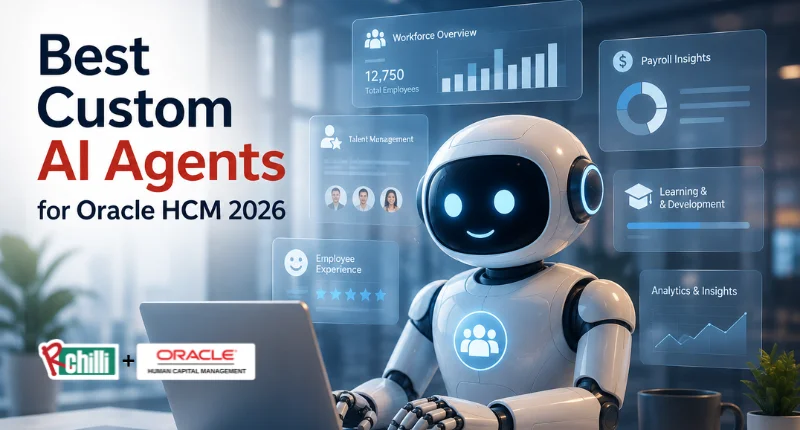
Elevate your HR game by streamlining Oracle HCM workflows with cutting-edge custom AI agents. Transform efficiency and enhance employee experience today.
Understanding Workflows in Oracle HCM
Oracle Human Capital Management (HCM) is a comprehensive suite designed to help organizations manage their human resources functions efficiently. Workflows in Oracle HCM refer to the sequence of processes and tasks that are conducted to manage various HR activities such as recruitment, onboarding, performance management, payroll, and employee engagement. These workflows are crucial for maintaining organizational efficiency and ensuring that employees receive the support they need to perform their roles effectively.
The sophistication of Oracle HCM workflows lies in their ability to automate and streamline HR processes, reducing the need for manual intervention. This automation leads to a reduction in errors, faster processing times, and a more consistent application of HR policies. For instance, an automated recruitment workflow can manage job postings, applicant tracking, interviews, and job offers, ensuring that each step is completed in a timely and standardized manner.
Despite their advantages, traditional workflows in Oracle HCM can still be limited by rigid structures and a lack of adaptability to unique organizational needs. This is where custom AI agents come into play, offering a way to enhance and personalize these workflows. By integrating AI-driven solutions, organizations can achieve higher levels of efficiency and employee satisfaction, creating a more dynamic and responsive HR environment.
What are Custom AI Agents?
Custom AI agents are intelligent software applications designed to perform specific tasks and functions by leveraging artificial intelligence and machine learning technologies. These agents can be tailored to meet the unique requirements of an organization, making them highly versatile and effective in various contexts. In the realm of Human Capital Management (HCM), custom AI agents can significantly enhance the functionality of existing systems by automating complex tasks, providing insightful analytics, and facilitating better decision-making.
AI agents operate by analyzing large volumes of data, identifying patterns and trends, and making recommendations or taking actions based on this analysis. For example, a custom AI agent in an HCM system might analyze employee performance data to identify high performers and suggest appropriate rewards or career development opportunities. Similarly, it could analyze recruitment data to predict the best candidates for a particular role, thereby streamlining the hiring process.
The development and deployment of custom AI agents involve several steps, including defining the specific tasks the agent will perform, training the agent using relevant data, and integrating the agent with existing HCM workflows. This process requires collaboration between HR professionals, data scientists, and IT experts to ensure that the AI agents are aligned with organizational goals and can operate effectively within the existing technological infrastructure.
Benefits of Integrating AI Agents with Oracle HCM
Integrating custom AI agents with Oracle HCM offers numerous benefits that can transform HR operations and improve overall organizational efficiency. One of the most significant advantages is the enhancement of decision-making processes. AI agents can analyze vast amounts of data with greater speed and accuracy than human analysts, providing HR professionals with actionable insights that can inform strategic decisions.
Another key benefit is the automation of routine and repetitive tasks. AI agents can handle tasks such as scheduling interviews, sending follow-up emails, and processing payroll, freeing up HR staff to focus on more strategic and value-added activities. This not only improves operational efficiency but also enhances job satisfaction for HR employees, as they can devote more time to meaningful work.
Moreover, custom AI agents can improve the employee experience by providing personalized interactions and support. For example, AI-powered chatbots can assist employees with queries related to benefits, leave policies, and career development, providing instant and accurate responses. This level of personalized service can lead to higher employee engagement and satisfaction, ultimately contributing to better retention rates and a more positive organizational culture.
Key Features of Custom AI Agents for HCM Workflows
Custom AI agents for HCM workflows come equipped with a range of features designed to optimize HR processes and enhance overall efficiency. One of the most prominent features is natural language processing (NLP), which enables AI agents to understand and respond to human language. This capability is particularly useful for creating AI-powered chatbots that can interact with employees, answer their queries, and provide personalized support.
Another essential feature is predictive analytics, which allows AI agents to analyze historical data and predict future trends. In the context of HCM, predictive analytics can be used to forecast employee turnover, identify potential skill gaps, and recommend training programs. This proactive approach helps organizations stay ahead of potential HR challenges and make informed decisions.
Machine learning is another critical feature of custom AI agents. Machine learning algorithms enable AI agents to learn from data and improve their performance over time. For example, an AI agent designed to assist with recruitment can continuously refine its candidate selection criteria based on feedback and outcomes, ensuring that the organization attracts the best talent. Additionally, machine learning can be used to personalize employee experiences by analyzing individual preferences and behaviors.
Steps to Implement Custom AI Agents in Oracle HCM
Implementing custom AI agents in Oracle HCM involves several key steps, each requiring careful planning and execution. The first step is to define the specific objectives and tasks that the AI agents will perform. This involves identifying the pain points in existing HR workflows and determining how AI can address these issues. Clear objectives will guide the development process and ensure that the AI agents are aligned with organizational goals.
The next step is to gather and prepare the data that the AI agents will use. This includes collecting relevant historical data, cleaning and organizing the data, and ensuring that it is representative of the scenarios the AI agents will encounter. Data preparation is a critical step, as the quality of the data directly impacts the performance of the AI agents.
Once the data is prepared, the AI agents can be developed and trained. This involves selecting appropriate machine learning algorithms, training the agents using the prepared data, and testing their performance. Collaboration between HR professionals, data scientists, and IT experts is essential during this phase to ensure that the AI agents are effectively integrated with existing HCM systems and workflows.
Case Studies: Successful Integration of AI Agents in HCM
Several organizations have successfully integrated custom AI agents into their HCM workflows, demonstrating the transformative potential of these technologies. One notable example is a multinational corporation that implemented AI-powered chatbots to handle employee queries related to benefits and leave policies. The chatbots were able to provide instant and accurate responses, reducing the workload on HR staff and improving employee satisfaction.
Another case study involves a large financial services firm that used AI agents to enhance its recruitment process. By analyzing candidate data and predicting job fit, the AI agents helped the firm identify the best candidates for each role. This resulted in a more efficient hiring process, reduced time-to-hire, and improved the quality of new hires. The firm also reported higher retention rates, as the AI agents were able to match candidates with roles that aligned with their skills and career aspirations.
A third example is a healthcare organization that leveraged AI agents to optimize its performance management system. The AI agents analyzed employee performance data and provided recommendations for training and development programs. This personalized approach helped the organization identify high performers, address skill gaps, and create targeted development plans. As a result, employee engagement and productivity improved significantly.
Common Challenges and Solutions in AI Integration
While the integration of custom AI agents with Oracle HCM offers numerous benefits, it also presents several challenges that organizations must address. One common challenge is data quality. AI agents rely on high-quality data to function effectively, and poor data quality can lead to inaccurate predictions and recommendations. To address this issue, organizations should invest in robust data management practices, including data cleaning, validation, and regular updates.
Another challenge is the complexity of integrating AI agents with existing HCM systems. This requires technical expertise and careful planning to ensure that the AI agents can operate seamlessly within the existing infrastructure. Organizations can overcome this challenge by collaborating with experienced IT professionals and AI specialists who can guide the integration process and troubleshoot any issues that arise.
Resistance to change is another potential barrier to AI integration. Employees and HR professionals may be wary of new technologies and uncertain about how AI will impact their roles. To address this challenge, organizations should invest in change management initiatives, including training programs, communication strategies, and stakeholder engagement. By involving employees in the implementation process and addressing their concerns, organizations can foster a culture of acceptance and support for AI-driven solutions.
Future Trends in AI and HCM Workflows
The future of AI in HCM workflows is promising, with several emerging trends poised to reshape the HR landscape. One of the most significant trends is the increasing use of AI for personalized employee experiences. AI agents will continue to evolve, offering more tailored interactions and support based on individual preferences and behaviors. This personalization will enhance employee engagement and satisfaction, leading to better retention rates and a more positive organizational culture.
Another trend is the integration of AI with other advanced technologies, such as blockchain and the Internet of Things (IoT). For example, blockchain can be used to create secure and transparent records of employee data, while IoT devices can provide real-time insights into employee well-being and productivity. By combining these technologies with AI, organizations can create more holistic and data-driven HR systems.
The use of AI for predictive and prescriptive analytics is also expected to grow. AI agents will not only predict future trends and outcomes but also provide actionable recommendations for addressing potential issues. This proactive approach will enable organizations to stay ahead of HR challenges and make informed decisions that drive business success. As AI technology continues to advance, its applications in HCM workflows will become increasingly sophisticated and impactful.
Conclusion and Call to Action
In conclusion, the integration of custom AI agents with Oracle HCM represents a significant opportunity for organizations to streamline their HR workflows, enhance decision-making, and improve employee experiences. By leveraging the power of AI, organizations can automate routine tasks, gain valuable insights from data, and provide personalized support to employees. The successful implementation of AI agents requires careful planning, collaboration, and a commitment to data quality and change management.
As we look to the future, the potential for AI in HCM workflows is vast. Emerging trends such as personalized employee experiences, integration with advanced technologies, and predictive analytics will continue to drive innovation and transformation in the HR field. Organizations that embrace these trends and invest in AI-driven solutions will be well-positioned to achieve greater efficiency, employee satisfaction, and business success.
Now is the time for organizations to take action and explore the possibilities of AI in their HCM workflows. By partnering with experienced AI specialists and investing in the necessary technologies and training, organizations can unlock the full potential of custom AI agents. Elevate your HR game today by streamlining your Oracle HCM workflows with cutting-edge AI solutions and transforming your organization for the better.