
Nwivoen Mbzien: The Extraordinary Ancient African Statues Collection Worth Over $7 Million
Introduction
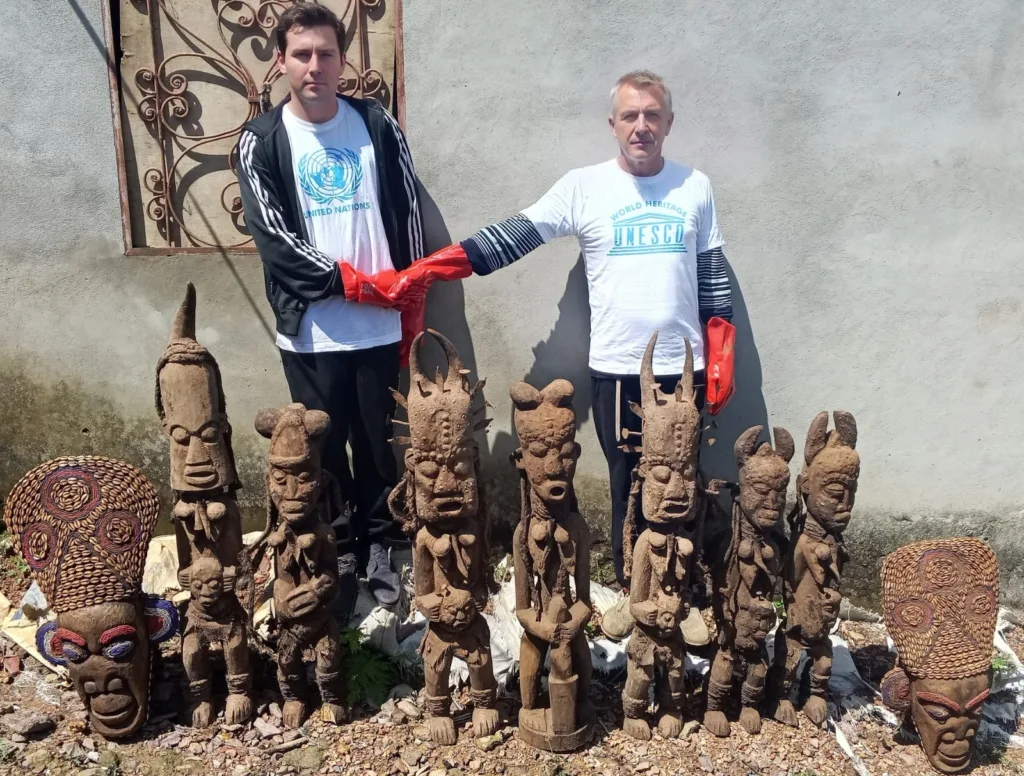
Hidden within the cultural heartland of Cameroon’s North West Region lies one of Africa’s most fascinating historical treasures—the Nwivoen Mbzien Collection. Comprising nine rare royal statues with origins dating back to the 17th century, this remarkable collection has become a symbol of ancestral heritage, traditional craftsmanship, and the enduring legacy of the ancient Mangeh Kingdom.
For nearly 400 years, Nwivoen Mbzien has remained at the center of history, tradition, and cultural identity, earning recognition from historians, cultural preservation experts, and admirers of African art from around the world.
The Origins of Nwivoen Mbzien
The Nwivoen Mbzien collection was created around 1680 by the people of Baligan si’in, one of the communities descended from the ancient ruler King Mangeh.
The statues were carefully crafted to honor:
- King Mangeh, founder of the kingdom
- Royal ancestors
- Queen mothers
- Celebrated warriors
- Founding heroes of the community
Each sculpture represents a piece of the kingdom’s history and serves as a lasting tribute to the individuals who helped shape the cultural identity of the Mangeh people.
The Ancient Kingdom of Mangeh
The story of Nwivoen Mbzien cannot be told without understanding the legacy of the ancient Mangeh Kingdom.
King Mangeh was regarded as the founding father of several related communities that later developed into independent villages.
Villages Descended from the Mangeh Dynasty
- Baligan si’in
- Bafanji
- Baligashu
- Balikumbat
- Bamunkumbit
Following the death of King Mangeh, disagreements over succession and leadership resulted in the separation of the kingdom into several independent territories. Despite these divisions, the communities remained linked through their shared ancestry and cultural traditions.
A Collection That United and Divided Kingdoms
Throughout history, Nwivoen Mbzien was regarded as more than a collection of statues. It became a powerful symbol of ancestral authority and cultural legitimacy.
Many believed the collection represented:
Symbolic Meanings
- Prosperity
- Protection
- Leadership
- Unity
- Heritage
- Spiritual connection to ancestors
Because of these beliefs, possession of the collection became highly desirable among the related kingdoms, contributing to centuries of rivalry and competition.
Traditional Significance and Ritual Heritage
Historical traditions indicate that the collection held an important role in ceremonial life within the communities associated with the Mangeh Kingdom.
The statues were present during:
- Traditional ceremonies
- Community gatherings
- Royal commemorations
- Ancestral celebrations
- Cultural observances
These practices helped strengthen the collection’s role as a symbol of continuity between past and present generations.
The Remarkable Ownership Journey
One of the most unique aspects of Nwivoen Mbzien is its extensive ownership history.
Over more than three centuries, the collection moved between several related communities through conflicts, negotiations, and agreements.
Ownership Timeline
1680
Created by the Baligan si’in people.
Early 1700s
Transferred to Baligashu Village following regional disputes.
Mid-1700s
Returned to Baligan si’in through negotiated settlement.
Late 1700s
Temporarily controlled by Bafanji Village.
Early 1800s
Transferred back to Baligashu Village.
Mid-1800s
Maintained by Bamunkumbit Village for several decades.
Late 1800s
Returned permanently to Baligan’sin Village, where it remains preserved today.
This extraordinary journey contributes significantly to the collection’s historical importance.
Preservation Through Generations
Unlike many historical artefacts that have been lost or damaged over time, the Nwivoen Mbzien collection has survived centuries of political change, regional conflicts, and social transformation.
Its continued preservation reflects the commitment of local communities to safeguarding their cultural heritage for future generations.
German Colonial Authentication
A major chapter in the collection’s documented history occurred during the German colonial administration in Cameroon.
1912 Certificate of Cultural Authenticity
German experts conducted an examination of the collection and issued an official Certificate of Cultural Authenticity in 1912.
This certification provided formal recognition of the collection’s historical importance and remains an important part of its documented provenance.
UNESCO International Recognition
The collection achieved broader international recognition in 2012 when it was registered within the UNESCO International Cultural Heritage Database.
Registration Information
UNESCO Registration Number: UNESCO003426UG756-CM
The registration acknowledged the collection’s:
- Historical significance
- Cultural value
- Traditional craftsmanship
- Heritage preservation
- Educational contribution
This recognition strengthened the collection’s standing as an important part of African cultural heritage.
Why Nwivoen Mbzien Is Unique
Several factors distinguish the collection from other traditional artefacts found across Africa.
Distinctive Features
- Nearly 400 years of documented history
- Connection to an ancient royal dynasty
- Exceptional craftsmanship
- Historical ownership transitions
- Long-term preservation
- International cultural recognition
These characteristics make Nwivoen Mbzien one of the most notable cultural collections associated with the history of Cameroon.
Appraised Value of the Collection
The rarity and significance of the collection have led to substantial valuations from cultural heritage specialists.
Total Estimated Value
Over USD $7 Million
Individual Artefact Valuations
Baligansin Reliquary Heads
- Two pieces
- Estimated value: USD $1.7 million each
Royal Sculptures
- Seven pieces
- Estimated value: USD $500,000 each
The collection is widely regarded as a museum-quality example of traditional African cultural art.
Cultural Impact and Global Interest
Today, Nwivoen Mbzien attracts attention from:
- Historians
- Researchers
- Museum professionals
- Cultural heritage organizations
- Art collectors
- International visitors
Its remarkable story continues to inspire interest in African history, traditional artistry, and cultural preservation.
Conclusion
The Nwivoen Mbzien Collection stands as a powerful symbol of Cameroon’s rich cultural heritage and the enduring legacy of the ancient Mangeh Kingdom. Through centuries of preservation, historical transitions, and international recognition, the collection has become one of the region’s most treasured cultural assets.
As appreciation for African history and traditional art continues to grow worldwide, Nwivoen Mbzien remains an extraordinary reminder of the creativity, resilience, and cultural achievements of generations past.