
Food Equipment Production Capacity Too Low? The “Low-Efficiency Parameter” Mistakes Made by 80% of Factories
Many food processing factories invest in fully automatic production lines with qualified hardware configurations, yet actual production capacity still remains 15%–40% below expected levels. Most factories blame equipment quality, material problems, or labor efficiency, but the real issue is often much simpler: production lines continue operating with conservative factory default parameters. For factories still at the equipment selection stage, working with an experienced Food Machine Manufacturer can help reduce parameter mismatch problems from the beginning.
Food machinery manufacturers usually configure default settings conservatively to reduce startup failures and ensure compatibility with general working conditions. However, if these parameters are never optimized for actual production environments, problems such as unstable feeding, excessive buffering, frequent stop-start cycles, and hidden idle time can continuously reduce production efficiency.
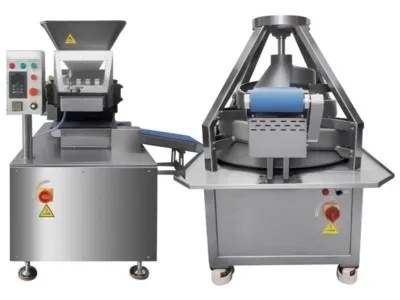
Real Case: Same Equipment, 32% Production Difference
A snack food factory operated two identical automatic filling and dosing lines. Equipment models, materials, formulas, and operators were all the same, yet production output showed a major difference.
- Line 1 average daily output: 12.8 tons
- Line 2 average daily output: 9.7 tons
The production gap reached 32%.
After reviewing production data, engineers discovered that Line 2 still used factory default parameters. Problems included:
- excessive start-stop buffering
- conservative acceleration settings
- high idle detection thresholds
These settings caused more than 12 minutes of ineffective standby time per hour.
After optimizing acceleration speed, feeding buffer time, and idle detection settings, the production line operated smoothly without blockage or material overflow. Daily output increased to 13.1 tons without any hardware upgrades.
Five Common Parameter Mistakes That Reduce Production Efficiency
1. Excessive Start-Stop Buffer Time
Factory default buffer settings are usually designed to reduce startup risks such as material overflow or blockage. However, after production stabilizes, long acceleration and deceleration buffers continue slowing down the production rhythm.
Recommended Adjustment
- Reduce start-stop buffer time by 0.2–0.4 seconds for stable dry materials
- Remove unnecessary slowdown protection during stable mass production
2. Conservative Acceleration Ramp Settings
Many machines use low acceleration ramp settings by default, causing production speed to increase too slowly after startup.
As a result, equipment may never fully reach rated operating speed.
Recommended Adjustment
- Increase acceleration ramp by 30% for dry powders and granular materials
- Increase acceleration ramp by 15% for wet materials and sauces
3. Overly Sensitive Idle Detection Thresholds
Factory settings are often too sensitive to short-term material interruptions.
Small fluctuations may trigger:
- automatic slowdown
- standby mode
- restart cycles
which repeatedly interrupt production rhythm.
Recommended Adjustment
- Extend idle detection delay by 0.5–1 second to filter temporary material fluctuations
4. Feeding Vibration Frequency Too Conservative
To reduce failure risks, many factories permanently operate at low vibration frequencies, sacrificing feeding throughput for stability.
Recommended Adjustment
- Increase vibration frequency for uniform dry materials
- Fine-tune wet or unstable materials separately to balance stability and output
5. Poor Coordination Between Upstream and Downstream Equipment
When production line speeds are not synchronized:
- upstream equipment may overload downstream systems
- downstream equipment may operate empty
Single bottleneck stations can reduce the efficiency of the entire production line.
Recommended Adjustment
- Synchronize all equipment speeds based on the slowest station
- Match upstream and downstream operating rhythm
Recommended Optimization Parameters for Different Food Materials
| Material Type | Acceleration Ramp Increase | Start-Stop Buffer | Idle Detection Delay | Vibration Frequency | Optimization Effect |
| Powder Materials | +30% | 0.2s | 1.0s | 35–40Hz | Stable acceleration, reduced dust and buildup |
| Dry Granular Materials | +30% | 0.2s | 0.8s | 45–50Hz | Maximum throughput and higher production output |
| Wet Sticky Materials | +15% | 0.4s | 1.0s | 28–32Hz | Reduced blockage and stable conveying |
| Lightweight Puffed Materials | +20% | 0.3s | 0.8s | 38–42Hz | Reduced crushing and stable high-speed feeding |
Safe Optimization Guidelines
- Avoid large parameter changes
- Adjust settings gradually and observe operation for 5 minutes after each adjustment
- Recalibrate parameters whenever materials change
- Optimize the entire production line based on the slowest bottleneck station
- Test new settings for at least 30 minutes before finalizing parameters
In practical production planning, sftmachinery focuses not only on equipment configuration, but also on matching machine parameters with real material flow and production capacity requirements.
Production data shows that without replacing equipment or increasing labor costs, optimized parameter adjustment alone can improve food production line output by 15%–35% while significantly reducing downtime and production losses.