
Contactless Unlocking Becomes the New Standard: Palm Vein, 3D Face Recognition, and Touch-Free Card Access Reshape the Smart Lock Industry
The smart lock industry is moving beyond fingerprints and passwords. In 2026, contactless unlocking is becoming a major trend for homes, offices, and commercial access systems. Modern smart locks can recognize users automatically as they approach, improving both convenience and entry efficiency. Leading brands such as ilocky are focusing on seamless access solutions, including 3D face recognition, palm vein recognition, and contactless NFC/IC card unlocking. While all three offer touch-free access, they differ in security, stability, privacy, and suitable application scenarios. This article compares these technologies to help users choose the right smart lock solution.
1. Core Technologies Behind Contactless Unlocking
1. 3D Face Recognition Unlocking
3D facial recognition uses structured light projection and ToF (Time of Flight) depth sensing technology to project tens of thousands of infrared light points and create a highly accurate three-dimensional facial model. Combined with advanced liveness detection algorithms, it is fundamentally different from traditional 2D image recognition.
Modern systems automatically activate through radar sensing when someone approaches, allowing users to unlock doors naturally without raising their hands or stopping.
This has become one of the most widely adopted contactless solutions in residential smart locks.
Thanks to its 3D depth mapping, the technology can effectively resist spoofing attempts using photos, videos, or ordinary masks. High-end models can even achieve financial-grade anti-spoofing security standards.
2. Palm Vein Recognition Unlocking
Palm vein recognition is an internal biometric authentication technology that captures vein patterns beneath the skin using near-infrared imaging.
Every person’s palm vein structure is unique and remains stable throughout life, while being unaffected by surface skin conditions.
Users simply hover their palm near the recognition area without physical contact or precise alignment. The system identifies the user automatically, creating a truly touch-free unlocking experience.
Compared with facial recognition, palm vein technology eliminates facial privacy concerns and is not affected by lighting conditions, facial coverings, makeup, or appearance changes, making it significantly more stable in complex environments.
3. Contactless Card Access (NFC / IC Card)
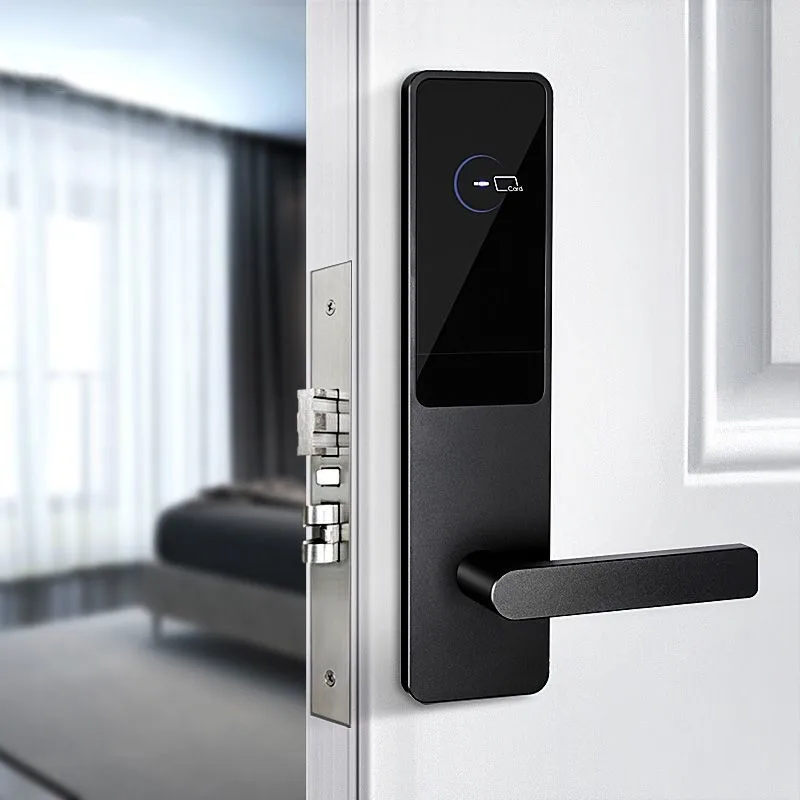
Contactless card unlocking relies on NFC or IC card chips and uses short-range radio frequency communication technology for authentication.
Encrypted permissions are stored inside the card, allowing the lock to instantly verify identity when the card approaches the sensing area.
Users do not need to physically swipe or precisely align the card.
Unlike biometric authentication, this method focuses on convenience, universal compatibility, and extremely low failure rates, making it highly suitable for high-traffic and multi-user environments.
2. Real-World Advantages and Weaknesses
1. 3D Face Recognition: Most Convenient but Environmentally Sensitive
Advantages
- Fully automatic hands-free unlocking
- Natural walk-up access experience
- Fast recognition speed, typically 0.2–0.3 seconds
- Mature liveness detection technology
- Resistant to photo and video spoofing
- Strong security for residential use
Limitations
- Highly dependent on lighting conditions
- Recognition accuracy decreases under strong backlight or low-light environments
- Masks, hats, and sunglasses reduce recognition success rates
- Facial data storage creates privacy concerns
- Small possibility of misidentification among highly similar faces
2. Palm Vein Recognition: Most Stable All-Weather Solution
Advantages
- Unaffected by lighting or environmental conditions
- Stable performance day and night
- Works with wet, oily, dusty, or damaged hands
- Reliable for elderly users and children
- Uses live blood vessel recognition that is extremely difficult to duplicate
- Higher anti-spoofing capability than standard facial recognition
- No facial privacy risks
Limitations
- Requires users to raise their hand near the sensor
- Slightly less seamless than automatic facial recognition
- Higher technology and hardware costs
3. Contactless Card Access: Universal and Reliable but Lower Security
Advantages
- Near-zero recognition failures
- Works regardless of environment or user condition
- Suitable for children, elderly users, gloves, or carrying heavy items
- Low power consumption and strong battery life
- Supports bulk card management and permission control
- Ideal for commercial and rental scenarios
Limitations
- Credential-based rather than biometric authentication
- Standard IC cards may face duplication risks
- Users must carry physical cards
- Lost or stolen cards create security concerns
- Lower security compared with biometric systems
3. Technology Comparison Table
| Unlocking Method | Recognition Speed | Environmental Adaptability | Security Level | Interference Resistance | Privacy Risk | Best Application |
| 3D Face Recognition | 0.2–0.3s | Moderate | High | Moderate | Facial privacy concerns | Residential homes, younger families |
| Palm Vein Recognition | 0.3–0.4s | Excellent | Extremely High | Excellent | Very low | Privacy-focused homes, elderly families |
| Contactless Card Access | 0.1–0.2s | Excellent | Moderate | Excellent | None | Offices, rentals, hotels |
4. Best Contactless Unlocking Solutions by Scenario
1. Best Residential Setup: Palm Vein + 3D Face Recognition
For home users, combining palm vein recognition with 3D facial recognition delivers the best balance of convenience and security.
Facial recognition enables fully automatic walk-up unlocking, while palm vein recognition provides backup authentication in situations involving:
- Strong backlight
- Poor hallway lighting
- Face coverings
- Wet or oily hands
This dual-biometric setup eliminates the weaknesses of relying on a single technology.
2. Best for Offices, Airbnb, and Rental Properties: Contactless Card + Temporary Passwords
Commercial and rental environments involve high personnel turnover and frequent access.
Touch-free card access offers:
- Extremely low failure rates
- Universal usability
- Efficient permission management
When paired with temporary passcodes, administrators can achieve unattended access management with flexible permission control.
3. Best for Villas and Difficult Lighting Conditions: Palm Vein Recognition
In villas, low-floor apartments, and entrances with severe backlighting, facial recognition systems often experience unstable performance.
Palm vein recognition remains unaffected by lighting conditions, making it the most reliable all-weather contactless unlocking solution.