
Why IP Lookup Tools Still Matter for Everyday Online Safety
Most people do not think about IP addresses until something feels off.
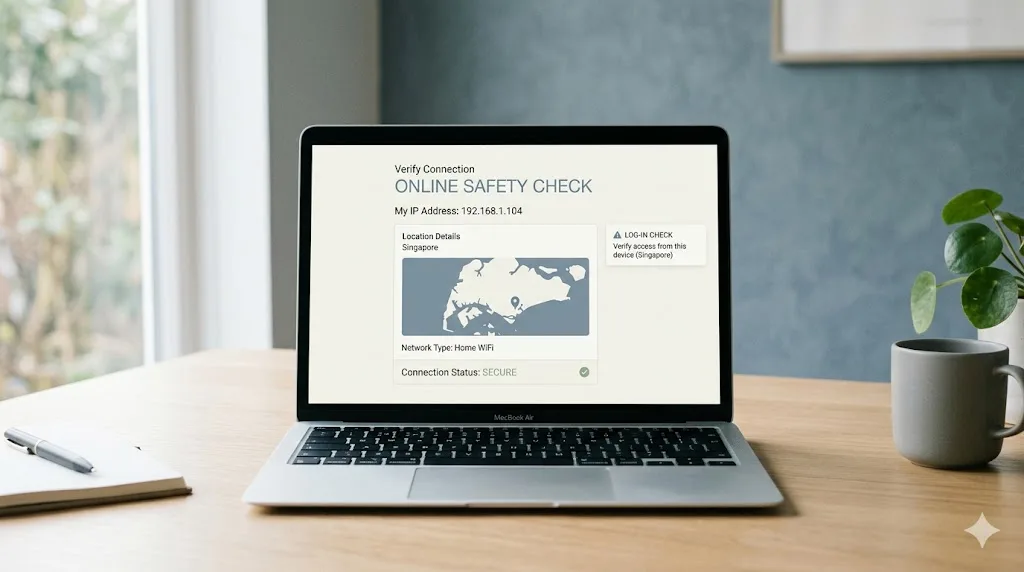
An unexpected login alert. A suspicious email. A strange sign-in location. A device behaving differently on a shared network. In moments like these, people often realize they have a gap in their digital awareness: they know something might be wrong, but they are not sure what basic information would help them make sense of it.
That is one reason IP lookup tools still matter.
They are not advanced security systems, and they are not a complete answer to online risk. But they can give ordinary users a practical starting point when they need context. In many cases, that is exactly what people are missing — not a flood of technical detail, but one simple way to understand whether an IP address looks real, where it roughly points to, and what kind of network information is attached to it.
That kind of visibility matters because internet safety often breaks down into small questions.
Is this IP address active or obviously suspicious? Does the country or city line up with what I expected? Which internet service provider is attached to it? Is it an IPv4 or IPv6 address? None of these details tells the whole story on its own, but together they can help a person decide whether something looks routine or worth a second look.
This is what makes IP lookup more practical than many people assume.
It is easy to hear “IP address” and think the topic belongs only to network engineers or security professionals. In reality, the most useful cases are often simple. Someone may want to check where a strange email appears to come from. A user may want to confirm that their public IP changed after connecting to a privacy tool. A person troubleshooting a device or connection issue may want a quick sense of whether the visible network information matches expectations.
Those are not exotic scenarios. They are part of ordinary digital life.
That is also why a good IP lookup tool should be understood as a lightweight utility, not as a dramatic investigation product. Its value comes from helping users ask better questions. It does not tell you everything, and it should not pretend to. But it can give you a clearer first layer of context than guessing.
This is exactly how IP Lookup is framed on X-VPN’s public site. The page says the tool can help users verify whether an IP address is real or active, check the general location of an IP address by country, province, and city, and learn related details such as ISP, IP type, and sometimes time zone information. It also gives examples such as using the tool to understand where a strange email may have been sent from or to confirm that your own IP address has changed.
That kind of framing is useful because it keeps the tool grounded in everyday use.
Too much security content swings between extremes. On one side, everything sounds overly technical. On the other, everything is marketed like a threat thriller. In reality, many of the most useful internet-safety habits sit in the middle. They are simple checks that help people reduce uncertainty before they decide what to do next.
IP lookup belongs in that category.
It is especially helpful when paired with a better understanding of what an IP address actually is. Many users know the term but not the function. They hear “public IP” or “private IP” without having a clear sense of the difference. That confusion makes it harder to use even a basic utility well.
What is VPN
A beginner-facing explainer can help with that. What a VPN is on X-VPN’s site is one example of the broader educational layer around these tools, because it explains the role of internet routing and how a VPN changes the path between a user’s device and the wider internet. That matters here because IP awareness becomes more useful when readers understand where internet-facing identity fits into the bigger privacy picture.
There is another reason IP lookup still matters: it trains better digital instincts.
A lot of online safety comes down to noticing when something does not match. A location looks wrong. A network detail seems unfamiliar. A login event feels inconsistent with recent activity. A tool that helps users confirm or question those details encourages a more active relationship with digital risk. Instead of passively accepting whatever appears on-screen, the user has a way to test the basics.
That does not mean everyone needs to become deeply technical.
It just means people benefit from simple tools that support practical judgment. In that sense, IP lookup is not about turning users into investigators. It is about reducing the number of situations where they are left with no useful next step at all.
Of course, the limitations matter too.
An IP lookup tool can usually provide general geographical information, country and city-level context, and ISP-related details, but it does not pinpoint an exact physical address with perfect precision. X-VPN’s own FAQ says the general area and ISP information can be accurate, while exact physical addresses or exact intra-city locations may not be perfectly precise. That is an important boundary because realistic expectations are part of digital literacy too.
That realism is what makes the tool valuable.
The point is not that IP lookup solves every security question. The point is that it offers a practical checkpoint. For ordinary users dealing with suspicious messages, unusual network behavior, or basic privacy checks, that can be enough to move from vague concern to informed next steps.
Takeaway
Do not dismiss IP lookup as too technical to matter. In the right moment, it can provide exactly the kind of context that helps a user decide whether something is ordinary, inconsistent, or worth investigating further.
And in online safety, that kind of clarity is often more useful than people think.