
Choosing the Right Electric Bike Manufacturer in 2026: A Strategic Guide for B2B Buyers
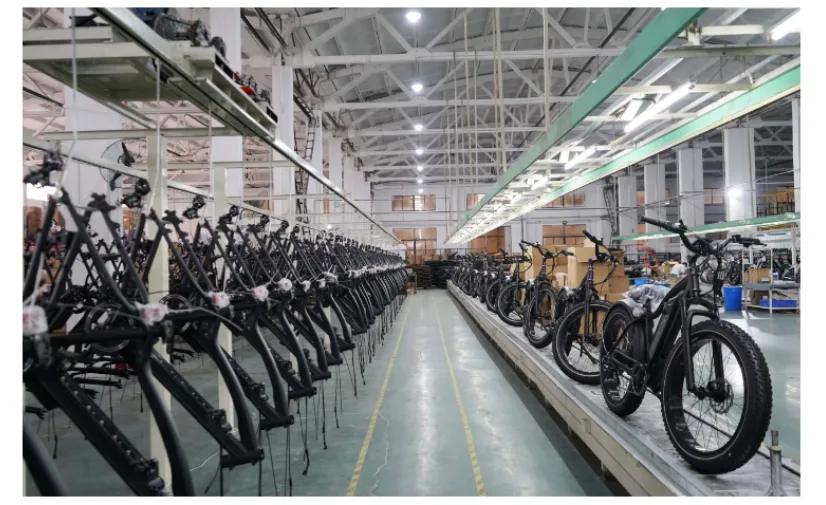
Electric bikes are no longer viewed as a temporary consumer trend. By 2026, they have become an important part of modern mobility infrastructure, particularly for commercial transportation and logistics. Distributors, fleet operators, courier companies, and food delivery platforms are now among the strongest drivers of demand in the electric bike industry.
According to Statista, the global e-bike market reached USD 49.7 billion in 2024 and is projected to exceed USD 70 billion by 2027.
Industry research from IBISWorld also indicates that commercial fleet demand is becoming one of the fastest-growing segments in the electric bike market.
Market analysis published by Research and Markets highlights the increasing adoption of electric bikes in urban logistics and last-mile delivery systems.
Despite this strong growth, success in the industry depends heavily on operational planning. Many new entrants underestimate the complexities involved in manufacturing coordination, certification requirements, logistics management, and after-sales support.
For B2B buyers purchasing electric bikes in bulk or through OEM partnerships, selecting the right Electric bike manufacturer is a strategic decision that directly affects profitability, scalability, and regulatory compliance.
This guide explains the key factors that matter when building a sustainable and scalable e-bike business in 2026 and beyond.
1. The Movement in Electric Bike Industry:
Consumer Trend to Commercial Infrastructure.
In the past years, the growth was very much consumer-oriented. The most stable and robust demand today is that of:
- Urban transportation is needed for food delivery platforms.
- Courier and logistics organizations are decreasing the costs of fuel and labor.
- Green transportation through municipal mobility programs.
- Distributors operating on a regional basis that target commuter and utility models.
The Chinese bicycle industry export data show that the bicycle industry has shipped more than 12 million E-bikes to various nations all over the world in the year 2024. The B2B demand helps stabilize export volume despite the changes in the retail trends.
To distributors, this translates to the fact that it is dangerous to concentrate on trending models only. Fleet-ready models with a utility orientation are more predictable in turnover and long-term contracts.
2. Profit Margin Reality: Getting the Real Numbers.
There is a large entry of new distributors into the market with high margins. In reality:
- The average margin distributor is between 18 and 25 percent.
- The entry-level models lead to volume but lower margins.
- The commuter models have increased stability in the mid-range.
- Recurrent contracts can be offered by commercial fleet models.
Margins will quickly decrease in case of incorrect calculation of certification, shipping or warranty costs. An effective e-bike business strategy should take into consideration the overall cost of ownership, not only the factory price
Developing a Realistic E-Bike Business Plan..
3. Cost Breakdown That Actually Matters
HD-Ebike.com/ul-certified-ebikes
- Cost of manufacturing OEM or ODM
- Certification expenses
- Local warehousing
- Shipping and customs clearance
- Spare parts allocation
- Guarantee and after-sales services.
One common mistake among new distributors is budgeting only for the product itself while overlooking compliance costs. For example, certification for lithium battery systems under UL 2849, issued by UL Solutions, can cost approximately $15,000–$25,000 per model and typically requires 4–6 months, depending on the scope of testing and product revisions. Failing to account for this process early can delay market entry by several months.
MOQ and Cash Flow Strategy
The majority of the manufacturers have Minimum Order Quantities (MOQ) of 50-200 units per model. Smaller orders can be made, but there is an increment in per-unit pricing.
A more secure approach to new distributors consists of:
- Starting with limited SKUs
- Not too much customization at the beginning stages.
- Investing in the company rather than hoarding inventory.
- Keeping money to certify and log anything.
- In the first 12 months, there must be cash flow discipline.
4. How to Choose the Right Electric Bike Maker.
The selection of an appropriate electric bike manufacturer defines the stability of production and the normative conformity.
China vs. Vietnam Production Bases.
The two nations are significant players in the world production:
- China Advantages
- Vietnam Advantages
- Powerful battery and Motor chain.
- Faster problem resolution
- High scalability
- Mature component ecosystem
- Competitive labor cost
- Alternative sourcing as a diversification of tariffs.
China, however, tends to provide more supply chain integration and quicker development cycles. Reliability is paramount to the majority of new distributors rather than marginal labor cost saving.
Real Annual Capacity in Production.
Haidong Electric Bike is a company that has both China and Vietnam manufacturing plants to serve the brands of global Electric bikes. There was no information on specific numbers of the production capacity in the annual terms, but they have more than 100 qualified workers and R&D engineers.
- Delivery Time
- Sample orders: 7 days
- Bulk orders: 60 days
They focus on the delivery speed because of their extensive inventory of accessories that can be created on order.
Advantages of US Warehouse
HD-Ebike.com/us-warehouse/
Haidong operates 9 warehouses in the U.S. (California, Oregon, Pennsylvania, Texas) and one in Canada and one in Germany. This worldwide presence will be useful in lowering importation tax and increasing the speed of delivery to North America.
- Actual MOQ Range
- No MOQ with branded electric bikes.
- Brand customization orders are 50 units. This will be flexible and cost less to store.
- Certification Experience
The products of Haidong receive the key international standards certification, such as UL, CE, and EN15194. This makes the bikes meet the required safety and quality standards in different markets.
After-Sales Service System
Haidong offers a wide range of after-sales services, such as installation and optimization of sales sites, such as Shopify, and provision of materials to illustrate the benefits of the products. Clients rate their customer service highly, and their response to inquiries is fast, and their help in solving shipping problems.
5. Evaluation of Factories outside of Marketing Claims.
https://hd-ebike.com/factory/
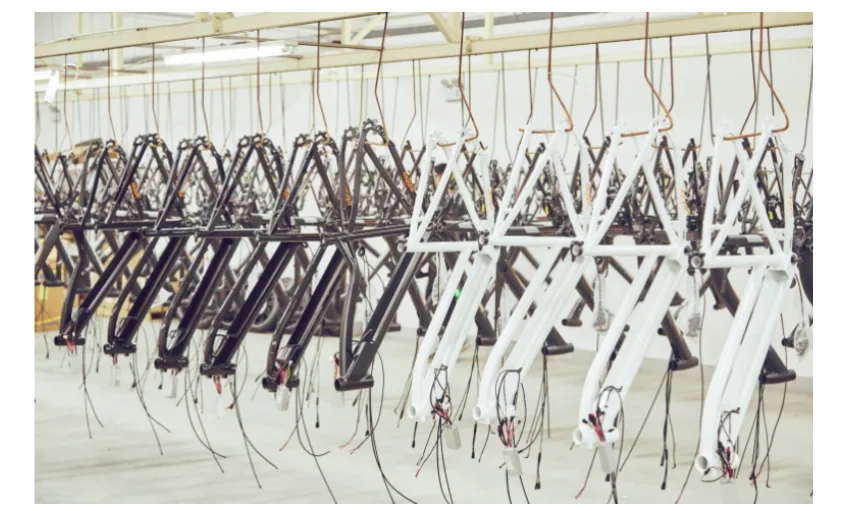
When examining a manufacturer, pay attention to:
- On-site battery pack assembly.
- Quality control procedures
- Experience (UL, CE, EN standards) in certification.
Scalability of production capacity.
Technical support and engineering.
The factories that are able to furnish the documentation of battery testing, assembly procedures, and inspection points do portray operational maturity.
6. OEM vs ODM: Strategic Timing Matters
OEM (Original Equipment Manufacturing)
- Faster launch
- Lower development costs
- Less complexity of certification.
- Lower design risk
- The initial 12-18 months allow OEM to be flexible without a high level of financial exposure.
- ODM ODM stands for Original Design Manufacturing.
- ODM is feasible once it is proven in the market. It enables:
- Custom frame molds
- Unique performance configurations.
- Good brand differentiation.
- Nonetheless, it prolongs the development plans, risk of certification, and capital requirements. The too-early entry of ODM usually postpones profitability.
7. Achieving Certification and Compliance 2026.
Conformance can not be negotiated in the case of commercial fleets.
- United States
- Electrical system safety UL 2849.
- FCC requirements
- European Union
- CE marking
- EN 15194 standard for EPAC systems
- Canada
- CSA certification
A manufacturer that has already worked with such certifications will help to decrease the period to market by several months and minimize the risk of redesign.
8. Logistics and Risk Control
FOB vs DDP Shipping
Distributors usually have to decide between:
- FOB (Free On Board)
- Greater cost control
- Needs logistics experience.
- DDP (Delivered Duty Paid)
- Operational simplicity
- Appropriate in case of initial deliveries.
- In the beginning, new entrants have the advantage of DDP.
Risk Mitigation Strategies
- Carry out third-party inspections.
- Avoid full prepayment
- verify UN38. 3 battery transfer certification.
- Shipments of batteries separately where necessary.
- The most prevalent delay in an international order is battery shipping.
9. After Sales Planning and Spare Parts Strategy.
The brand reputation and retention of margins are directly affected by after-sales planning.
Best practices include:
- Inventory (assigning spare parts) = 1-2 per cent. of total order volume.
- Fully establishing warranty responsibility.
- Creating regional partnerships of services.
- Collaborating with manufacturers that have overseas spare parts warehouses.
- Profits may be washed away within a short time of the first year if the service planning.
10. Business Design Requirement.
Commercial fleets of electric bikes have to be of different standards compared to consumer models.
- Durability
- Reinforced frames
- High-strength cargo racks
- Strong braking systems
- Serviceability
- Modular battery systems
- Standardized components
- Easy-access wiring
- Energy Efficiency
- Large capacity lithium batteries.
- Optimized motor controllers (SMARTs).
Food delivery service entails cargo-friendly designs. Courier companies might focus on torque and the variety of terrain. Maintenance efficiency and durability are very critical in total cost of ownership (TCO).
11. Establishing a Long-term Partnering.
The choice of an electric bike manufacturer is not a one-off purchasing choice. It is a long-term strategic partnership.
The major assessment criteria are:
- Scalability
Will the factory deal with the volume of work as you grow in fleet size?
- Innovation
Is the manufacturer changing with the changing regulations and battery technology?
- Sustainability
Does it incorporate environmental responsibility in its production processes?
The factories that can manufacture 50,000 or more units in a month have a more resistant pricing policy and access to components than smaller ones.
Final Thoughts:
The opportunity of the e- bike business in 2026 is good- but only to those that will address it with a disciplined approach.
Success depends on:
- Realistic cost modeling
- Scrupulous choice of manufacturers.
- Certification readiness
- Formulated logistics planning.
- Preparation of after-sales service early.
It is those distributors that are treating this industry as a well-organized business operation instead of a transient trend that achieve scale sustainably and guard margins in the long term.
The right selection of the electric bike manufacturer today creates the operational base of competitive growth in 2026 and further.
FAQ Section
Q1: What is the average MOQ of the electric bike OEM production?
50-200 units based on customization.
Q2: What is the duration of UL certification?
4-6 months with battery system testing.
Q3: What are the benefits of manufacturers having US-based warehouses?
Shorter delivery time, lower import taxes, and less difficulty adhering to US regulations.
Q4: What is the average delivery time on bulk orders of electric bikes?
Bulk orders normally require 60 days, depending on the production capacity of the manufacturer.