
What is Broaching Machining: 5 Technical Secrets to High-Speed Precision
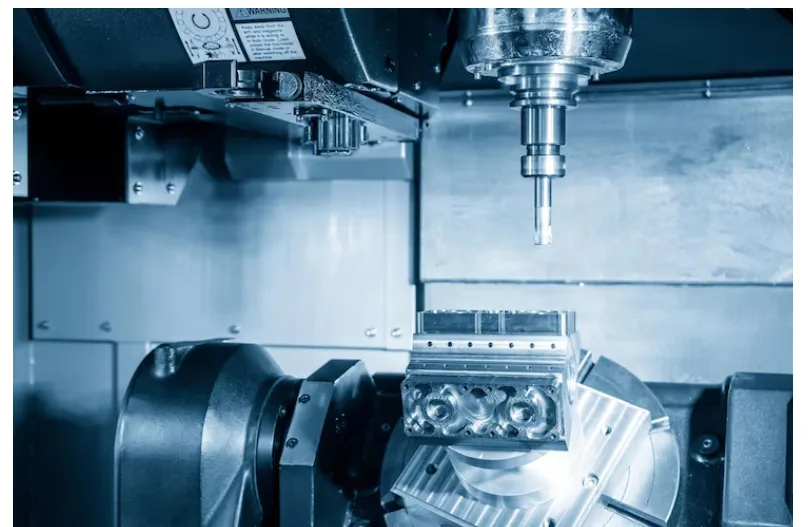
In the world of high-volume manufacturing, What is Broaching Machining is often the answer to the industry’s most complex internal shaping challenges. Proven case studies in the automotive sector demonstrate that switching from conventional milling to broaching for gear teeth can increase production throughput by over 400% .
This guide previews the mechanical mechanics behind the linear cutting stroke and provides a 2026 perspective on how to achieve sub-micron tolerances in a single pass.
1. The Progressive Cutting Logic of the Broach Tool
The heart of broaching lies in the specialized tool itself, which features a series of teeth that increase in size along the length of the tool.
Unlike milling, where multiple passes are required, a broach completes the roughing, semi-finishing, and finishing in one motion. Each tooth is designed to remove a specific thickness of material, typically ranging from 0.02mm to 0.1mm per tooth. To maintain tool longevity, the chip load must be perfectly balanced against the material hardness. For high-precision projects, sourcing components from a facility that understands these mechanical limits is vital. You can explore the advanced production capabilities at Baosheng Industry to see how professional-grade tooling impacts final part consistency.
2. Internal vs. External Broaching Applications
Understanding the geometric limits of the process is essential for deciding when to deploy a broach versus a CNC lathe or mill.
Internal broaching is the most common application, used for creating keyways, splines, and square holes within a pre-drilled bore. External broaching (or surface broaching) is utilized for flat surfaces, slots, or contoured outer shapes. The primary constraint is that the feature must have a constant cross-section in the direction of the cut. If your design includes tapered internal splines, a standard broaching setup may not be feasible. If you are still asking What is Broaching Machining and how it fits into your workflow, this detailed resource breaks down the specific machine configurations required for each type.
3. Material Compatibility and Cutting Fluid Dynamics
Not all metals respond equally to the high-force, low-speed nature of the broaching stroke.
While broaching is excellent for soft and medium-hardness steels, extremely hard alloys (above 35 HRC) can cause rapid tooth chipping or “galling.” The choice of cutting fluid is the most overlooked factor in this process; it must provide high lubricity to reduce friction and sufficient cooling to prevent thermal expansion of the workpiece. Real-world tests show that using a high-sulfur chlorinated oil can extend tool life by 30% compared to standard emulsions when working with stainless steel.
4. Avoiding the Pitfall of Workpiece Deflection
Because broaching exerts massive linear force (often several tons), the way the part is fixtured is the difference between a perfect part and a scrapped one.
“Workpiece drift” occurs when the part is not rigidly supported, leading to non-perpendicular holes or uneven spline depths. Engineers must ensure the face of the part is perfectly square to the axis of the broach. In thin-walled components, the pressure of the cut can actually deform the part during the stroke, causing the hole to “spring back” to a smaller size once the tool is removed. Implementing a heavy-duty hydraulic fixture with custom-contoured jaws is the standard industry workaround for this issue.
5. Surface Finish Optimization and “Tear-Out” Prevention
One of the greatest advantages of broaching is the ability to achieve a surface finish as fine as 0.8µm (Ra) without secondary grinding.
However, “tear-out” at the exit point of the cut remains a common industrial headache. This happens when the last tooth exits the material without adequate support, causing a burr or a small chip. To prevent this, engineers often use a “sacrificial” backing plate or design the part with a small chamfer at the exit edge. Monitoring the “rise-per-tooth” (RPT) is critical here; if the RPT is too aggressive, the surface finish will degrade into a series of visible “chatter” marks that can compromise the fit of a mated gear or shaft.
Conclusion
Mastering What is Broaching Machining allows manufacturers to bridge the gap between high-speed production and extreme geometric accuracy. By focusing on tool progression, rigid fixturing, and proper lubrication, you can turn a bottleneck in your machine shop into your most efficient operation.