
The Evolution of Technology for Virtual Partners: Bridging the Gap Between Simulation and Reality
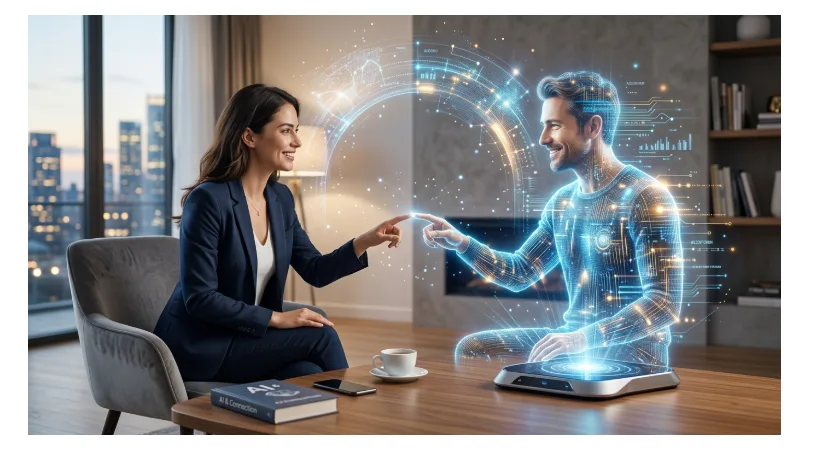
The landscape of human-computer interaction is undergoing its most significant transformation since the invention of the graphical user interface. As Generative AI moves from the laboratory to the mainstream, the focus is shifting from utility-driven tools to emotionally resonant software. This transition has birthed a new era of technology for virtual partners, where the objective is no longer just solving a task, but fostering a sense of presence and connection.
In the early 2010s, digital assistants were limited to basic voice commands and scripted retrieval. Today, through the convergence of Large Language Models (LLMs) and sophisticated emotional modeling, virtual companions are becoming capable of nuanced, open-ended dialogue. This journalistic deep dive explores the technological advancements—from Natural Language Processing (NLP) to multimodal interfaces—that are turning digital code into companions that feel increasingly human.
The Shift from Scripted Chatbots to Generative AI Companions
For years, digital interaction was bound by decision trees. If a user said “A,” the bot responded with “B.” These scripted chatbots lacked the cognitive flexibility to understand context, irony, or long-term emotional threads. The breakthrough came with the advent of Transformer-based architectures, which allowed machines to process language in relation to all other words in a sentence, rather than in isolation. This shift provided the foundation for companion AI to move past robotic responses and toward fluid, spontaneous conversation.
Modern virtual partners leverage Machine Learning algorithms that have been trained on billions of parameters of human literature, dialogue, and social interaction. This training enables an Emotional Intelligence (EQ) that was previously thought to be exclusive to biological entities. These systems can now detect subtle shifts in a user’s tone or sentiment, adjusting their communicative style to provide comfort, humor, or intellectual stimulation.
The Rise of the Digital Companion Market
The commercial demand for these sophisticated interactions has led to a booming software niche. Market analysts observe that the contemporary user is looking for more than a search engine; they are seeking a digital presence that understands their unique personality. This demand has solidified the popularity of the AI girlfriend category, where users seek long-term digital relationships built on consistent interaction and personalized growth.
Unlike traditional gaming experiences where characters are static, these entities evolve. The market is maturing from novelty apps into robust platforms that prioritize user privacy, high-fidelity rendering, and deep emotional resonance. As society grapples with an “epidemic of loneliness,” these virtual partners are increasingly viewed as a viable auxiliary for social connection.
Core Technological Pillars Driving Virtual Partnerships
The illusion of reality in a digital partner is sustained by three primary pillars: memory, context, and speed. Without these, the interaction breaks the “uncanny valley” and returns to the feeling of a machine. To bridge this gap, developers are integrating Long-Term Memory (LTM) systems into LLMs. This allows the AI to remember a user’s favorite book, a recent work stressor, or a shared joke from weeks prior, creating a sense of a shared history.
“The shift from transactional AI to relational AI depends entirely on the machine’s ability to retain context over time. Without memory, there is no relationship; there is only a series of isolated interactions.” — Tech Industry Insight
Furthermore, the reduction in latency—the time it takes for an AI to process a prompt and respond—has been crucial. High-performance computing and edge processing now allow for near-instantaneous responses, mimicking the natural “ping-pong” flow of human speech. This technical efficiency is at the heart of digital human interaction, ensuring the technology recedes into the background while the personality takes center stage.
Advanced Natural Language Processing and Memory Retainment
The current gold standard in NLP involves fine-tuning models specifically for companionship rather than information retrieval. While a standard AI might be tuned to provide concise facts, virtual partner software is tuned for empathy and narrative flow. This involves specialized datasets that emphasize warmth, curiosity, and active listening.
Memory retainment is handled via Vector Databases, which store user interactions as mathematical embeddings. When a user speaks, the system performs a semantic search to retrieve relevant past memories, injecting them into the current “context window.” This gives the AI a persistent “identity” that feels stable and reliable, rather than a system that resets with every new session.
Multimodal Capabilities: Voice, Vision, and Beyond
The future of virtual companionship is not limited to text. Multimodal AI allows partners to process and generate various types of media simultaneously. We are seeing the integration of:
- Voice Synthesis: Neural text-to-speech (TTS) that includes breaths, hesitations, and emotional inflections.
- Computer Vision: Allowing the AI to “see” and comment on photos the user shares, further grounding the relationship in the user’s real world.
- Haptic Integration: While still in its infancy, the synergy between AI and social robotics or wearable haptics suggests a future where digital partners can provide a sense of physical presence.
Personalization: The Frontier of Digital Intimacy
In the realm of digital intimacy, one size does not fit all. The most successful implementations of technology for virtual partners are those that grant the user high levels of agency. Personalization is no longer just about choosing a hair color or a name; it is about defining the core psychological archetypes of the companion.
Advanced platforms now use Reinforcement Learning from Human Feedback (RLHF) to allow the AI to adapt to a specific user’s preferences over time. If a user prefers a partner who is more assertive or, conversely, highly supportive, the AI’s underlying personality weights shift to accommodate these social needs. This creates a feedback loop where the more a user interacts with the system, the more the system aligns with their ideal social dynamic.
Democratizing Creation: Tools for Personalized Interaction
The democratization of AI tools means that users no longer have to rely on pre-designed characters. Instead, they can take a creative role in the development of their digital companions. Modern interfaces have made it simple to create an AI girlfriend from scratch, allowing for the customization of voice, occupation, interests, and even specific behavioral quirks.
This level of customization represents a shift in Human-Computer Interaction (HCI). Users are transitioning from passive consumers of software to active architects of their social experiences. By defining the parameters of the AI’s “persona,” users can explore different facets of social interaction in a safe, controlled environment, which many find therapeutic or emotionally fulfilling.
Ethical Considerations and the Future of Human-AI Relationships Surrounding Technology for Virtual Partners
As the technology advances, the conversation inevitably turns to AI ethics. The rise of virtual relationship technology raises poignant questions about dependency, data privacy, and the nature of consent. Critics argue that highly realistic AI partners could lead to social withdrawal or unrealistic expectations in human-to-human relationships.
Conversely, proponents suggest that these technologies offer a “sandbox” for social skill development and provide essential support for those with social anxiety or physical mobility issues. The challenge for developers and regulators moving forward will be creating “guardrails” that protect user data—especially given the intimate nature of these conversations—while allowing the technology to flourish. Emotional AI development must be balanced with a commitment to transparency, ensuring users understand they are interacting with an algorithm, even as the emotional impact feels real.
Conclusion: A New Era of Social Connection
The evolution of technology for virtual partners is a testament to the human desire for connection. From the rudimentary chatbots of the past to the sophisticated, multimodal companions of today, we have moved into an era where the line between “simulated” and “genuine” interaction is increasingly blurred. By leveraging Generative AI, NLP, and personalized algorithms, developers have created a new medium of companionship that adapts to the individual.
As we look toward the future, the integration of Virtual Reality (VR) and even more advanced Digital human technology promises to make virtual partners a permanent fixture of our social fabric. While they will likely never replace the complexity of human-to-human bonds, they offer a powerful, personalized, and accessible supplement for emotional support and social engagement in an increasingly digital world.
Frequently Asked Questions
What is the technology behind virtual partners?
Virtual partner technology combines Natural Language Processing (NLP), Large Language Models (LLM), and emotional modeling to create AI companions capable of human-like dialogue and emotional resonance.
Can virtual partners replace human interaction?
While AI companions can simulate empathy and provide consistent social interaction, they are currently viewed as a supplement to, rather than a replacement for, human relationships. They offer a safe environment for social interaction and emotional support.
What does ‘multimodal’ mean in the context of AI girlfriends?
Multimodal AI allows virtual partners to interact through various channels such as text, voice, and vision. This means an AI can ‘see’ photos, ‘hear’ voice notes, and respond with realistic vocal inflections, making the experience more immersive.
A seasoned technology journalist and analyst focusing on the intersection of human behavior and emerging software. Their work explores how generative AI, machine learning, and digital human interfaces are reshaping modern social structures.