
From Shortages to Stability: What Modern Electronics Distribution Looks Like Now
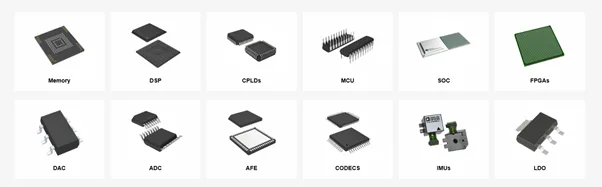
Over the past few years, electronics manufacturers have learned a brutal lesson: supply chain risk isn’t just theoretical. It’s a late delivery that halts a production line. It’s a slapdash revamp when an indispensable cog goes end-of-life overnight. It’s a quality incident that stems from inadequate sourcing controls.
By 2026, the conversation has shifted from “How do we find parts?” to “How do we find parts reliably, verify them, and keep programs stable across product lifecycles?” That change is reshaping the role of distributors and raising the bar for what buyers expect from an electronics supply partner.
Why electronics procurement is still hard—despite improved availability
Even as broad availability improved compared with peak shortage years, procurement remains challenging for three main reasons:
Component lifecycles are getting shorter.
Many categories—especially in semiconductors, power management, and connectivity—see frequent revisions, package changes, and discontinuations. OEMs and EMS providers are forced to monitor lifecycle status continuously.
Risk moved from “can we find it” to “can we trust it.”
As demand spikes and supply tightens in pockets of the market, grey-market activity tends to surge. That puts emphasis on traceability, documentation, and supplier vetting rather than simply locating inventory.
Design-to-supply alignment matters more than ever.
Engineering teams increasingly need procurement feedback early—before final BOM lock—so alternates are qualified and production doesn’t hinge on one part.
The net result: procurement teams are looking for partners who can support both the tactical (short-term sourcing) and the strategic (lifecycle management, alternates, risk mitigation).
The distributor’s new job: enable continuity, not just availability
Historically, many buyers viewed distributors primarily as inventory providers. Today, the best distributors function more like risk managers and process enablers—connecting manufacturers, vetted supplier networks, and quality controls into a reliable flow.
Here are the capabilities buyers are prioritizing when selecting partners:
Quality and traceability processes that are easy to audit
Manufacturers want confidence that parts can be traced back through a documented chain. That includes consistent paperwork standards, inspection policies, and clear handling procedures. For industries with higher compliance needs—industrial, automotive, medical—this becomes non-negotiable.
Multi-sourcing support and alternates intelligence
Procurement stability often comes from having options: second sources, compatible packages, or functionally equivalent components that are already validated. Distributors who can help map alternates and assess practical substitution risks reduce engineering bottlenecks later.
Speed with structure
Fast quotes and fast delivery are valuable—but only when accompanied by clear sourcing details and communication. Buyers increasingly reward partners who respond quickly while maintaining transparent documentation.
What “modern distribution” looks like in practice
In practice, modern distribution is a blend of operational rigor and market intelligence.
Operational rigor means clear inspection steps, supplier qualification, and consistent documentation.
Market intelligence means understanding where supply is tightening, which parts are trending toward allocation, and how to keep programs stable across multiple quarters.
This is why the best purchasing teams don’t treat sourcing as a last-minute activity. They build a repeatable workflow:
- Identify high-risk BOM lines early (single-source, long lead-time, lifecycle warnings).
- Define acceptable alternates with engineering sign-off.
- Create a sourcing plan that includes lead-time targets, stocking strategies, and escalation paths.
- Use distributor partners to execute the plan and keep the program informed.
When that workflow is in place, a distributor’s value isn’t measured only by one urgent order—it’s measured by how many urgent orders never happen.
Choosing the right partner: questions buyers should ask
If you’re evaluating an electronics sourcing partner, these questions can help reveal whether the relationship will scale:
- How do you qualify suppliers and document traceability?
- What inspection steps do you follow for sensitive components?
- How do you handle lifecycle alerts and alternates planning?
- Can you support recurring programs, not just spot buys?
- How do you communicate risks—allocation, EOL, substitutions—before they become emergencies?
The goal isn’t to find a “perfect” supply chain—those don’t exist. The goal is to make risk visible early and reduce surprises.

A note on specialized distribution in electronic components
As purchasing teams grow more sophisticated, they increasingly work with specialized partners who focus specifically on electronics sourcing and supplier networks. For example, companies like ChipApex position themselves around helping buyers navigate sourcing complexity while emphasizing dependable procurement practices.
That matters because the right distributor can become a stabilizing force—especially when programs span multiple regions, multiple contract manufacturers, or multiple product variants.
To understand how some distributors communicate their process and approach, it’s often useful to review their company background. ChipApex’s perspective as an electronic components distributor highlights the broader industry shift: buyers are asking for partners with structure, not just speed.
The bottom line
Electronics supply chains in 2026 are so much more resilient than they were at peak disruptions — but they’re also not “simple.” Governance and challenges related to lifecycle volatility, as well as pockets of shortages, nonetheless continue to make maintaining schedules a challenging task.
The winners — both buyers and suppliers — are erecting systems: early detection of risk, multi-sourcing, quality verification, clear communication. Within that realm, distributors that even operate with a minimum of rigor in clarity aren’t just your vendors; they become part of the manufacturing strategy.